16 best hikes in the Dolomites

The Dolomites are home to some of the most amazing mountains and best hiking trails in Italy (and the world!). There are many beautiful walks, hikes, and all sorts of trails to choose from, no matter your fitness and level.
I’ve been living here my whole life and did more hikes than I can count. So, if you are looking for the best hikes to do, I’ve got you covered!
Below I’ve compiled a list of the best hikes in the Dolomites. Some of these trails are not for the faint of heart but others are perfect if it’s your first time hiking in the Dolomites.
In a hurry?
These are the Dolomites essentials:
🎡 Book your Dolomites tours:
Misurina, Braies & Tre Cime tour from Cortina
Secada & Val di Funes from Bolzano
Guided snowshoe hike
Guided winter hike
Guided via ferrata🛏️ Stay at:
Grand Hotel Savoia 5* (Cortina)
Hotel Grones 4* (Ortisei)
Hotel Passo Tre Croci 3* (Cortina)🚗 Getting to Milan and around:
Renta a car

Where to stay in the Dolomites for hiking
The Dolomites stretch for about 350 km (217.48miles) and this size combined with untraversable mountain ranges, winding roads and narrow valleys means it can take some time to get from one place to another.
When choosing where to stay in the Dolomites it is very important that you base yourself strategically and close to the starting points of the hikes you want to do.
The best towns to base yourself in the Dolomites are:
Grand Hotel Savoia | CORTINA D’AMPEZZO
With its central position, top-tier rooms and amenities, and charming built-in spa, it’s the perfect place to wind down and treat yourself after a day in the snow.
Gardena Grödnerhof | HEART OF ORTISEI
A stunning luxury hotel in the center of Ortisei, close to the ski resorts and the best base for your winter holiday.
Sayonara Nature & Wellness Hotel | SAM MARTINO DI CASTROZZA
This gorgeous hotel features a large spa with gym and relaxation area, a furnished garden, and close proximity to the Tognola ski slopes.
These beautiful towns are close to the main mountain groups and offer plenty of facilities and entertainment.
Wild camping is forbidden and you won’t slide past policies’ vigilant eyes.

Best hikes in the Dolomites
I go trekking in the Dolomites almost weekly and have walked every single hike on this list, and more.
The first 14 hikes listed can be completed in one day and are easy to moderate in difficulty, then I included a via ferrata and a challenging multi day hike for the most adventurous.
For each hike I list how difficult it is as well as the length and the elevation so you can easily asses if it’s the right fit for you.
I also provide a link to the starting point on Google Maps, more info on the facilities, fees and logistics, as well as the best place to base yourself if you’d like to do the hike.
1. Tre Cime di Lavaredo loop – The most popular Dolomites Hiking Trail
Difficulty: easy to moderate
Distance: 10km (6.2 miles)
Duration: 3,5h
Elevation on path: 340m (1115 feet)
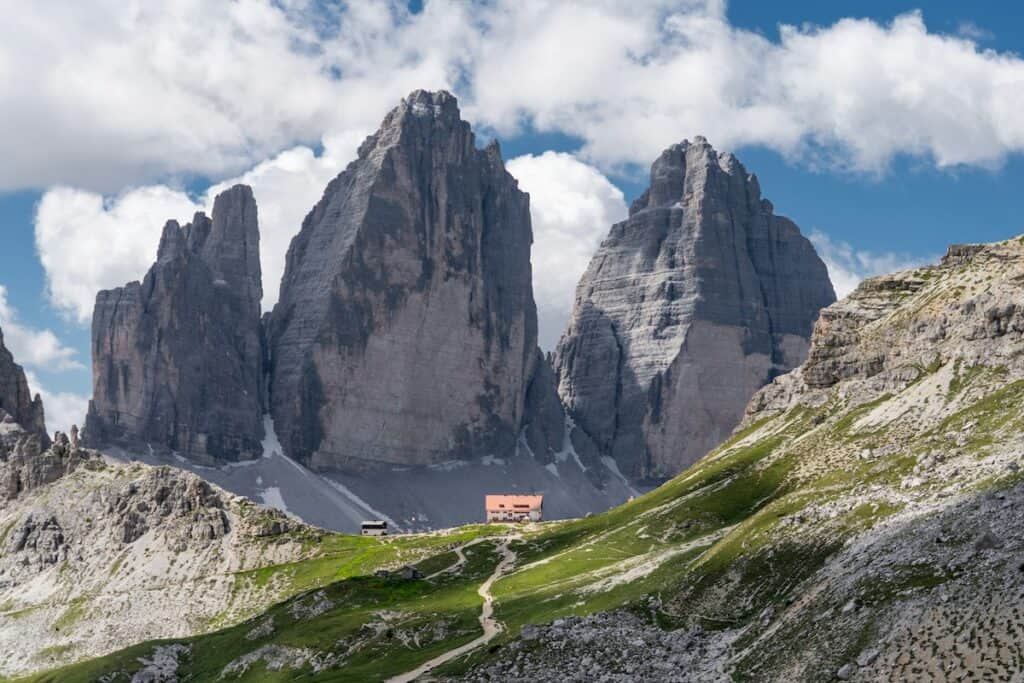
The Tre Cime di Lavaredo Loop is by far the most popular and best Dolomites hiking trail and also one of the best hiking trails in Italy and one that you absolutely shouldn’t miss despite the crowds!
There are many different hiking trails in the Tre Cime National Park but this one definitely offers the best views with very little effort.
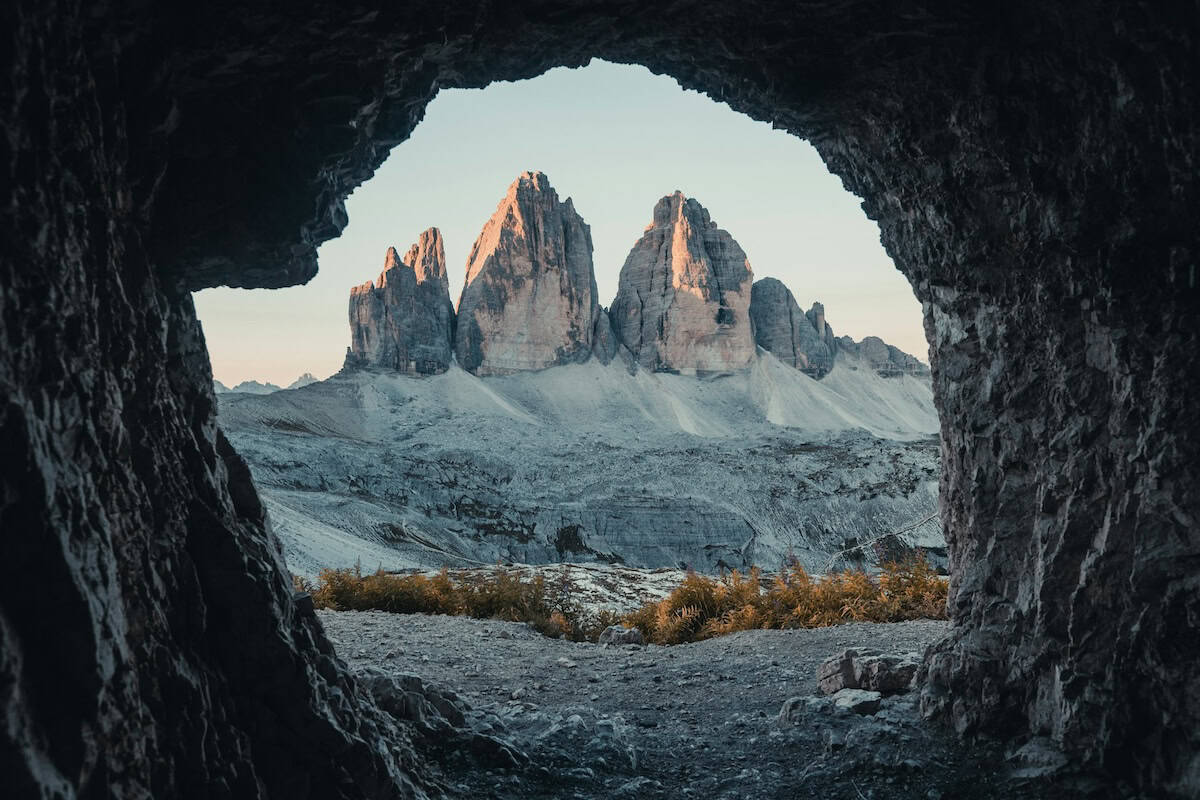
You’ll hike below the Tre Cime for the first half of the hike and then will move behind them for the most amazing views. Watching the sunrise from the little caves behind Rifugio Locatelli is my absolute favorite!
Pro tip: don’t forget to enjoy the view over Val Fiscalina and its lakes from behind rifugio Locatelli as well! As I like to say, two amazing views are better than one!
Starting point: Rifugio Auronzo 2.333m
Facilities: 3 mountain huts with toilets, food, beverages and accommodation
Fees: Toll road: 30€ per day, it’s free from 7pm to midnight
Best time to visit: Early in the morning before the crowds, sunrise is even better! The trail is closed in winter but you can reach rifugio Auronzo by foot or via snowmobile
Where to stay:
Cortina d’Ampezzo, Auronzo di Cadore and Misurina are the closest towns, these are some of the best hotels to stay at:
- Grand Hotel Savoia
- Faloria Mountain Spa Resort
- Chalet Lago Antorno is a very cute hut 10 minutes drive from the start of the toll road to access the Tre Cime

2. Cadini di Misurina Viewpoint
Difficulty: easy
Distance: 4km (2.2miles)
Duration: 1h
Elevation on path: 112m (367 feet)
Cadini di Misurina, close to Tre Cime, are in my opinion the most stunning place in the Dolomites!
The most popular viewpoint is a pinnacle and it’s very exposed. Make sure to wear sturdy shoes and only attempt going there on a dry day. Otherwise, you can enjoy the same stunning views from a safer viewpoint along the main path.
You can easily combine it with the Tre Cime Loop as it’s just a little deviation from the path and you’ll avoid paying the toll road twice.
Starting point: Rifugio Auronzo 2.333m
Facilities: no facilities along the hike, just the rifugio at the beginning
Fees:
Toll road 30€ per day, it’s free from 7pm to midnight.
Best time to visit: at sunrise it is less crowded and fairly beautiful, but sunset is the most stunning time of the day. In winter the path is closed and very dangerous.
Where to stay:
Cortina d’Ampezzo, Auronzo di Cadore and Misurina are the closest towns, these are some of the best hotels to stay at:
- Grand Hotel Savoia
- Faloria Mountain Spa Resort
- Chalet Lago Antorno is a very cute hut 10 minutes drive from the start of the toll road to access the Tre Cime

3. Col Raiser to Seceda
Difficulty: moderate to challenging
Distance: 17km (10.8 miles)
Duration: 6h
Elevation on path: 1110m (3608 feet)
This is my favorite hike in the Dolomites hands down! Seceda is also one of the most famous places in Puez-Odle National Park together with Gran Cir, Odle and Passo Gardena, but more on those Dolomites hiking trails later.
This hike starts at Col Raiser cable car. You could take it and cut half of the hike but you’d miss out on some of the most amazing viewpoints and you surely don’t want that! If you feel it’s too much though, you can take the cable car one way and walk back down so you still get the views.
This walk will take you through stunning pine forests and then up in the mountain where you’ll be surrounded by the best views. I am in awe every time I do this hike, no matter how many times I already went. The Seceda ridgeline truly is something out of this world in every season.
Starting point: Col Raiser 2.095m
Facilities: some huts with toilets offering drinks and food, closed in winter
Fees: parking is free but if you are taking the gondola check fees here
Best time to visit: start early in the morning as it is a fairly long walk. Every season is stunning but my favorite is autumn even though the suggested season is between May and September.
Where to stay:
The closest town is Ortisei. Gardena Grödnerhof and Hotel Grones are the best hotels in town.
Something I love doing though is bivouac at the top. I pitch my fav hiking tent after sunset and wake up for sunrise the day after! Bivouac is allowed here but make sure you are well prepared for it.

4. Lago Federa
Difficulty: moderate
Distance: 9,5km (5.9miles)
Duration: 2,5h
Elevation on path: 750m (2460 feet)
Lago Federa is a bit of a hidden gem but I assure you it’s one of the best lakes in Dolomites and one of Dolomites best hikes.
The hike is quite steep at times but not too long, and it’s at its best in fall when the foliage makes for a magical backdrop.
Make sure you wear sturdy shoes as the trail can be slippery and don’t miss out on doing the loop of the lake as well! It adds around 1 km to the walk.
Starting point: Ponte de Ru Curto 1.703m
Facilities: nothing on the way, Malga Federa hut might be open at the lake in peak season
Fees: parking is free
Best time to visit: every time of the day is good, it’s not a very crowded hike. The best season is autumn for the foliage but the suggested period is May to September
Where to stay:
- The closest town is Selva di Cadore and Cortina is a good option too. Consider staying at:
- The Laurin Small & Charming, a cute hotel in Selva di Cadore
- Grand Hotel Savoia
- Faloria Mountain Spa Resort

5. Giro delle 5 Torri – Passo Giau
Difficulty: moderate
Distance: 11km (6.8miles)
Duration: 4,5/5h
Elevation on path: 700m (2296 feet)
This hike offers the best views over most of the mountain groups of the Dolomites and it is one of my summer favorites. It is one of the lesser-known yet stunning Dolomites hiking trails and you should explore it before it gets too popular.
The trail will take you to the 5 Torri mountain formation, crossing many huts on the way such as Averau, Nuvolau and Scoiattolo where you can recharge while enjoying the view!
I really like to bivouac at Passo Giau and then go to Lago Federa the next day for sunrise!
Starting point: Passo Giau 2.236m
Facilities: many huts along the way with toilets offering food, drinks and also accommodation depending on the season
Fees: parking is free
Best time to visit: start early in the morning to have the best time to complete the loop, the suggested period is May to September but in my opinion, June is the best month
Where to stay:
- The closest town is Selva di Cadore and Cortina is a good option too. Consider staying at:
- The Laurin Small & Charming, a cute hotel in Selva di Cadore
- Grand Hotel Savoia
- Faloria Mountain Spa Resort

6. Geisleralm excursion – Adolf Munkel Trail
Difficulty: easy to moderate
Distance: 9,2km (5,7 miles)
Duration: 3 hours
Elevation on path: 378 (1240 feet)
Hiking Adolf Munkel Trail in the Dolomites is one that you can enjoy at any time of the year! This easy trail leads you through forests and alpine meadows all while offering breathtaking views over the Odle group and Val di Funes.
I am not a huge foody and usually take a sandwich with me on hikes but Geisler Alm is one of the best rifugios in the Dolomites and I love stopping for a bite while enjoying the outstanding views!
Starting point: Parcheggio Malga Zannes 1.680m
Facilities: Malga Zannes andGeislerAlm huts with toilets, food and drinks.
Fees: parking fee is 10€ per car per day
Best time to visit: All seasons are beautiful and unique, May to September is the suggested time but June and January are my favorite months
Where to stay: The closest small towns are Santa Magdalena and Funes while the closest bigger town is Ortisei.
Villa Messner is a great luxurious place to stay in Funes.

7. Alpe di Siusi loop
Difficulty: easy to moderate
Distance: 12,5km (7.8miles)
Duration: 3h
Elevation on path: 300m (984 feet)
Alpe di Siusi, also known as Seiser Alm is a gorgeous meadow and one of the most photographed spots in the Dolomites
The meadow covers 52 square km and there’s a ton of hiking trails to choose from but the one starting in Compaccio will give you a general overview of the area and some epic views over the Sassolungo peaks.
This trail is open year-round and stunning in every season. It’s also great for mountain biking!
Starting point: Compaccio at Alpe di Siusi 1820m – reachable by car before 9am and after 5pm or via cable car between 9am and 5pm
Facilities: many huts and restaurants with toilets food and drinks, also accommodation options
Fees: depending on parking spots and whether you take the cable car or not, fees vary.
Find all the info here.
Best time to visit: sunrise or sunset for the best views. My favorite months are May and June for the best wildflowers and lush meadows.
Where to stay:
There are many accommodation options up in Alpe di Siusi, but Cyprianerhof Dolomit Resort and Romantik Hotel Turm are the absolute best ones.
If you prefer staying in a town the closest ones are Ortisei or Selva di Val Gardena. The Laurin Small & Charming is a cute hotel in Selva di Cadore. Gardena Grödnerhof and Hotel Grones are the best hotels in Ortisei.

8. Lago di Sorapis
Difficulty: moderate
Distance: 11km (6.8 miles)
Duration: 4h
Elevation on path: 300m (984 feet)
Lago di Sorapis is one of the best lakes in the Dolomites and has become very popular very quickly for a reason!
There are two trails to reach the lake but the one starting in Passo Tre Croci is the best one as the other one is way harder and not as scenic. Despite being more crowded, in my opinion, it is the better option.
You’ll walk through lush woods and then on the side of the mountain with stunning views over the valley until you reach the lake.
The path is exposed in some parts so make sure you wear sturdy shoes. The lake is stunning because of its color but swimming in it is forbidden.
Starting point: Passo Tre Croci Parcheggio per Sorapis 1.803m
Facilities: Rifugio Vandelli near the lake with toilets, food and drinks
Fees: free
Best time to visit: start early in the morning to avoid crowds, the color of the lake is at its best when the sun is up so go on a clear day. May or September are best to avoid crowds, in winter the path is dangerous and the lake is frozen
Where to stay: The closest town is Cortina d’Ampezzo so stay at Grand Hotel Savoia, Faloria Mountain Spa Resort or Hotel Passo Tre Croci for the best experience.

9. Lago di Braies loop
Difficulty: easy
Distance: 4km (2.4 miles)
Duration: 1h
Elevation on path: 181m (583 feet)
Lago di Braies (Pragser Wildsee) is the most famous lake in the Italian Dolomites and in Europe.
The lake is one of Dolomites’ top attractions and a victim of over tourism with tourists waiting in line here to get ‘the shot’. However, the trail around the lake is a true gem that many people miss.
The easy loop takes around 1 hour to complete and takes you to some hidden spots where you can enjoy the lake in tranquility. I love heading right from the hotel to find a tranquil spot to enjoy the fresh water, swim and sunbathe, it’s absolute bliss.
Starting point: Hotel Lago di Braies 1.494m
Facilities: cafes and restaurants near the Braies Hotel
Fees: parking fees or shuttle bus fees vary
Best time to visit: Sunrise offers ideal lighting and fewer crowds. Avoid the summer peak season due to heavy crowds. September is optimal, and snowfall adds to the charm.
Where to stay:
Hotel Lago di Braies at the lake offers stunning views and is best for early starts.
The closest towns are San Candido and Cortina d’Ampezzo. If you decide to stay in town, Grand Hotel Savoia, Faloria Mountain Spa Resort or Hotel Passo Tre Croci offer the best experience.

10. Giro del Sass de Putia – Passo delle Erbe
Difficulty: moderate
Distance: 13km (8 miles)
Duration: 4,5h
Elevation on path: 547m (1794 feet)
Passo delle Erbe is often overlooked by tourists but is extremely stunning!
Upon arrival at Passo Delle Erbe, the stunning Dolomite massif sets the tone for a picturesque hike.The trail starts wide and flat, narrowing swiftly, leading through mountain passes before gently descending amidst picturesque pastures and timber huts.
Starting point: Würzjoch 1.982m
Facilities: 5 huts along the way
Fees: free
Best time to visit: Begin the loop early for ample time to enjoy the views. May to September is recommended, with June offering the best temperatures and vistas.
Where to stay:
The closest bigger town is Brunico while a smaller closer alternative is Antermoia. I highly recommend staying at Falkensteiner Hotel Kronplatz for a memorable stay.

11. Lagazuoi to Falzarego Pass
Difficulty: easy
Distance: 5km (3.1 miles)
Duration: 1,5h
Elevation on path: 215m (705 feet)
For those seeking stunning yet easy Dolomite trekking trails, this one is for you.
Take the Falzarego-Lagazuoi gondola to avoid elevation gain; walking up is possible but not recommended due to uneven and steep paths. The hike officially begins at Rifugio Lagazuoi, known for its excellent food and breathtaking views. The trail takes you past WWI tunnels and forts before descending back to the valley.
Starting point: Cable Car Lagazuoi start walking at Rifugio Lagazuoi
Facilities: the rifugio has toilets, food,drinks and accommodation
Fees: gondola fees vary depending on season
Best time to visit: May to October, but beautiful year-round. In winter, it’s a ski area; access to Rifugio is possible via gondola, but trails are closed.
Where to stay:
Cortina d’Ampezzo is the closest town and Rosapetra SPA Resort is a very nice choice!

12. Torri del Vajolet excursion to Rifugio Principe
Difficulty: Moderate
Distance: 9,4km (5.8 miles)
Duration: 3,5h
Elevation on path: 644m (2115 feet)
This walk begins at Rifugio Gardeccia, reached by gondola. From there enjoy an easy walk to Rifugio Preuss and Rifugio Vajolet, taking in stunning views.
Then, a short but steep section leads to Torri del Vajolet and Rifugio Re Alberto, boasting incredible and unique vistas. While many stop here, I highly recommend returning to Rifugio Vajolet and ascending to Rifugio Passo Principe for some of the best views in the area and a homemade cake at Rifugio Passo Principe!
You can extend the trek to Lake Antermoia, a stunning alpine lake, adding 5 km with some steep sections. This transforms the hike into a full day challenge, requiring breaks for food and rest.
Starting point: Ciampedie – gondola at Vigo di Fassa, starting the trail at Gardeccia
Facilities: several huts along the way with toilets, food and beverages, some offer accommodation
Fees: gondola fees vary depending on season
Best time to visit: May to September recommended, with June and September optimal. Start early to avoid crowds
Where to stay:
The closest town is Vigo di Fassa or the nearby towns of Moena, Pera di Fassa and Campitello di Fassa.
Ciampedie Luxury Alpine Spa Hotel is my recommendation.

13. Lago di Carezza loop
Difficulty: easy
Distance: 1.1km (0,7 miles)
Duration: 30 minutes
Elevation on path: mostly flat
Lago di Carezza, also known as Karersee, is a beautiful emerald green lake. The loop around it is one of the shortest and most picturesque hikes in the Dolomites.
Legend has it that Lago di Carezza gets its color from a wizard’s failed attempt to lure a mermaid out of the lake. He created a rainbow to lure her, but when she saw him, she fled into the depths. Enraged, the wizard tore down the rainbow and cast it into the lake.
When you reach the lake and start the walk you’ll clearly see that the shores are fenced off so please stay on the path and do not climb over, it’s extremely important to protect and respect the fragile environment around the shores of the lake. Swimming is obviously forbidden, trespassing may result in fines.
Starting point: Parking Lake Carezza
Facilities: food, drinks and toilets at the car park
Fees: parking fees vary
Best time to visit: accessible all year, best in June for blooming wildflowers and pleasant temperatures
Where to stay:
The closest town is Vigo di Fassa or the nearby towns of Moena, Pera di Fassa and Campitello di Fassa.
Ciampedie Luxury Alpine Spa Hotel is my recommendation.

14.Trekking del Cristo Pensante – Passo Rolle
Difficulty: easy/moderate
Distance: 10km (6.2 miles)
Duration: 3,5h
Elevation on path: 479m (1571 feet)
This is one beautiful hike in the Pale di San Martino peaks, a very nice part of the Dolomites which is often overlooked because it is a bit further away from the main attractions.
This scenic hike starts in a beautiful valley with mountain vistas, leading to Monte Castellaz, featuring a statue of a thinking Christ. While the statue may not add to the trail, the summit views are stunning.
You can choose to pass through Malga Segantini both ways or opt to skip it on one route, heading directly to Passo Rolle carpark.
Starting point: Parcheggio per Malga Juribello at Passo Rolle 1.989m
Facilities: Baita G. Segantini hut with toilets, food and beverages
Fees: free
Best time to visit: Accessible all year, best in June for blooming wildflowers, lush landscapes, and pleasant temperatures.
Where to stay:
The closest town is San Martino di Castrozza. Sayonara Nature & Wellness Hotel is a fabulous hotel there.

15. Gran Cir Via Ferrata
Difficulty: moderate to challenging
Distance: 4,5km (2.7 miles)
Duration: 2,5h
Elevation on path: 474m (1555 feet)
In my opinion the Gran Cir Via Ferrata is the best via ferrata in the Dolomites. The ascent is steep with continuous elevation gain. However, the breathtaking views make it absolutely worthwhile!
You should have or hire the proper gear even though there is only a short part of the hike where you need the help of a chain to climb up.
If you don’t have the experience or gear to do the via ferrata on your own, book this via ferrata experience for a safe and fun adventure. It is beginner friendly and loads of fun.
Starting point: Grödner Joch / Ju de Frara
Facilities: no facilities along the way
Fees: free
Best time to visit: May to September, best in June
Where to stay:
Closest bigger town is Ortisei, otherwise Selva di Val Gardena is a smaller yet nice village. Granbaita Dolomites is a great option to stay at.

16. Pale di San Martino Traverse (2-4 days hike)
Difficulty: challenging
Distance: 37 km (23 miles)
Duration: 2-4 days depending on how much you want to walk per day
Elevation on path: 2700m (8860 feet)
This traverse spans from the northern to the southern end of Pale Di San Martino Nature Park, encompassing the best part of the longer Alta Via 2 hike. Along the way, you’ll encounter alpine huts, lakes, peaks, and sections of via ferrata, providing a taste of Dolomite climbing.
Make sure you have all the necessary gear and this map or a clear understanding of the paths you need to take.
Pale di San Martino may not be the first choice for overseas travelers and not appropriate for beginners. But its an exceptional hike and a true hidden gem in the stunning Dolomite range.
Starting point: Parcheggio per Malga Juribello
Facilities: huts along the way offering food, drinks and accommodation
Fees: free
Best time to visit: May to October, best in June
Where to stay:
The closest town is San Martino di Castrozza. Sayonara Nature & Wellness Hotel is a fabulous hotel there.

Hiking in the Dolomites Safety and Tips
Hiking in the italian Dolomites comes with some important safety recommendations as it can be a wild and unpredictable region:
- check the trail and weather conditions online or at one of the info points before you go, wear sturdy hiking shoes and high socks
- Pack for 4 seasons: even in the Summer it can get very cold. Make sure you’re wearing layers
- Book your huts in advance, especially in peak or ski season
- Bring a small first aid kit and head lamp
- Wear polarized sunglasses and sun protection. The sun at high altitude is no joke especially if there is snow
- Trails are well marked but make sure to have a trail map downloaded, phone reception is rare
- Carry cash, not all huts or small shops accept cards
Respect nature and wildlife and don’t walk off the path, leave no trace behind and respect drone regulations where stated, it’s important for wildlife.

Mountain Huts and Camping in the Dolomites
Wild camping is prohibited in the Dolomites. Some parking spots permit overnight stays, but rooftop tents, camping furniture left outside, or stones for leveling tires are not allowed. Violation may result in fines.
Accommodation options in the Dolomites range from high-end luxury hotels to charming guesthouses in most towns, with official campsites, mountain huts, and bivouacs also available.
Reservations are necessary for huts, and many are seasonal. Official bivouacs, typically basic, provide facilities when huts are closed or unavailable. Check out this list of mountain huts and bivouacs for more details.
Getting to and around the Dolomites
The best way around the Dolomites is by car or campervan. There are some toll roads but it’s overall the quickest way to get around
The closest airport is Venice and you can either rent a car or opt for this transfer service from Venice to Cortina
Public buses are available but there isn’t a unified bus pass for the entire region, but towns and most mountain passes are well-connected. For timetable information, check out the main websites for each region’s main transport companies: Trentino Trasporti Suedtirol Mobil and Dolomiti Bus.

Best time for hiking in the Dolomites
The best time for hiking in the Dolomites is from May to mid-September. Outside this period, visiting is still possible, but many trails may be covered in snow or converted into ski areas, posing risks, especially for non-experts.
My top three favorite times for hiking in the Dolomites are:
- Early June for: pleasant temperatures, blooming wildflowers, fewer crowds, open trails, and most huts available.
- Mid-September for: pleasant temperatures, fewer crowds, spectacular sunsets, possibility of snowfall in higher peaks adding to breathtaking views.
- October is my all time fav for: photographing fall colors, less crowds, moody views, but be aware of possible early snow on some hikes, adding a touch of challenge.
Hiking the Dolomites in winter
Winter hiking in the Dolomites is undoubtedly epic but challenging. Most trails are officially closed, requiring snowshoes, crampons, or skis for navigation. Make sure to always check weather conditions which can change rapidly.
Some of the most popular spots become ski areas and offer snowmobile tours or cable cars for access to trails.
However, Alpe di Siusi, Geisler and Seceda are absolutely stunning in winter and usually easier than other destinations to reach.
Are you planning a trip to the Dolomites?
Whether you are a thrill-seeker looking for adrenaline-pumping activities or a nature lover seeking peace and tranquility, you’ll love the Dolomites! But keep in mind that the Dolomites are huge and a very popular destination so careful planning and advanced bookings are essential.
Before you head off, make sure to check out all our Dolomites guides!

How to get to and get around the Winter Olympics in Italy (flights, trains and more)

Where to stay for the 2026 Winter Olympics – Italy Olympics Accommodation

The Dolomites in Winter – 16 unmissable things to do in winter in the Dolomites
Dolomites day trip from Venice – what to see, do and best tours
Dolomites itinerary – How to spend 5, 3 or 2 days in the Dolomites
Where to stay in the Dolomites – The best areas and accommodation in the Dolomites