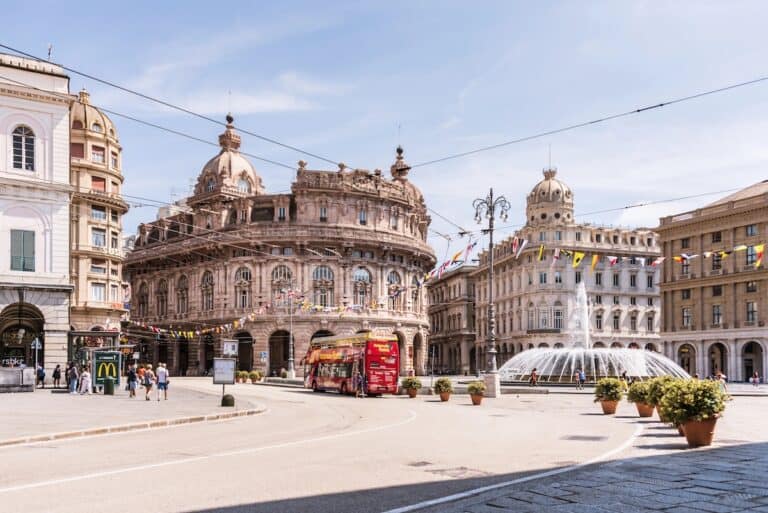
Genoa Itinerary – Best things to do in Genoa in 1, 2 or 4 days

Genoa is a charming city located on the beautiful Italian Riviera, known as the birthplace of Christopher Columbus. Its narrow streets and colorful buildings offer a picturesque setting for experiencing the rich maritime history and beautiful architecture of Italy.
During my last visit with friends, we spent several days getting lost in the streets, indulging in delicious pasta and constantly craning our necks to admire the architecture. It was a memorable trip that I will always cherish.
TABLE OF CONTENTS
.
Genoa’s biggest allure was its lack of tourism compared to other parts of Italy, allowing for a more intimate and authentic experience. With great Italian food coupled with the pretty sunset pastels of the buildings, the city has a lot to offer.
Based on my experience, I have crafted the ideal 4 day itinerary, along with adaptations for those with only 1 or 2 days to spare.
What and where is Genoa, and why visit
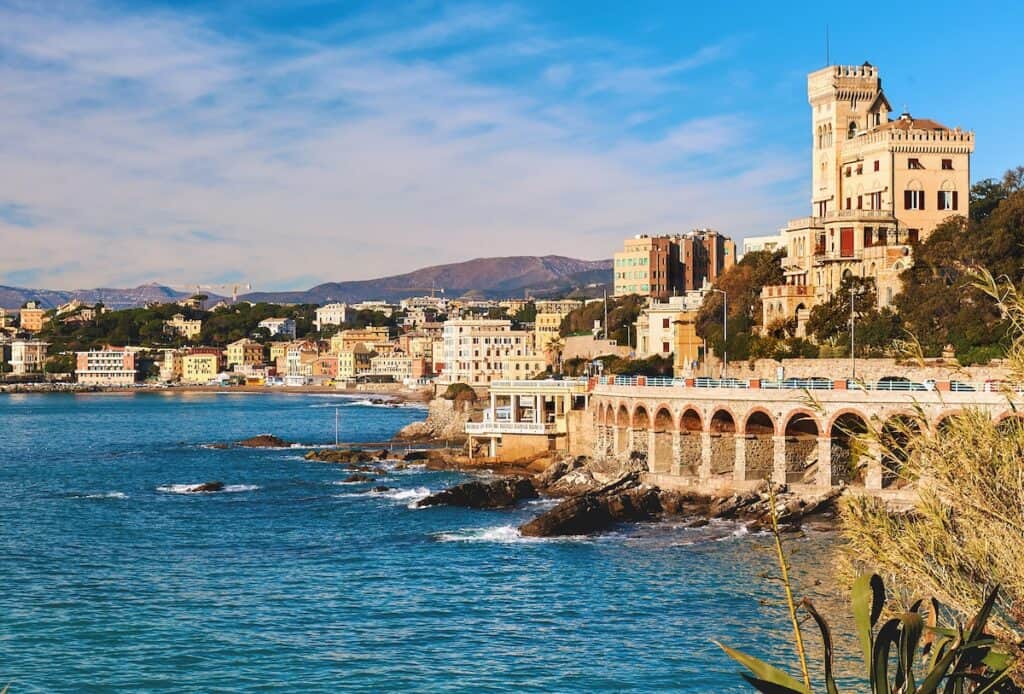
Nestled on the northwestern coast of Italy, Genoa is the capital of the Ligurian region and a large seaport. The city also marks the center of the famous Italian Riviera, with Portofino and Cinque Terre a short train ride away.
The city has the backdrop of northern Italy’s mountains and a mild Mediterranean climate. The seashell-shaped port is filled with boats and a testament to the city’s history in maritime trade.
You can find streets and piazzas (Italian for plaza) just as charming as those found in more popular cities in Italy that are flat and easily walkable. Great for history lovers, architect nerds and foodies, Genoa is sure to make for a great and generally affordable trip.
How many days in Genoa
Genoa can be easily seen in just 3 or 4 days. More time would allow you to really explore the city in-depth, but I don’t think it is necessary. I think staying in Genoa is also a great option to be able to visit the rest of the Riviera since it can definitely be cheaper than other more touristy and widely known cities or towns.
Many of the main attractions of Genoa feature striking architecture, so think beautiful Italian piazzas and historic palaces, its museums and the main harbor, Porto Antico, which is home to the Genoa Aquarium — the largest aquarium in Italy and most biodiverse in Europe.
How much time you need really depends on what you want to see and prioritize in the city but I think the 3 day timeline is perfect for hitting the highlights and even adding in a daytrip.
Insider tip: While you can find great pizza and pasta all across Italy, this region is best known for its pesto and focaccia bread. You can find it offered in most restaurants or in cafes.

Where to stay in Genoa
I would recommend staying in the heart of the city, where you can easily walk around but also have access to a train or metro station for travel purposes.
To dive deeper into the neighborhoods and recommended hotels check out this Genoa accommodation guide.
Hotel Bristol Palace – GRAND AND ELEGANT
Located in the heart of the city and within a ten minute walk of stunning palazzos, this grandiose hotel offers exceptional service and opulent decor.
Hotel Continental Genova – CENTRAL AND CONTEMPORARY
This modern hotel boasts a coastal theme in rooms and has a spectacular location— right next to the central station.
Hotel Astoria – WARM AND ACCOMMODATING
With highly-rated staff, an excellent location and a beautiful exterior, this hotel is a sure choice.
Genoa 4 day itinerary
Day 1 – Get Walking
The first day is focused on getting used to the city and taking in the scenery via walking, so grab your comfiest shoes and get a good stretch in beforehand.
Historic Centre
I would hit the ground running by taking a stroll around the city and getting used to your surroundings, familiarizing yourself with the stunning architecture and also taking note of the city’s layout if you’re planning on traveling at all.
Join this walking tour to hit some of the highlights or if you’re more interested in what food Genoa has to offer, book this food tour to satisfy a few cravings.
Porto Antico
The city’s port is also fun to explore and you can get great views and do some market shopping in Eataly, an Italian restaurant and store combination. If you’re really in a shopping mood, you can try one of the main streets — Via XX Settembre — for bigger stores like Zara, Oysho and Nike.
End the night at a place like Ristorante Santa Teresa for a classic Ligurian meal or at E. Prie Rosse for a more rustic atmosphere. And if you don’t have to be rolled out after, never skip on gelato.

Day 2 – Portofino Half-Day Trip
If you’re looking to see more of the coast and explore beyond Genoa, the iconic town of Portofino is just a train ride away.
Portofino
This tour includes a pesto cooking class in Portofino, lunch in the harbor, focaccia tasting from a local bakery, and round-trip ferry tickets from Santa Margherita Ligure to Portofino.
You can easily get to Santa Margherita by taking a train from one of Genoa’s stations, just give yourself plenty of time to get there.
Top tip: Train delays and even cancellations are always a possibility, so make sure to plan ahead and don’t be afraid to ask for help if needed.
Santa Margherita
I would recommend extending the half-day trip to also explore some of Santa Margherita Ligure, a lesser-known but bigger town than Portofino which also provides scenic hilltop views and beautiful buildings. Then, take the train back to Genoa to spend more time in the city.
Boccadasse
If your feet are in need of a rest but your mind is wanting more, this private historical tour takes guests in a rikshaw around the city through different districts to experience some of the best-known attractions without exhausting themselves.
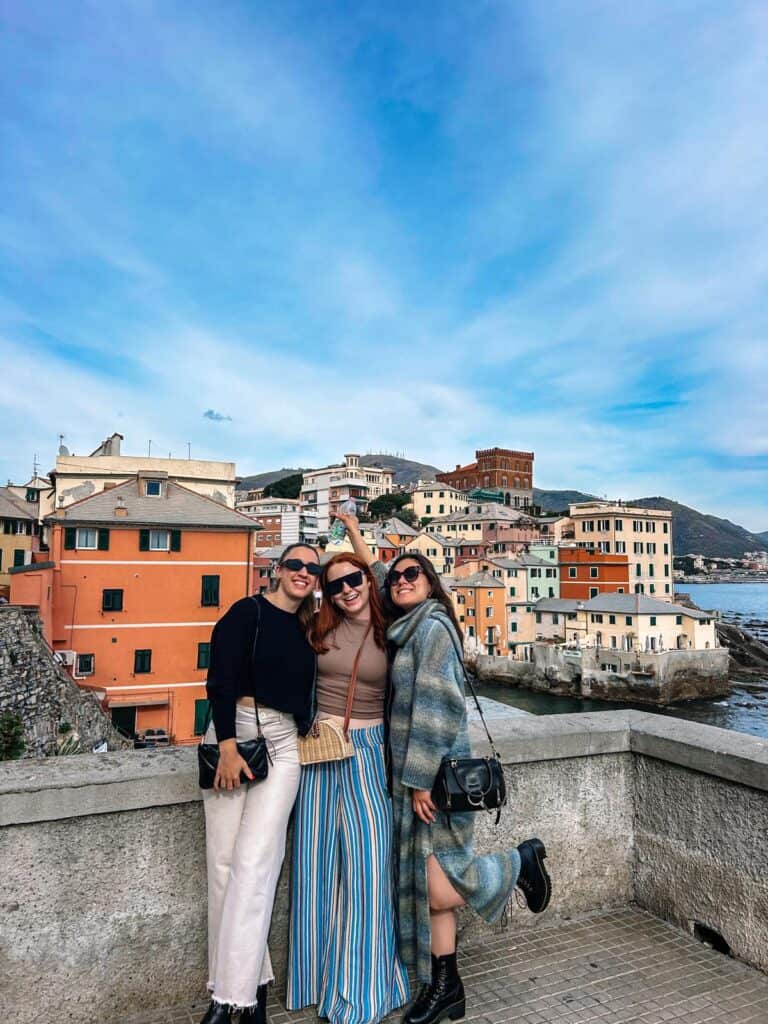
I would also highly recommend taking a city bus or taxi to Boccadasse, a quaint and scenic fishing village in Genoa, to watch a beautiful sunset and enjoy an aperol spritz with the sound of seagulls overhead and water lapping onto the pebbly beach.
Treat yourself to a meal at the upscale Ristorante Capo Santa Chiara, which overlooks the water, or at Creuza de Ma, a small, nautical-themed restaurant.
Day 3 – Aquarium and Final Sightseeing
Day 3 is a more relaxed day to finish up any final sightseeing within the city and enjoy one of Genoa’s biggest attractions — the aquarium.
Genoa Aquarium
I think one of my biggest mistakes, especially as an animal lover, was not making space in my itinerary for the aquarium. It’s located right on the port and easy to get to, with admission for adults starting at 25 euros. This is also a great activity if you get any rain or bad weather since it’s indoors.
Spend time soaking up the rest of the city and seeing places you haven’t checked off the list yet. If you’re in search of hidden gems, look no further than this hidden treasures walking tour which focuses on “hidden treasures” of the city and street food.
If the weather is looking promising and you’re in need of more ocean air, book this private sailing trip to relax and learn about the coastline from a skipper, with time to swim and enjoy a delicious lunch. Seeing the city from the water is sure to be unforgettable.

Palazzo Spinola National Gallery
Since it was raining during a lot of my trip, I trekked to the Palazzo Spinola National Gallery on my last day for some final exploring and was pleasantly surprised. The museum is absolutely stunning inside and can be enjoyed by history buffs and onlookers alike.
Think elaborate chandeliers and walls, art in every room and even a kitchen set-up to immerse the visitor in history.
Insider Tip: You can purchase a Genova Museum card for just 15 euros, and it includes one-time access to 28 city museums for 24 hours as well as public transport.
MOG Mercato Orientale
Grab lunch or simply just meander around the MOG Mercato Orientale, a bustling indoor market and food court with options galore and a wide variety of vendors. I am gluten intolerant and was able to find gluten-free flatbread to munch on while my friends chowed down on pasta. It’s also located on the same street mentioned above — Via XX Settembre.
End the day on a high note by trying more mouth-watering Ligurian food at a smaller, more intimate place like Locanda degli Artisti or the more casual Panino Marino, which is right on the harbor.
Your last day can really be tailored to whatever experience you are looking for, Genoa can be enjoyed in so many different ways. But I think above all, you should end your trip with a scoop or two of gelato.

Day 4 – Cinque Terre Day Trip
On day 4 you’ll be exploring one of the most beautiful and popular destinations in Italy – the famous Cinque Terre. This is a stretch of coast encompassing five gorgeous seaside towns with incredible views and fabulous beaches.
The best way to experience Cinque Terre is by joining this private tour with pickup in Genoa. For a more budget alternative hop on the train and explore on your own accord. Whichever option you choose make sure to book this boat tour for the most breathtaking views. Cinque Terre really is best experienced from the sea!
If you want to get the incline walking out of the way first and end with the flatter towns, take the train to the furthest town — Riomaggiore — and work your way back. Riomaggiore and Manarola have some of the steepest inclines out of the towns.
Insider tip: If you’re in a big walking mood, you can also take the 300+ steps to reach Corniglia or even hike between towns for a real workout.
Monterosso al Mare
I would recommend starting with the closest town and largest of the five, Monterosso. To hit all five towns, there is a train pass you can buy for as low as 19.50 euros in the “low season” which includes March, April, May and October. This grants unlimited train travel between the towns, access to hiking paths, bathroom access at stations and more.
Once you’re off the train, spend time exploring the new town, which sports yellow umbrellas dotting the beach, various hotels and restaurants lining the main “via”.
Make sure to check out the Statua del Gigante from the beach, a giant statue jutting out from rocks that represents Neptune, the god of the sea.
Once you’ve seen enough, cross through the tunnel past the train station to reach the old town, which feels like stepping back in time.
Before descending, walk up to the Statua di San Francesco d’Assisi for spectacular ocean views and a cliffside view of the rest of Monterosso. Walk further up to the San Francesco Church, where major artworks are kept.
Climb down and wander through the picture-perfect old town, shop in the local stores and grab a bite to eat. Don’t miss the Church of San Giovanni Battista, a gothic-genovese style church in the center of town.
Snap some final pics, maybe grab an aperol spritz to-go (my highlight of the trip) and trek on to the next town.
Vernazza
Vernazza is the second town on the coast and characterized by its v-shaped harbor and classified as one of the most beautiful villages in Italy, according to the Cinque Terre website.
The town is definitely more hilly than Monterosso but still doable. Wander in the Church of St. Margaret of Antioch, a small harborside church with a stone build. The views of the water crashing against the shore from the windows are breathtaking and the whole place emulates a sense of peace and calm.
You can also easily get lost going up steps and stumble upon a beautiful lookout tucked away at the top. If you’re feeling up for another uphill challenge, walk up steep steps to reach the Ruins of Doria Tower, an ancient hilltop castle with panoramic views of the town and beyond.
Explore the town more, maybe grab a gelato or another spritz and then start heading back to the train station to continue your journey.
Corniglia
The smallest of the towns, Corniglia is the least popular of all due to its size and limited accessibility. It rests 100 meters above sea and is reachable by climbing 382 stairs to the top or by taking a shuttle bus from the train station.
Once you reach the top, the town itself is actually relatively flat. I found it to be charming due to its more local feel, adorable cafes and restaurants, and sweeping view of the Ligurian Sea.
Once you take in the views, head to the Parish of San Pietro, an old church on the way to the center of town. Then, on to the Oratory of Santa Caterina, another historic church more in the center.
If you haven’t yet, grab a meal or snack from a cafe or restaurant, Corniglia has a handful of highly rated options and it’s likely less crowded than those of other towns. Once you’ve had your fill of the town, hop on the train to the next town — Manarola.
Insider tip: Manarola, specifically the Manarola Overlook Viewpoint, is known to be an amazing place to watch the sunset.

Manarola
The third town, Manarola, is built on a rock towering over the sea with a tiny boat ramp and “harbor” area. There is no beach, but plenty of cliffs to jump from and great deep-water swimming.
Unlike the others, this town is very up and down, with some very steep inclines, so prepare yourself. Walk to the Overlook Viewpoint to catch a stunning glimpse of the sea and shoreline then head inward to the Church of San Lorenzo, yet another historic church built in the Gothic Ligurian style.
If you have the right shoes you can hike up to Volastra, one of the oldest villages in the Cinque Terre National Park which is nestled above Manarola and amidst vineyards. Here, you can see the Parrocchia di Nostra Signora della Salute, a small Catholic church. Traverse through the tiny town, where you can walk amongst olive groves, before heading back down.
If you still haven’t found a place to grab a meal or aperitivo, or already have and are wanting even more, the highly rated Nessun Dorma is a seaside restaurant with beautiful views and good food.
Stroll around the winding streets one last time and then ready for your final destination and the fifth town.
Riomaggiore
Dubbed the most romantic of all the towns, Riomaggiore boasts a small picturesque harbor and pebble beach surrounded by pastel houses.
If you’re up for more of a hike, trek to the Sanctuary of Our Lady of Montenero, a remote Catholic church and monastery that also overlooks the ocean but from the wide, white arches of the structure.
Although it was mentioned on the website which appears to be updated, as of July 2024, Google Maps has it listed as temporarily closed. Make sure to check this before hiking all the way up and realizing it’s not accessible.
Riomaggiore has more of a younger feel to it and is even recommended for couples by the Cinque Terre website. Unlike the other towns, there is more of buzzing nightlife, with restaurants and bars staying open until 1 a.m.
But like the other towns, Riomaggiore has not just one church but two — the Church of San Lorenzo, with a stunning rose window dating back to the 14th century, and the Church of San Giovanni Battista. There is also the Castle of Riomaggiore, built in the 13th century, with beautiful seaside views.
The famous footpath from Riomaggiore to Manarola, Via dell’Amore is finally reopening this year on July 27th after being closed due to a landslide. It’s only half an hour and noted as being easy, so it would be a perfect trail for those not particularly in a hiking mood but wanting to trek a little by foot.
Relax and enjoy your final Cinque Terre town. Whether it be another aperitivo or more gelato, you deserve it after hitting five separate towns in one day.

Genoa 2 day itinerary
If you can’t spend more than 2 days in Genoa, no worries. Here is an adaption of the longer itinerary that is shortened just to catch the main attractions of the city.
Day 1 – Piazzas and Palazzos
Start by getting to know the city center. I highly recommend booking this walking tour to make the most of your time. Or, if you prefer to eat your way through Genova, book this food tour to combine sightseeing with delicious tastings.
Walk around the Porto Antico and then venture into the heart of the city to see the famous palazzos, such as:
- Palazzo Podestà
- Palazzo Spinola National Gallery
- Palazzo Grimaldi della Meridiana
Hit these famous piazzas:
- Piazza de Ferrari
- Piazza San Giorgio
- Piazza Banchi
And check out these landmarks:
- Porta dei Vacca
- Porta dell’Olivella
- La Casa di Colombo
- Cattedrale di San Lorenzo – Duomo di Genova
- Basilica di Santa Maria Asunta in Carignano
- Royal Palace Museum
Day 2 – Aquarium and Boccadasse
Check out the renowned Genoa Aquarium in the morning and explore more of the port and streets around it. Catch a bus or taxi to the nearby district of Boccadasse and enjoy a sunset here.

1 day in Genoa itinerary
If you only have one day to spare, I would highly recommend just booking a walking tour to ensure you can see as much of the city as possible. This private walking tour led by a local is fully personalized and tailored to the interests of the traveler.
That way, you can spend as much time as you want sightseeing and also learn about the city from someone with expertise.
To hit the main highlights of the city, I would suggest the following itinerary:
Morning – Genoa essentials
Find your way to Piazza de Ferrari, a famous piazza in the center of the old town. Then take a short walk to Porta Soprana, a towered gate from the city’s past. Circle back to the San Lorenzo Cathedral, a Romanesque Cathedral sporting a black and white striped exterior.
Head towards the Porto Antico and walk along the harbor, a must-see in the port city. Then head back in the center and pass by Basilica di Santa Maria Assunta in Carignano, a beautiful baroque structure. Now, it’s time for some palatable Ligurian food.
Afternoon – Modern Genoa
If you’re craving more of a restaurant atmosphere to rest a bit from all the sightseeing, I would recommend a place like the modern and bright Strakkino for pizza.
Or if you’re up for more action, MOG Mercato Orientale, located on the shopping street Via XX Settembre, is a hustling and bustling market with several Italian food options and a sit-down food court area.
Do some shopping on the street if you’re in the mood and then continue on to the Palazzo Spinola National Gallery, a grandiose restored aristocratic home turned art museum from the 16th century. This was one of the highlights of my trip and I’m so glad I didn’t skip!

Evening – Boccadasse
Take a city bus or taxi to the charming village of Boccadasse, where you can lay on a small beach in warmer months or just walk around appreciating the scenery. You can stop by the panoramic viewpoint for sweeping views of the coastline and then walk down to take in the small harbor and architecture.
I would recommend getting here by sunset to enjoy it after a long day of walking and find a place to eat, such as the upscale Ristorante Capo Santa Chiara or the intimate Creuza de Ma.
One of my rules when traveling in Italy is to never skip on gelato, so treat yourself to one from one of the many gelato shops in the nearby radius.

Getting to Genoa
By air: Genova has its own airport — the Aeroporto di Genova or Genova City Airport is just a ten minute drive to the Porto Antico. You can reach the center of the city by a connection bus between the airport and city, via a train and bus, taxi or rental car. Tickets can be purchased online or at the airport.
By bus: Using services such as FlixBus to arrive in the city are probably some of the cheapest options, but definitely time-consuming and not always reliable. I took a bus from Venice which took roughly 6 hours, and while I saved money, I wouldn’t do it again. On the way back, my bus did not have a working bathroom and we frequently got stuck in traffic. I nearly missed my flight from the Venice airport. Keep this in mind if your final return destination is not in Italy.
By train: Genoa has multiple train stations and is well-connected with the rest of Italy and Europe. Keep in mind which station you arrive at since you may need to walk a bit to get to your accommodation or take a bus or taxi.
By car: Driving a car to Genoa is an option, just be aware it means taking some mountainous roads which are narrow and windy. You also may encounter traffic depending on when and where you are coming from, so this could add time to your travels. Be sure to look up parking information about where you are staying and ask them for tips on getting around if you plan to use the car during your stay.
You can also book a private transfer from the airport to the city here if you don’t want the stress of driving yourself. If you have a group, you can split the cost and make it more affordable.
By boat: The port city can be accessed via ferry as a main connection point from Sicily, Sardinia, Corsica, Spain and even North Africa. This is definitely not a fast way of traveling but it does mean more leg room and great views.
Getting around Genoa
Since Genoa is the capital of the region and a good sized city, it has multiple types of public transportation. The easiest and cheapest would be using the city’s bus offerings for getting around the city. Download the AMT Genova app to get tickets to buses and find routes.
The city also has an operating metro which is fast and easy to use. There are several stations throughout the city.
The Genoa train stations are the best option for day trips along the coast. Tickets can be purchased day-of and are relatively affordable.
Top Tip: Find your train by using the route lists in the stations, your ticket may not have the train information on it. Make sure to validate it before getting on to avoid a fine.
To reach higher parts of the city, you can use funiculars and elevators to save an unnecessary workout. You can also utilize a 24-hour Hop-on Hop-off bus to easily see many of the main attractions minus the walking. You can buy tickets for the bus here.
As an avid walker, I maintain that walking simply is the best way to get around. The main part of the city is very walkable and flat and it allows you to stumble upon charming side streets, get whiffs of homemade pesto, and feel more like a local.

Best time to visit Genoa
Like many places, the best time to visit Genoa is during the shoulder season from April to June and then from September to October. The weather will be warm but not as hot as its southern Italian counterparts and it will be great for sightseeing.
I visited in late March and while I did love my time in the city, the weather was far from ideal. It was cold and rainy almost the entire time and made it hard to really take in the architecture and colors of the city.
If you’re visiting around that time I would strongly recommend packing an umbrella and rain gear in the event that you get some showers.
Is Genoa worth visiting?
I think Genoa is absolutely worth visiting. In my opinion, it is very underrated and I had barely heard of it besides the term “Genoa salami” before visiting, but I think the lack of tourists also adds to its appeal.
I also found it to be cheaper than expected, despite being the capital of the region and the sixth-largest city in Italy. If you’re dying to visit places like Portofino or Cinque Terre, staying in Genoa is way more affordable and you can experience more than one city on the coast.
The pesto and focaccia bread alone is enough for me as a foodie, but there are some great restaurant options that range in price.
The main draw of the city is really its architecture and history. But even if you have no interest in any of that, Genoa still captures the heart of many with its bright colors, sea breeze and quintessential Italian piazzas and palazzos.

About the author: Maddie Brechtel
An American expat living in Spain, Maddie enjoys immersive travel experiences focused on language practice, local interactions, and deep dives into the culture and history.
A passionate travel enthusiast, she recently explored northwestern Italy, indulging in pesto, capturing moments through photography, and embarking on trains. With a growing love for Italy, Maddie plans to embark on many more adventures in the country and dreams of returning to the region.
Having explored multiple European countries, she documents her travels and life on her blog, Life of Mads.