Complete Guide to Locorotondo Puglia: Things to do in Locorotondo and how to visit

If you’re looking for the best things to do in Locorotondo, start with one important expectation check: this is not a town packed with major attractions. Locorotondo is small, quiet, and best enjoyed slowly.
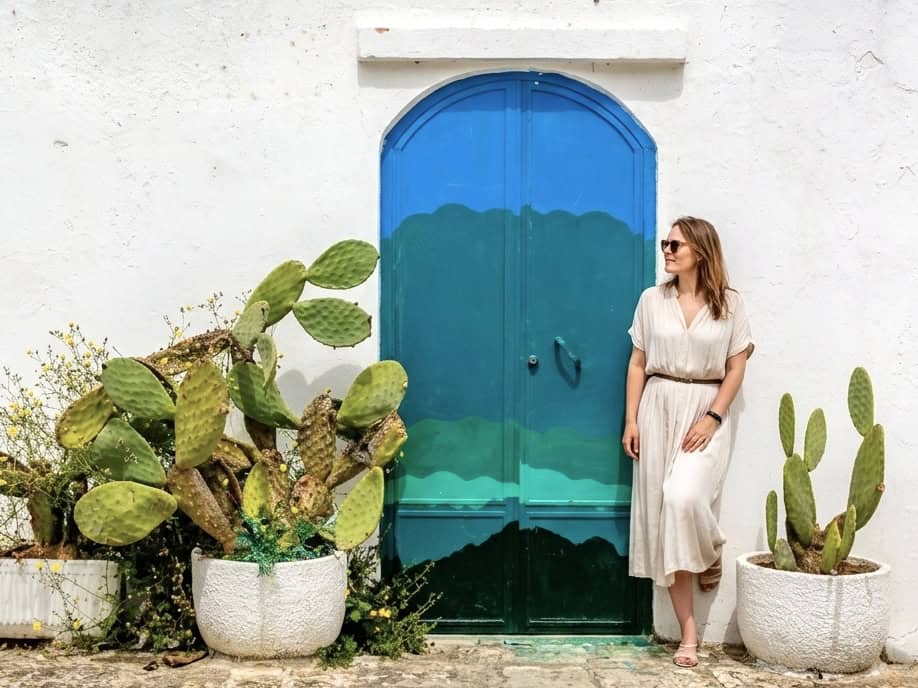
The historic center is the main event here. You come for the whitewashed lanes, the traditional cummerse houses, the views over the Valle d’Itria, and that easy Puglia rhythm where “just a quick walk” somehow turns into coffee, wine, photos, and a long lunch.
.
I visited Locorotondo on a Puglia road trip, and while I personally preferred nearby Cisternino for food and local feel, Locorotondo is prettier in that clean, bright, postcard-ready way. It feels more polished than some of the surrounding towns, but still small enough that you can see the highlights in just a couple of hours.
This guide covers what to do in Locorotondo, what not to miss just outside of town, how long you actually need, where to eat and drink, and the small details that most quick guides miss.

Why Visit Locorotondo
Locorotondo is one of the prettiest towns in Puglia, but don’t come expecting a long list of major attractions. The real reason to visit Locorotondo is much simpler: whitewashed lanes, cummerse rooftops, valley views, local wine, and that slow Valle d’Itria atmosphere that makes you want to linger over one more glass.
It’s small. And that’s the whole point.
The historic center is compact and easy to explore in 1–2 hours, which makes Locorotondo perfect as a quick stop between Alberobello, Martina Franca, Cisternino, and Ostuni. But if you have time, stay longer for lunch, aperitivo, or golden hour along Via Nardelli.
I liked Locorotondo, but I’ll be honest: I personally preferred Cisternino. It felt a little less polished and more local, and the food scene won me over. That said, Locorotondo is arguably prettier at first glance.
Where to Stay in Locorotondo
Locorotondo is best for travelers who want a quiet Valle d’Itria base rather than a busy city stay. Choose the historic center if you want to walk everywhere, or stay in the surrounding countryside if you want a pool, parking, trulli, and easier access to nearby towns.
Sotto Le Cummerse — OLD TOWN CHARACTER
Stay here if you want the most Locorotondo-feeling stay, with rooms and apartments set inside traditional buildings in the historic center.
Ottolire Resort — COUNTRYSIDE LUXURY
Peaceful countryside stay outside Locorotondo, with trulli-inspired architecture, a pool, restaurant, parking and more space to breathe.
Leonardo Trulli Resort — ROMANTIC TRULLI ESCAPE
Stay here if you want a quiet rural base with classic Valle d’Itria charm. Wake up among greenery, stone buildings, and countryside views rather than inside the historic center.

15 Best Things to Do in Locorotondo
Wander the Whitewashed Historic Center
The best thing to do in Locorotondo is also the simplest: walk around the historic center with no real agenda.
Locorotondo’s old town is small, circular, and ridiculously pretty. Think narrow lanes, whitewashed houses, flower pots, stone staircases, tiny balconies, arches, and perfectly framed corners that look like someone designed them for Pinterest.
I’d start around Piazza Vittorio Emanuele II, then walk through Porta Napoli into the old town. From there, just follow the lanes. Locorotondo is compact enough that you won’t really get lost, but it’s also maze-like enough that you’ll keep finding new corners.
Also keep an eye out for:
- old stone portals
- small shrines
- decorative balconies
- narrow staircases
- tiny courtyards
- laundry hanging between whitewashed walls
This is also why I wouldn’t rush Locorotondo as a 30-minute photo stop. Yes, you can see it quickly, but the charm is in slowing down a little.
Locorotondo is easy to explore on your own, but this guided tour can be worth it if you want to understand what you’re actually looking at. It gives you the stories behind the architecture, local traditions, and historic details that are easy to miss.

Admire the Cummerse Rooftops
One of the most distinctive things about Locorotondo are its cummerse.
These are the traditional narrow houses with steep, sloping roofs made from local stone slabs. They are one of the architectural features that make Locorotondo different from other towns in Valle d’Itria.
Everyone talks about trulli in Alberobello, but Locorotondo’s cummerse are just as important to the town’s identity. They give the old town a slightly different look from the rest of Puglia — still whitewashed and southern Italian, but with these tall, pitched rooftops that almost feel unexpected here.
Did you know? The word cummersa is linked to the pointy roof shape itself and derived from the latin word cum vertice. These steep roofs were practical, not just pretty as they helped with rainwater drainage and suited the local building materials.

Walk Via Nardelli, Locorotondo’s “Lungomare”
This panoramic street runs along the edge of the historic center and is often nicknamed Locorotondo’s Lungomare which is funny because there is absolutely no sea here.
Instead of water views, you get views over the Valle d’Itria, with olive groves, vineyards, dry-stone walls, trulli, and countryside stretching out below the town.
This is also a great spot for a coffee, a glass of wine, or an aperitivo. I highly recommend Pavi’ Wine Bar or Bel Sit for unbeatable views.
Try Locorotondo DOC Wine
Locorotondo is one of the best towns in Puglia for wine lovers, especially if you like crisp white wines.
The area is known local white wine typically made from native grape varieties such as Verdeca and Bianco d’Alessano. It’s usually fresh, dry, and easy to drink, exactly the kind of wine that makes sense with Puglia’s food, heat, and long lunches.
You can keep this very simple and order a glass with lunch, but if you’re interested in wine, I’d honestly book a proper tasting. You’ll understand the area better, and you won’t just be randomly pointing at a wine list pretending you know what’s going on.

Admire Baroque Details on Palazzo Morelli
Palazzo Morelli is one of the most beautiful buildings in Locorotondo’s historic center.
You’ll recognize it by its ornate Baroque doorway, decorative stonework, and elegant wrought-iron balconies. It’s not a huge attraction, and in most cases you’ll mainly admire it from the outside, but it’s absolutely worth including in your walk.
Look closely at the balconies and the carved details around the entrance. They’re a nice contrast to the otherwise simple whitewashed lanes.
Take in the View from Villa Comunale
Right next to the old town, Villa Comunale is not a villa, but rather a small park with one of the best viewpoints in Locorotondo.
Don’t expect some grand botanical garden situation. It’s more of a peaceful terrace with trees, benches, and views.

Visit Locorotondo’s Historic Churches
Locorotondo has several churches worth seeing, but I’d keep this simple: don’t turn your visit into a church checklist.
The most important one is Chiesa Madre di San Giorgio, the main church in the historic center. It’s dedicated to Saint George and sits right in the old town, so you’ll almost certainly pass it while wandering.
Also look for Chiesa della Madonna della Greca, one of the oldest churches in Locorotondo. It’s smaller and more understated, but historically important and worth a quick stop if it’s open.
You may also come across Chiesa dell’Addolorata and other smaller chapels tucked into the streets. These are nice to notice as part of the town’s atmosphere rather than as standalone must-sees.
Top tip: Church opening hours can be inconsistent, especially in smaller towns. If a church is open, pop in. If it’s closed, don’t stress. You’re not missing the Sistine Chapel.

Find the Torre Civica and Palazzo Comunale
s you wander Locorotondo’s historic center, make a quick stop by the Torre Civica and Palazzo Comunale, close to Palazzo Morelli.
The Palazzo Comunale was the town’s old civic building, once home to the local administration. In older Italian sources, you may see this referred to as the Università, which meant the town’s governing body, not an actual university.
Attached to it is the Torre Civica, the civic clock tower. It’s a small but useful landmark, with a clock on the facade and bells at the top.
Create a Stone Souvenir
If you want to do something more hands-on in Locorotondo, this stone souvenir workshop is one of the more unique local experiences.
Instead of just walking around the white stone streets, you actually work with local stone and create something to take home. That’s a much more interesting souvenir than another magnet.
It’s also a good option if the weather is bad, which can happen even in Puglia (hence the pointy roofs!). I visited Puglia around Easter and had some truly awful weather, so I fully support having a non-weather-dependent activity in your back pocket, and this one is so much fun!


Browse Boutiques, Ceramics, and Local Shops
Locorotondo’s historic center has a handful of small boutiques, ceramic shops, and local stores that are worth browsing as you wander.
You’ll find small design pieces, ceramics, local crafts, pretty homeware, and little things that actually feel connected to the place. If you’re already visiting Alberobello, Ostuni, and Polignano a Mare, you’ll see plenty of souvenir shops, but Locorotondo feels a bit calmer and less aggressive about it.
Look for the hanging Quarantane During Lent
If you visit Locorotondo between Carnival and Easter, look up. You may see dark rag dolls hanging above the streets. These are usually called Quarantane or Quarantene, traditional Lent figures found in parts of Puglia.
The name comes from quaranta, the Italian word for forty. That links directly to Quaresima, the 40-day period of Lent before Easter.
At first glance, they can look like witches, which is why visitors often wonder what on earth is going on. But they’re not Halloween decorations and they’re not random spooky dolls.
Did you know? The Quarantana is traditionally represented as an old woman dressed in dark clothing. In some places, she symbolizes the austere period of Lent after the excess of Carnival.

See Locorotondo from the Panoramic Viewpoint
Most Locorotondo guides focus on the views from town, especially along Via Nardelli and Villa Comunale. But one of the best views is actually of Locorotondo itself.
For that classic postcard angle, head to this panoramic viewpoint just outside the historic center. From here, you can see Locorotondo sitting on its hill, with its whitewashed houses clustered together and the cummerse rooftops rising above the countryside.
Follow the Strada dei Vini DOC
If you have a car (or bike!) and want to turn Locorotondo into a bigger countryside experience, follow part of the Strada dei Vini DOC.
This wine route connects Locorotondo with Martina Franca and the wider Valle d’Itria wine area. It passes through some of the prettiest landscapes in inland Puglia: vineyards, olive groves, almond trees, trulli, rural houses, and old masserie.
This is a great option if you want to experience the landscape around Locorotondo instead of only seeing the historic center. The town itself is beautiful, but the countryside is a huge part of the appeal.
Top tip: Don’t combine a self-drive wine route with heavy tastings. Either choose one proper winery stop and keep it sensible, or book a tasting that works with your transport plans.
Visit Trullo Marziolla
Trullo Marziolla is often described as one of the oldest known trulli in the Valle d’Itria area, with a date linked to the 1500s.
You usually can’t visit the inside, so this is not a major attraction, but it’s a nice quick detour if you’re interested in the history of trulli and have a car and flexibility for the stop. But I wouldn’t go out of my way for it.
Did you know? Most people associate trulli with Alberobello, but these cone-roofed stone buildings are scattered all over the countryside around Locorotondo, Martina Franca, Cisternino, and beyond.

Take a Cooking Class
If you want to add a food experience to your Locorotondo visit, this cooking class is a really nice option, especially if you’re staying in Valle d’Itria for more than one night.
The experience starts with a welcome at the winery and a short introduction to the local wine region. Then, guided by local chefs and winemakers, you’ll learn how to prepare traditional Apulian dishes using fresh, seasonal ingredients.
Expect the focus to be on proper local cooking rather than fancy restaurant food. Think handmade pasta, countryside recipes, simple ingredients, and the kind of dishes that make Puglia so good for food travel.
During the class, you’ll also taste the winery’s wines and learn which bottles pair best with the dishes you’re making. At the end, you sit down to eat what you prepared, with local wine, in a relaxed winery setting.

How Many Days in Locorotondo
You only need 1–2 hours to see Locorotondo. The historic center is tiny, and you can easily wander the whitewashed lanes, admire the cummerse rooftops, walk Via Nardelli, and stop at Villa Comunale in one short visit.
That said, I’d allow half a day if you want to slow down, take photos, stop for coffee, try local wine, or stay for lunch.
Locorotondo also works well as a Valle d’Itria base. If you’re using it to explore Alberobello, Martina Franca, Cisternino, Ostuni, and Ceglie Messapica, stay 1–2 nights.
My take: I wouldn’t dedicate a full sightseeing day to Locorotondo alone, but I would stay overnight if you want a quiet, pretty base in Valle d’Itria.
Getting to Locorotondo
Locorotondo is easiest to visit by car, especially as part of a wider Puglia road trip.
- By Car: Renting a car in Puglia is the best option for flexibility. I rented a car from Bari Airport, and it made visiting Locorotondo and the surrounding towns much easier.
- By Train: Locorotondo has a small station with regional links to nearby towns like Alberobello and Martina Franca. Check schedules carefully, as services can be limited.
- By Bus: Buses are available, but timings can be awkward. Fine for slow travel, not ideal for a packed itinerary.
Parking in Locorotondo
Park outside the historic center and walk in. Don’t drive into the old town unless you enjoy narrow lanes and ZTL fines.
There is a big underground parking near Piazza Aldo Moro just outside the old town. You could also try your luck with street parking on Corso XX Settembre. I managed to get a free parking spot just off of Via Martina Franca near the garage which I’m still impressed with.
Getting Around Locorotondo
Locorotondo is best explored on foot. The historic center is compact, walkable, and easy to cover in one loop.
- Walking: Best for the old town, Via Nardelli, Villa Comunale, Palazzo Morelli, churches, and cummerse lanes.
- By Car: Not needed inside town, but useful if Locorotondo is your base for Valle d’Itria.
- By Bike / E-bike: Good for the surrounding countryside and wine roads, not necessary inside the old town.
- By Taxi: Limited. Arrange transfers in advance through your accommodation.
- By Tour: If you want local context, book this guided tour of Locorotondo for the historic center, architecture, and main sights.


Where to Eat and Drink in Locorotondo
Locorotondo is a good place for a slow lunch, aperitivo, or dinner with local wine. Expect Puglian staples like fresh pasta, burrata, seasonal vegetables, olive oil, antipasti, and crisp local white wines.
- Pavì for wine and a modern meal — Good for aperitivo or dinner with views.
- Vinifera Vini & Affini for wine lovers — Best if you want to try regional bottles.
- Controra for a relaxed local meal — A solid old-town option.
- Ombre e Fioi for aperitivo — Incredible cocktails and taglieri too pretty to eat.
- Osteria Il Rosone for traditional dishes — Good for classic Puglian food.
- Casa Pinto for a more polished dinner — Better for a slower evening meal.
- Ai Tre Santi for an easy central stop — Convenient and simple.
For more than just a glass with dinner, book this Locorotondo wine tasting to learn about local Apulian wines properly.
For food lovers, book this cooking class at a winery near Locorotondo for handmade pasta, local recipes, wine pairings, and a relaxed meal at the end.
Is Locorotondo Worth Visiting?
Locorotondo is worth visiting for its whitewashed historic center, cummerse rooftops, valley views, local wine, and slow-town atmosphere.
It pairs easily with Alberobello, Martina Franca, Cisternino, or Ostuni, so it makes a great short stop on a Puglia itinerary.
Honest take: I liked Locorotondo, but I preferred Cisternino. Locorotondo is prettier; Cisternino felt more local and had better food appeal.
Best Time to Visit Locorotondo
The best time to visit Locorotondo is spring or early autumn, especially late April, May, September, and early October.
I visited Puglia around Easter. It can be busy then, but bad weather kept things quiet. Not ideal for photos, great for avoiding crowds. We take the wins where we find them.
Are you planning a trip to Puglia?
Puglia looks easy on a map, but it’s bigger, more spread out, and more varied than many people expect. Where you stay, how you get around, and which towns you prioritize can make a huge difference to your trip.
Before you book anything, check out all our Puglia guides and itineraries too.