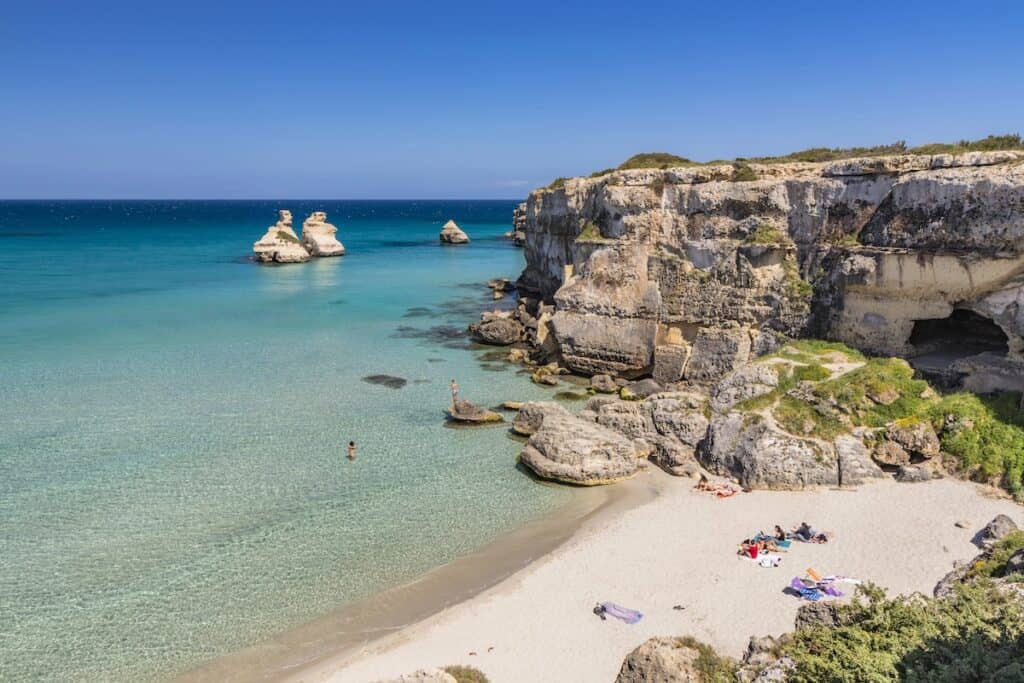
16 Wonderful Things To Do in Ostuni, Puglia

Ostuni is one of the most beautiful towns in Puglia, and the kind of place that actually lives up to the photos. The historic center is a maze of whitewashed houses, narrow lanes, staircases, arches, tiny shops, and sudden views over olive groves rolling toward the Adriatic.
I visited Ostuni twice because the first visit came with terrible weather, and I didn’t feel like I had seen the town properly. I’m glad I went back. The old town is gorgeous, but the views from outside the center are what really made Ostuni stand out for me.
.
Ostuni is not a town you visit for a long checklist of major monuments. The best things to do in Ostuni are slower and more atmospheric: wander the old town, follow the viewpoints, stop for ridiculously good food, and stay long enough to see the city glow at sunset.
This guide focuses mostly on what to do in Ostuni itself, with a few worthwhile beaches, food experiences, and countryside activities included at the end.
Planning in a hurry?
Book the Best Ostuni Tours & Experiences:
Wine Tour from Ostuni with Lunch
Stay at:
Dama Bianca Boutique Hotel
Where is Ostuni and Why Visit
Ostuni is in Puglia, southern Italy, in the province of Brindisi. It sits on a hill about 8 km from the Adriatic coast, surrounded by olive groves and countryside, with views stretching toward the sea on a clear day.
You should visit Ostuni if you want one of the most beautiful historic towns in Puglia, but with a little more going on than just a pretty main square.
Ostuni is one of the most popular towns in the Valle d’Itria area, although technically it sits just south of the main towns like Alberobello, Locorotondo, and Cisternino. Ostuni is often called La Città Bianca, or The White City, because of its whitewashed old town stacked dramatically on the hillside.

One Day in Ostuni: Suggested Walking Route
If you only have one day in Ostuni, follow this loose route so you see the old town, views, food stops, and sunset without zigzagging all over the place.
1. Start in Piazza della Libertà
2. Grab pasticciotti near Piazza Pietro
Sansone
3. Join a guided tour
4. Visit Ostuni Cathedral and Arco Scoppa
6. Find Porta Azzurra
7. Have lunch at Doppio Gusto
8. Walk beneath the old town walls
9. Photograph Ostuni from outside the old town
10. Return for sunset drinks and dinner
The best things to do in Ostuni are simple, but memorable: wander the whitewashed streets, climb through the old town to the Cathedral, stop for sunset drinks with a view, eat properly good Puglian food, and photograph the city from outside the historic center.
Ostuni is also a smart base on a Puglia road trip because it’s close to the coast, near several Valle d’Itria towns, and easy to combine with beaches, masserie, wine tastings, and countryside food experiences.


Where to Stay in Ostuni
Staying in the old town sounds romantic, and it can be, but remember that Ostuni is steep, the historic center is pedestrian only, and dragging luggage through narrow stone lanes is not exactly a wellness retreat.
If you’re arriving by car, I’d seriously consider staying just outside the old town or near the city walls instead.
-

RELATED:
Where to Stay in Ostuni, Puglia
I stayed just outside the historic center because I wanted easier parking and luggage logistics, and I’d do the same again.
Some accommodations outside the old town also have incredible views back toward the White City, the olive groves, and even the sea, which can be better than staying deep inside the maze.
Il Sogno delle Benedettine — OLD TOWN ATMOSPHERE
Stay here if you want the full historic-center experience with character, charm, and that “sleeping inside the old town” feeling. Pack light though! Ostuni’s old lanes are beautiful, but they are not gentle on luggage.
VISTA Ostuni — BY THE WALLS
Book this for a polished luxury stay close to the old town without being buried too deep in the narrow lanes. The location near the walls gives you easy access to the historic center while keeping things more spacious and refined.
Dama Bianca Boutique Hotel — BOUTIQUE STYLE
Stay here if you want a boutique base outside the densest part of town, with easier logistics and a calmer feel. This is a smart choice if you’re driving through Puglia and want the Ostuni experience without the parking headaches.

15 Best Things to Do in Ostuni
1. Take a Guided Tour of Ostuni’s Old Town
The best way to start your visit is with this walking tour or this tuk-tuk tour especially if this is your first time in the city.
Ostuni is gorgeous to wander on your own, but it’s also the kind of place where you can easily walk past centuries of history while distracted by yet another whitewashed staircase covered in plants.
Ostuni’s historic center is compact, steep, and maze-like, with lanes twisting around the hill toward the Cathedral at the top.
A good guide helps you understand why the city looks the way it does, how the old town developed, and what you’re actually seeing around places like Piazza della Libertà, Via Cattedrale, Ostuni Cathedral, and Arco Scoppa.
You have two main options: this walking tour or this tuk-tuk tour.
The walking tour is best if you want history, context, and a slower look at the old town. You’ll cover the main sights on foot, learn more about the city’s layout, and get a better sense of how Ostuni became known as La Città Bianca, or the White City.
The tuk-tuk tour is better if you’re short on time, visiting in peak summer heat, traveling with mobility issues, or just want an easy first look at the town before exploring on your own.
I’d especially recommend the tuk-tuk tour if you’re visiting during the hotter months. Ostuni’s white streets may look breezy and romantic in photos, but those uphill lanes under the Puglia sun are not playing around.
Don’t treat the tour as a replacement for wandering. Treat it as your orientation.
The best parts of Ostuni still happen when you turn down a random side street and suddenly find a view, a quiet staircase, or a tiny shop you would have missed otherwise.
Top tip: Take a tour early in your visit, then explore on your own afterwards. Ostuni is much more enjoyable once you understand the basic layout and know which viewpoints, alleys, and food stops are worth looping back to.

2. Get Lost in Ostuni’s Whitewashed Streets
After your tour (or instead of one, if you prefer exploring solo) the best thing to do in Ostuni is simply wander through the whitewashed old town.
Ostuni’s historic center is often called La Città Bianca, meaning The White City, because of its whitewashed buildings. The effect is especially striking in the old town, where the houses feel stacked together like sugar cubes on a hillside.
This is the part of Ostuni everyone comes for: narrow lanes, bright white houses, stone staircases, arches, little balconies, potted plants, painted doors, and glimpses of countryside and the Adriatic Sea appearing between buildings.
Ostuni is not a town to rush. It’s a town to get lost in.
The old town climbs up the hill in layers, so every few turns you either find yourself looking up toward another staircase or back down over the olive groves. Remember to turn around often. Some of the best views in Ostuni appear behind you, especially as you climb higher and the town opens up toward the countryside.
Insider tip: The easiest route into the old town is along Via Cattedrale, the main street leading from the lower part of the city toward Ostuni Cathedral. Think of it as your loose spine through the historic center. It helps you stay oriented without killing the joy of getting slightly lost. And you should get slightly lost.
Via Cattedrale has small shops, galleries, restaurants, souvenir stores, and pretty corners branching off into side streets. The temptation is to follow it straight up to the Cathedral, but don’t do that too quickly.
Duck into the side lanes, look back often, and take the slower route. Ostuni rewards the wanderers, not the people speed-walking to the next pin on Google Maps like they’re late for a dentist appointment.
I also found Google Maps pretty useless in the old town. The lanes are too narrow and tangled for it to be genuinely helpful at every turn. In my experience, it’s better to use the Cathedral, Piazza della Libertà, and the city walls as rough reference points, then let the rest unfold.
Did you know? Ostuni’s whitewashed look is not just decorative. The limewash helped keep homes cooler in the summer sun and was historically used for sanitation. Pretty and practical!

3. Start in Piazza della Libertà
Piazza della Libertà is the main square in Ostuni and the natural place to start exploring the old town. It sits just below the historic center, so it works as your orientation point before you climb up toward Via Cattedrale and the Cathedral which sits at the very top.
Insider tip: Use Piazza della Libertà as your meeting point if you’re traveling with someone. Ostuni’s old town can get confusing fast, and “meet me by that white wall near the stairs” is how friendships are tested.
The square is also one of the liveliest parts of Ostuni. You’ll find cafes, restaurants, locals passing through, visitors stopping for photos, and several important landmarks all packed into one relatively compact space.
The main sight here is the Colonna di Sant’Oronzo, a tall Baroque column dedicated to Saint Oronzo, Ostuni’s patron saint. You’ll see Saint Oronzo standing at the top, watching over the square like he’s supervising everyone’s aperitivo choices.
The column was built in the 18th century and is one of Ostuni’s most recognizable landmarks. Saint Oronzo is especially important in this part of Puglia, and you’ll see his name pop up in other towns too, including Lecce. In Ostuni, he is celebrated during the Festa di Sant’Oronzo, the city’s major patron saint festival in late August.
Around the square, you’ll also see Palazzo San Francesco, now Ostuni’s town hall, and the Church of San Francesco d’Assisi. The church and former Franciscan convent give the square a more historic feel, so it’s not just a convenient meeting point or coffee stop.
Piazza della Libertà is useful because it gives you that first sense of Ostuni’s layout: the newer part of town on one side, the old town rising above, and Via Cattedrale pulling you upward into the maze.
Did you know? Saint Oronzo is believed to have protected Ostuni from plague, which is one reason he became so important to the city. His column is not just decorative; it reflects the town’s religious identity and local history.

4. Try Pasticciotti at Pasticciotti Tradizionali
Before you climb too far into the old town, make a stop at Pasticciotti Tradizionali near Piazza Pietro Sansone.
This was one of my favorite food finds in Ostuni. In fact, the pasticciotti here were the best I had during my whole Puglia trip, and I did not approach that research casually!
A pasticciotto is a small pastry filled with custard, most closely associated with southern Puglia and especially Salento. The classic version has a shortcrust pastry shell and a rich crema pasticcera filling, baked until golden.
It looks simple, but when it’s good, it’s the kind of pastry that makes you briefly reach Nirvana. Crisp outside. Soft, warm custard inside.
Pro tip: Order the classic custard version first. Some bakeries offer variations, but the plain crema pasticcera version is the benchmark. If they can’t get that right, the pistachio one is not going to save the situation.
Pasticciotti are usually eaten for breakfast or as a sweet snack, often with coffee. You’ll find them across Puglia, but quality varies. Some are too dry, some are too sweet, and some taste like they’ve been sitting around waiting for emotional support.
The ones I had in at Pasticciotti Tradizionali were exactly what I wanted: fresh, rich, and properly satisfying without feeling heavy.

5. Visit Ostuni Cathedral
At the top of Ostuni’s old town, you’ll find Ostuni Cathedral, officially the Concattedrale di Santa Maria Assunta. This is the main historic landmark in the city and one of the places you should not skip, even if you’re mostly here for the whitewashed streets and views.
The Cathedral sits at the highest point of the historic center, which already makes the walk up feel like a small pilgrimage. A sweaty, slightly breathless pilgrimage if you’re visiting in summer, but still.
The church dates back to the 15th century and has a late Gothic style, which makes it stand out from the simpler white houses around it. The first thing you’ll notice is the facade. Ostuni Cathedral is known for its large rose window, one of the most distinctive architectural details in the city.
Did you know? Ostuni Cathedral is a co-cathedral, meaning it shares cathedral status within the local diocese. So yes, it has a slightly complicated religious title.
What I like is that the Cathedral does not feel isolated from the town. You approach it through narrow lanes and small openings, then suddenly the space widens and the church appears above you. It feels like the old town has been slowly building toward this moment.
Inside, the Cathedral is worth a quick visit if it’s open, but don’t just poke your head in and leave. Look up. The ceiling is the interior highlight, along with the side chapels, artworks, and carved wooden choir.
But the exterior and area around the Cathedral are the real highlights for me. This is where Ostuni starts to feel less like a pretty maze and more like a layered historic town.

6. See Arco Scoppa
Just a few steps from Ostuni Cathedral, Arco Scoppa is one of the most photographed sights in the old town. It’s a stone arch that connectsthe Bishop’s Palace with the Seminary Palace, near the Cathedral, creating one of those classic Ostuni views that looks almost too staged to be real.
Surrounded by pale stone, elegant facades, and narrow streets dropping away toward the lower city, the arch adds a little drama to the scene.
The original connection between the buildings was reportedly made from wood, but it was later replaced with the stone arch you see today. It gives this part of the city a slightly Venetian feel, though on a much smaller and quieter scale.
Insider tip: This area can get busy because it’s part of the classic old town route. If you want cleaner photos, go earlier in the morning or later in the day after the quickest day-trippers have moved on. And sit down for a coffee or Aperol spritz to enjoy the buzz.

7. Stop for the View at Borgo Antico or Bar Perso
For one of the best experiences in Ostuni, stop for a (yes, another) drink with a view at Borgo Antico or Bar Perso. Hydration is important after all, especially in the hot summer days.
Both spots sit in the upper part of the old town, where the whitewashed streets open up toward the countryside and sea. From here, you get that classic Ostuni moment: white buildings behind you, olive groves below, and the Adriatic somewhere in the distance.
The town is beautiful from the inside, but the views are what give it context. You suddenly understand that this is not just a pretty white village; it’s a hilltop city rising above one of the most iconic landscapes in Puglia.
Yes, drinks in scenic spots are usually more expensive. Shocking behavior from places with million-euro sunsets. But in Ostuni, I’d make the exception. This is exactly the kind of town where an aperitivo with a view feels like part of the experience, not just a break from sightseeing.
Pay a little extra for the view. It’s worth it.
If you’re visiting in high season, try to arrive early or book if possible. The best tables go quickly, especially around sunset.
8. Find Porta Azzurra
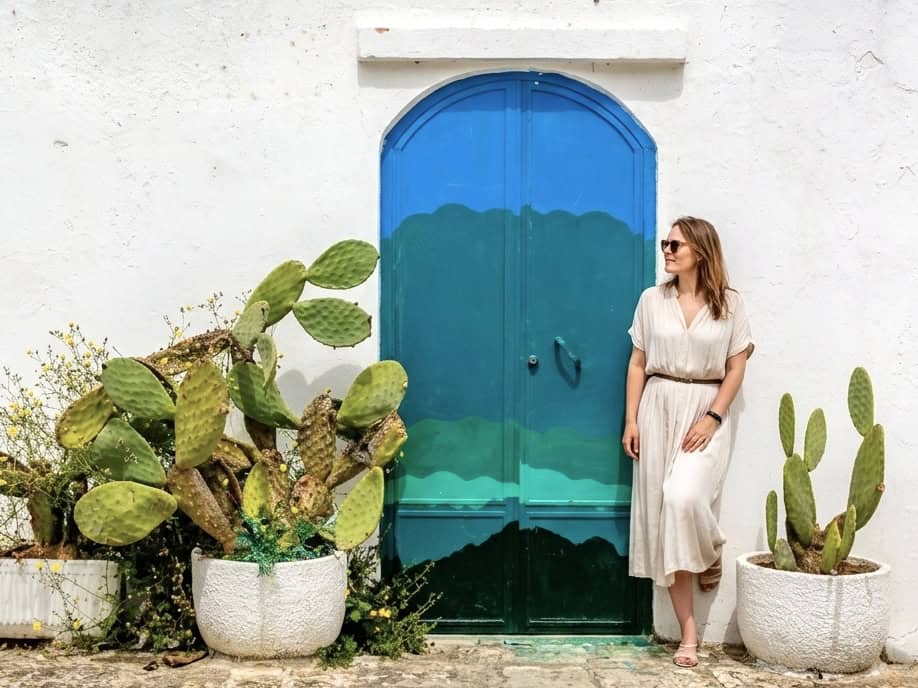
Right beside Borgo Antico and Bar Perso, you’ll find Porta Azzurra, Ostuni’s famous blue door. It’s one of the most photographed little corners in the old town, mostly because the bright blue door pops beautifully against the whitewashed walls.
It’s pretty. It’s photogenic. It’s also just a door.
That does not mean you should skip it. It means you should keep your expectations where they belong: low-to-medium, with room for a cute photo. If you’re already nearby, it’s worth finding.
Route-wise, it makes sense to visit Porta Azzurra before or after stopping near Borgo Antico or Bar Perso because they’re right beside each other.
Honest take: Porta Azzurra is worth snapping if you’re nearby, but it is not one of the best things to do in Ostuni on its own. If you’re on the other side of town, tired and hungry, do not turn it into a quest.

9. Try an Octopus Sandwich at Doppio Gusto
For a casual food stop in Ostuni, I highly recommend Doppio Gusto. I had the best octopus sandwich here, and the owner, Antonio, was an absolute gem, which always makes a place stick in your memory.
This is the kind of stop I love in Puglia: simple, local, unfussy, and genuinely satisfying.
Octopus is common in Puglia, especially in coastal areas, and although Ostuni itself is inland, it’s close enough to the Adriatic that seafood still feels completely natural here. Done well (and Antonio does it very well!), octopus should be tender, flavorful, and not the rubbery sadness some places try to pass off as “traditional.”
I’d choose this over a random restaurant on the main square if you want something quick and memorable.
Doppio Gusto also works well route-wise. After exploring the upper old town, Cathedral, Arco Scoppa, Borgo Antico, and Porta Azzurra, you can stop here as you descend to the Northern part of town and the city walls.

10. Walk Along Ostuni’s City Walls
One of the best ways to appreciate Ostuni is to walk beneath the old town along the city walls. And this needs a small clarification: this is the kind of walk where you stroll along the top of the walls like you’re guarding the city from above.
You’re mostly walking below the historic center, looking back up at the whitewashed buildings stacked above you, out into the countriside and over the Adriatic coast in the distance.
When you’re inside Ostuni’s old town, everything feels close and maze-like: narrow lanes, staircases, arches, and white walls around every corner. But from below the walls, you get a much better sense of the city’s shape.
You can actually see how dramatically Ostuni rises from the hill, with the old houses layered above the surrounding countryside.

11. Take in the views from the many Viewpoints
A lot of visitors only wander the old town, take a few photos of the Cathedral area, and leave. Don’t do that. The outside views are what give the White City its full impact.
The whitewashed streets are beautiful, but some of the best views of Ostuni are actually from outside the historic center. Inside the old town, you get the details. From outside, you get the full drama of the city rising above the countryside.
Best viewpoints to look for:
- Corso Vittorio Emanuele II
There are several viewpoints along this street and generally the higher up and further out you walk, the more impressive the views get. - Piazzetta Martiri delle Foibe
This is the furthest view along Corso Vittorio Emanuele II and it gives you the best angle from the southern side of the newer town. - The road approaching from the coast
If you’re driving in from the Adriatic coast, keep your eyes open. The white city appears above the olive groves, and honestly, I found it hard to keep my eyes on the road while picking up my jaw from the floor. - Below the old town
After exploring the historic center, walk below the city walls and look back up. This gives you a better sense of how Ostuni is stacked on the hill. - Borgo Antico / Bar Perso area
Not outside the town, but still one of the best open views from the edge of the old center, and you can enjoy it with an aperitivo.
12. Shop for Local Products and Artisan Pieces
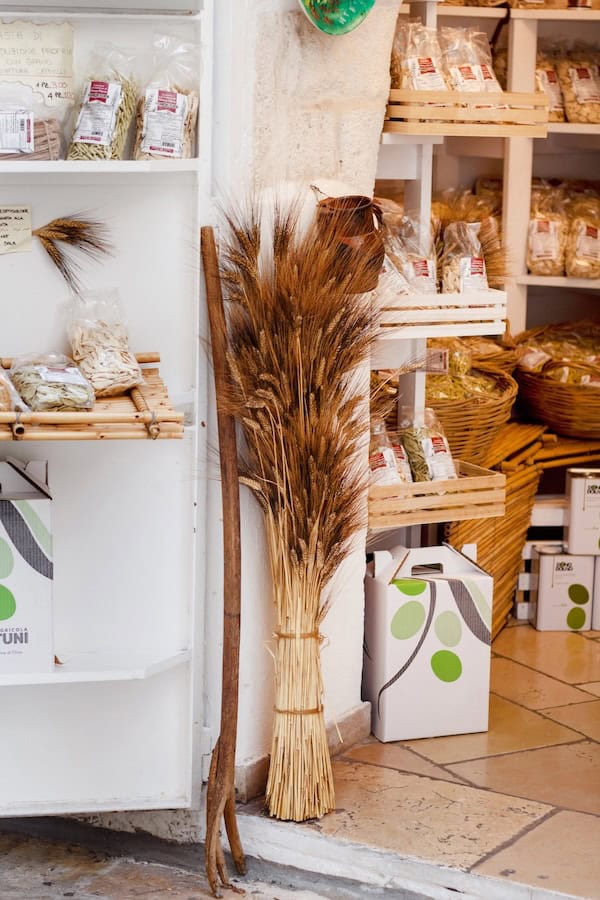
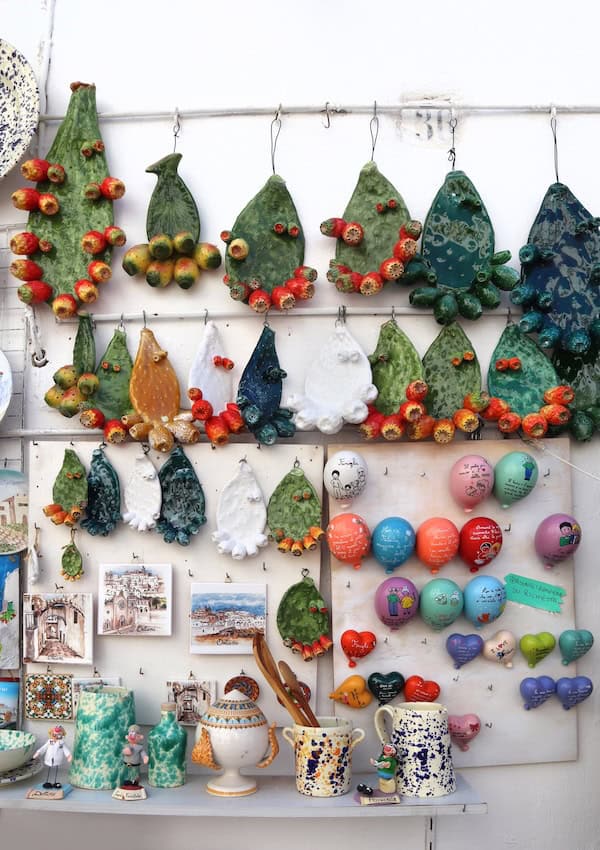
Ostuni’s old town is a great place to browse for local products, ceramics, olive oil, linen, art, and small handmade pieces.
The best approach is to wander slowly around Via Cattedrale and the surrounding lanes, then dip into whatever looks genuinely interesting.
You’ll find shops selling Puglian ceramics, olive oil, taralli, wine, homeware, jewelry, and small design pieces. Some are clearly aimed at tourists, but others have a more thoughtful, local feel.
This is also a good place to buy edible souvenirs. Puglia is excellent for things you’ll actually use when you get home: olive oil, dried pasta, taralli, preserves, and local wine. Much better than a random magnet that will fall off your fridge and quietly disappear behind it for three years.
I’d treat shopping in Ostuni as part of the wandering rather than a separate activity. The best shops are scattered between the main streets and smaller side lanes. Give yourself time to browse without turning it into a mission.

13. Pick your favorite food experience
If you have more than a quick half-day in Ostuni, I highly recommend adding a food or countryside experience.
This is where Puglia really shines: simple ingredients, olive groves, masserie, local cheese, handmade pasta, wine, and the kind of meals that make you wonder why you ever tolerated sad desk lunches.
Apulian Cooking Class with a View in Ostuni
Book this Cooking Class if you want a proper food experience in Ostuni, not just another restaurant meal.
You’ll make classic Puglian dishes like handmade orecchiette, eggplant parmigiana, braciole in tomato sauce, and lemon jam cake, then sit down for lunch or dinner with wine. This is the option I’d choose if you want something hands-on and memorable
Private Cheese Tour to Masseria Fragnite
Book this Cheese Tour if you want to visit an authentic Apulian masseria and see how mozzarella, burrata, caciocavallo, and other southern Italian cheeses are made. You’ll also taste fresh and aged cheeses, cold cuts, and other local products.
A masseria is a traditional farmhouse estate, and visiting one is one of the best ways to experience the countryside around Ostuni. Some are now luxury hotels or restaurants, while others still focus heavily on agriculture, olive oil, cheese, wine, or local food production.
Private Wine Tour from Ostuni with Lunch
Book this Wine Tour if you’re staying in Ostuni and want a full-day food and wine experience without driving.
It includes lunch and nearby Valle d’Itria stops, so treat it as a countryside day from Ostuni rather than a thing to do in the old town itself. I skipped wine tastings on my trip because I was driving; a tour with transport solves that problem neatly.

14. Visit the Beaches Near Ostuni
Ostuni is not directly on the beach, but it sits close enough to the Adriatic coast that beach time is an easy add-on if you’re visiting in warmer months.
That said, I wouldn’t prioritize the beach if you only have one day in Ostuni. The historic center, viewpoints, Cathedral, food stops, and sunset are the main reasons to visit.
The beaches near Ostuni are best if you’re staying overnight, visiting in summer, or using the town as a base.
Some of the best beaches near Ostuni include:
- Pilone Beach — one of the easiest sandy beaches near Ostuni, good for a classic beach stop.
- Lido Morelli — a good option if you want facilities and a more organized beach day.
- Torre Pozzelle — better if you prefer a wilder, rockier coastal feel with small coves.
- Costa Merlata — good for clear water, rocky sections, and a more scenic stretch of coast.
- Rosa Marina — a popular summer beach area with lidos and a more resort-like feel.
If you’re visiting in July or August, expect the beaches to be busy. This is not the season for spontaneous empty-cove fantasies unless you’re getting up early and working for it.
15. Experience Festivals and Local Life in Ostuni
Ostuni is beautiful on a normal day, but it’s even better if your visit lines up with a local event, festival, or market day.
The biggest local celebration is the Festa di Sant’Oronzo, dedicated to Ostuni’s patron saint. It usually takes place in late August and includes religious processions, local traditions, music, and a much livelier atmosphere than you’ll find on a regular sightseeing day.
This is also when you may see Ostuni’s famous horse procession, the Cavalcata di Sant’Oronzo, where riders in traditional dress take part in the celebrations. If your trip overlaps with it, check the local schedule and build your evening around it.
If you’re in town on a Saturday morning, you can also visit the local market. I wouldn’t build your whole Ostuni trip around the market, but it’s worth a look if you’re already there. It gives you a more everyday version of the city.
Even without a specific festival, Ostuni is worth experiencing after dark. The old town changes completely once the lights come on. The white walls turn warmer, restaurants fill up, and the lanes feel more atmospheric than they do during a quick midday visit.
Don’t leave too early.
Like many towns in Puglia, Ostuni comes alive in the evening, especially in the warmer months when people spill into the streets for dinner, drinks, music, and late walks through the old town.
That’s one of my biggest Ostuni tips. Sunset and evening are when the city really earns its reputation.

16. Take a Day Trip from Ostuni
Ostuni works really well as a base for exploring more of Puglia, especially if you have a car. The town sits close to the coast, the Valle d’Itria, and several of the prettiest villages and towns in the region, so you can easily use it for day trips without changing accommodation every night.
That said, give the White City proper time first. Wander the old town, see the viewpoints, eat something excellent, stay for sunset, then use extra days for nearby towns and beaches.
If you’re staying in Ostuni for two nights or more, these are the best day trips to consider:
- Alberobello — famous for its trulli, the cone-roofed stone houses that make the town look like a fairytale village with a gift-shop addiction. It’s magical, but very touristy, so go early or late if you can.
- Locorotondo — one of the prettiest towns near Ostuni, with white lanes, flower-filled balconies, and a very polished historic center. It’s easy to combine with Cisternino if you want a relaxed Valle d’Itria day.
- Cisternino — my top pick for a smaller, more authentic Valle d’Itria town. It’s cute without feeling as polished as some of the better-known stops, and it’s the place to try fornelli pronti, the butcher-restaurant setup where you choose your meat and have it grilled for you.
- Martina Franca — a larger and more elegant town with Baroque architecture, local life, and a less theme-park feel than Alberobello. It’s a good choice if you want somewhere beautiful but not completely dominated by day-trippers.
- Ceglie Messapica — a great option if you’re into food and want somewhere less obvious. It doesn’t have the same instant postcard look as Alberobello or Locorotondo, but that’s part of the appeal.
- Polignano a Mare — dramatic and beautiful, especially if you want those cliffside sea views. Personally, I find it overhyped compared with the attention it gets, but it’s still worth seeing once.
- Monopoli — one of my favorite coastal towns in Puglia because it still feels lived-in. You get a pretty old town, harbor views, local life, and easy access to the sea without the same level of hype as Polignano a Mare.
- Bari — better as a separate city stop than a casual day trip, but possible if you’re traveling by train or ending your trip there. Bari Vecchia is charming, especially around Orecchiette Street, but you don’t need a full day unless you’re adding museums, shopping, or a long lunch.
- Lecce — doable as a longer day trip, but I’d only recommend it if you’re not already staying there separately. It’s one of the best cities in Puglia and deserves more than a rushed visit if your itinerary allows.

How Many Days in Ostuni
You can see the main sights in Ostuni in a few hours, but I’d give it one full day if you can. That gives you enough time to wander the old town, visit the Cathedral, walk beneath the city walls, stop for food, chase the viewpoints, and stay for sunset.
If you’re only passing through, aim for an evening visit. Ostuni is pretty during the day, but it really shines later on, when the white buildings soften in the golden light and the old town starts filling up for dinner.
For a slower trip, 1–2 nights in Ostuni works well. Stay one night if you want the old town, sunset, and dinner without rushing. Stay two nights if you also want beach time, a cooking class, a masseria visit, or a day trip into the Valle d’Itria.
Getting to Ostuni
Ostuni is in the province of Brindisi, about 8 km from the Adriatic coast, and it’s easiest to reach by car if you’re doing a Puglia road trip.
The closest airport is Brindisi Airport, while Bari Airport is also a common option for international flights and road trips through Puglia.
- By Plane: The closest airport is Brindisi Airport, roughly 38 km from Ostuni, while Bari Airport is around 100 km away. Brindisi is more convenient if flight options work for you, but Bari often has better international connections and is a common starting point for a Puglia loop.
- By Car: Driving is the most flexible way to visit Ostuni, and Puglia in general. I rented a car from Bari Airport for my Puglia road trip, and I’d do it again. Just book accommodation with parking and avoid driving into the historic center. Parking can be annoying in high season, so don’t leave it as a “future you” problem. Future you will not be impressed.
- By Train: Ostuni has a train station with connections to cities like Bari, Brindisi, and Lecce, but the station is outside the old town. From the station, take a local bus, taxi, or shuttle into the center rather than assuming you can casually roll your suitcase uphill like a hero. Local bus connections run between the station and town, and tickets should be bought before boarding.
- By Bus: Buses connect Ostuni with nearby towns and the train station, but schedules can be limited depending on the route and season. Check current timetables before relying on buses for tight plans. STP Brindisi operates urban and extra-urban services in the area, including links between the historic center, train station, neighborhoods, and some beach areas.
Where to Park in Ostuni
If you’re driving to Ostuni, park outside the old town and walk in. The historic center is steep, narrow, and partly affected by ZTL zones. These are restricted traffic zones where only authorized vehicles can enter. Drive in by mistake and you get a fine.
Aim for the official parcheggio comunale first, this is a municipal car park that clearly look like proper car park. You have the option of paying hourly or daily fees.
Be careful with parking just outside the walls, as some lots are legitimate while others can be overpriced or unofficial. If someone is aggressively waving you in like they’re directing airtraffic, maybe think twice before you hand them money.
You can often find free parking lots (white lines) or cheap hourly parking (blue lines) on the streets south of the old town around Villa Comunale Sandro Pertini. In high season, these fill up fast, so the tourist car parks on the eastern side of town may be easier, even if you have to pay a daily rate.

Getting Around Ostuni
Ostuni is best explored on foot, but be ready for hills, stairs, smooth stone, and lanes that twist around like they’re actively trying to humble Google Maps.
Google Maps can be unreliable inside Ostuni’s old town. Use it loosely, but don’t fight the maze. Getting lost is genuinely part of the experience here.
The old town is compact, so you don’t need a car once you’re there. In fact, a car is more of a liability inside or near the historic center. Park outside, wear comfortable shoes, and treat the old town like a place to wander rather than a route to conquer.
- Walking: This is the best way to explore the old town. Most of the main sights like Piazza della Libertà, Via Cattedrale, Ostuni Cathedral, Arco Scoppa, Borgo Antico, and Porta Azzurra, are within walking distance, but the route is uphill and uneven.
- Tuk-Tuk Tour: A tuk-tuk tour is useful if it’s hot, you’re short on time, or you’re traveling with someone who doesn’t want to deal with steep lanes. It’s not essential, but it’s a smart intro before wandering on your own.
- Taxi / Local Bus: Taxis or local buses are most useful for getting between Ostuni train station and the center. The train station is outside town, and the local bus journey into Ostuni takes around 18 minutes according to current route data.
- Car: Use your car for getting to Ostuni, visiting beaches, or taking day trips. Don’t use it for exploring the old town. That way lies stress, ZTL confusion, and possibly a very expensive souvenir in the form of a fine.

Where to Eat and Drink in Ostuni
Ostuni has a good mix of casual food stops, scenic aperitivo spots, and restaurants tucked into the old town. The trick is being selective, especially around the busiest squares and most obvious tourist routes.
I’d build your food day around a few specific stops rather than just sitting down wherever hunger attacks.
- Doppio Gusto — for an octopus sandwich
I had the best octopus sandwich here, and the owner was a gem. It’s a great casual lunch stop if you want something quick, local, and more memorable than a random tourist-menu pasta. - Pasticciotti Tradizionali — for pasticciotti
Go here for pasticciotti near Piazza Pietro Sansone. These were the best I had during my Puglia trip, and I did not take the pastry research lightly. - Borgo Antico — for aperitivo with a view
Book or arrive early if you want a good table, especially around sunset. This is one of the best places to slow down and enjoy the view over the olive groves and toward the sea. - Bar Perso — for drinks with a view
Another strong option for sunset drinks. I’d happily pay a little extra here because the view is the point. - Osteria del Tempo Perso — for a famous Ostuni dinner
This is one of Ostuni’s most famous restaurants, set in vaulted stone rooms in the historic center. It’s popular, yes, but the setting is genuinely memorable, so book this if you want dinner that feels atmospheric rather than just convenient. - Osteria Piazzetta Cattedrale — for a more polished meal near the Cathedral
This is a good pick if you want a proper sit-down dinner in the upper old town, close to Ostuni Cathedral. The Michelin Guide describes it as a restaurant just a few metres from the Cathedral, focused on quality produce, mostly from Puglia. - Trattoria Sapere e Sapori — for a traditional, lower-key option
Choose this if you want something more casual and traditional rather than a big “destination dinner.”
If you want a more hands-on food experience, book this cooking class in Ostuni or this cheese tasting at Masseria Fragnite. Puglia is one of the best regions in Italy for simple food done properly, and these experiences give you more context than another sit-down meal.

Is Ostuni Worth Visiting?
Yes, Ostuni is absolutely worth visiting. It’s one of the most beautiful towns in Puglia, with whitewashed streets, a dramatic hilltop setting, lovely viewpoints, good food, and easy access to beaches and countryside experiences.
That said, Ostuni is not the place to visit for a huge list of major attractions. The town itself is the experience. You come here to wander, eat, photograph the White City from different angles, and stay long enough for sunset.
I’d especially recommend Ostuni if you’re doing a Puglia road trip and want a town that feels both photogenic and practical as a base. It’s close to the coast, near several Valle d’Itria towns, and has enough food, views, and atmosphere to justify more than a rushed stop.
Honest take: If you only visit for one hour in the middle of the day, you may wonder what the fuss is about. Give Ostuni late afternoon, sunset, and dinner, and it makes much more sense.
Best Time to Visit Ostuni
The best time to visit Ostuni is late April, May, September, or early October. You’ll usually get pleasant weather, longer days, and a much nicer balance between atmosphere and crowds.
I visited Puglia around Easter. That can be a busy period, but the weather was bad during part of my trip, so Ostuni didn’t feel overly crowded. Still, based on the whole trip, my ideal windows would be the last week of April or the first week of October.
Weirdly specific, yes. But for good reason.
High season in Puglia generally runs from late spring through summer, with July and August being the hottest, busiest, and most expensive months. Ostuni is especially popular in summer, and its population can swell significantly during the season.
- Spring: Best for comfortable sightseeing, flowers, and lower crowds before peak season.
- Summer: Best for beaches, nightlife, and events, but expect heat, crowds, higher prices, and parking stress.
- Autumn: Good for a calmer trip with fewer people than August.
- Winter: Quiet and cheaper, but some restaurants, tours, and seasonal spots may be limited.
If you’re interested in local events, the Festa di Sant’Oronzo takes place in late August, with celebrations traditionally running from August 24–27 and the Cavalcata di Sant’Oronzo on August 26. This can be a memorable time to visit, but book accommodation and restaurants ahead.

Ostuni FAQ
What is Ostuni known for?
Ostuni is known as “La Città Bianca,” or the White City, because of its whitewashed houses clustered on a hill above olive groves and the Adriatic countryside.
How long do you need in Ostuni?
Half a day is enough to see the main sights, but one full day is better if you want to wander slowly, visit the Cathedral, stop for aperitivo, and enjoy dinner in the old town.
Can you visit Ostuni without a car?
Yes, but it is easier with a car. Ostuni has a train station, but it is about 3 km from the old town, so you’ll need to walk uphill, take a bus, or get a taxi into the centre.
What are the best things to do in Ostuni in one day?
Start in Piazza della Libertà, wander the old town, walk up Via Cattedrale, visit the Cathedral, see Arco Scoppa, enjoy the viewpoints, walk the city walls, stop for aperitivo, and have dinner in the historic centre.
Is Ostuni walkable?
Yes, Ostuni is walkable, but the old town is hilly, uneven, and full of stairs. Wear comfortable shoes.
Is the blue door in Ostuni worth seeing?
It’s worth a quick stop if you’re nearby, but it’s not the main reason to visit Ostuni. The old town, Cathedral, viewpoints, and city walls are more worthwhile.
What is the best viewpoint in Ostuni?
For the best view of Ostuni itself, go to Corso Vittorio Emanuele II. For views from the old town over the countryside and sea, head near Arco Scoppa and Borgo Antico.
Are you planning a trip to Puglia?
Puglia looks easy on a map, but it’s bigger, more spread out, and more varied than many people expect. Where you stay, how you get around, and which towns you prioritize can make a huge difference to your trip.
Before you book anything, check out all our Puglia guides and itineraries too.