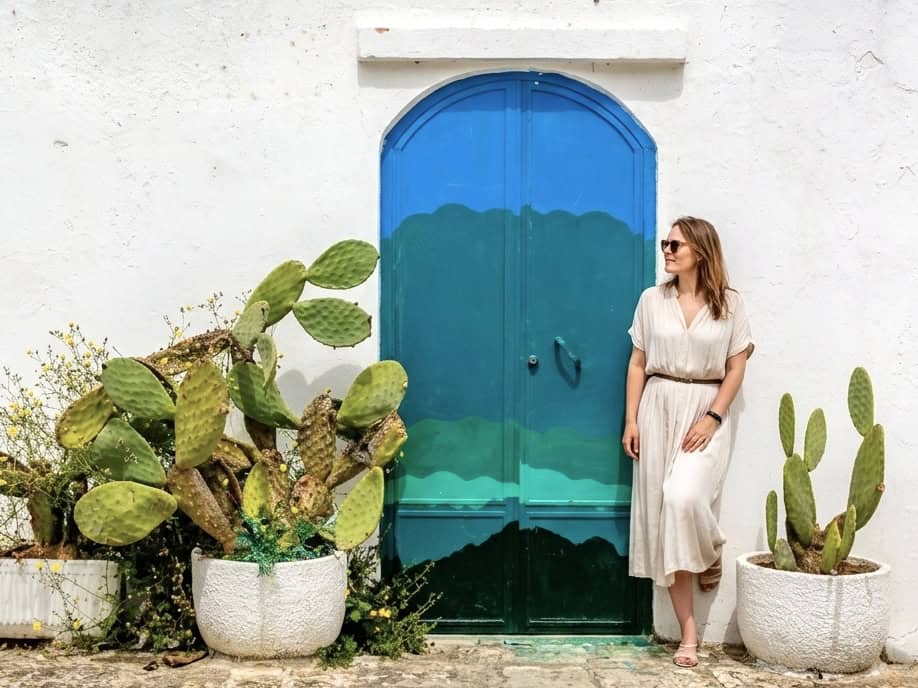
Puglia itinerary (from Bari) – What to see in Puglia in 10, 7 or 5 days

If you’re planning a Puglia itinerary, this guide covers the best way to explore Puglia in 10, 7, or 5 days from Bari, with detailed day-by-day routes, practical tips, and plenty of stops that are actually worth your time.
It’s designed for travelers who want a realistic Puglia road trip itinerary that balances famous highlights like Alberobello, Matera, Ostuni, and Polignano a Mare with coastal drives, smaller towns, hidden gems and genuinely excellent food.
.
I did a version of this Apulia itinerary from Bari with my mom for her birthday, so this guide is based on my actual travel experience, not just a map and a fantasy attention span.
It struck a great balance between beautiful towns, dramatic coastlines, and memorable local food, with a few lessons learned along the way, mostly involving potholes, parking, and the fact that some of Puglia’s most famous places are best enjoyed early or with slightly lowered expectations.
If you’re flying into Brindisi instead, check our Puglia road trip itinerary from Brindisi, which makes more sense for that route and cuts down on unnecessary backtracking.
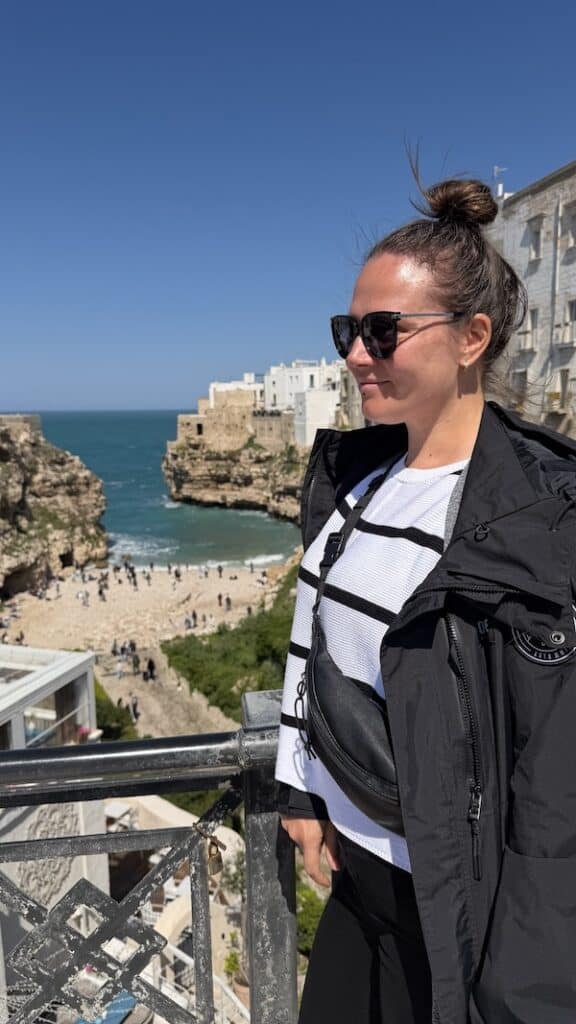
In a hurry? Book your Puglia essentials!
If you want to lock in the best experiences on this itinerary, these are the tours I’d prioritize.
Alberobello: trulli tour
Matera: walking tour
Otranto: guided walking tour
Polignano a Mare: caves boat tour
Bari: street food tour
Lecce: history and food tour
Ostuni: walking tour
Castel del Monte: entrance ticket
How Many Days in Puglia
For most people, 7 to 10 days in Puglia is the sweet spot.
With 10 days, you can properly road trip the region without turning it into a full-time driving job. You’ll have enough time for northern highlights like Castel del Monte, inland stops like Altamura and Matera, the postcard villages of the Valle d’Itria, and the long scenic swing through Salento before finishing in Bari.
Here’s how I’d think about it:
- 3 days or less: Stay in Bari or Lecce and do day trips.
- 5 days: You can see a lot, but you’ll need to skip some of the deeper southern stretches.
- 7–10 days: Ideal for a balanced road trip.
- 2 weeks: Best if you want beach time, winery stops, or more lesser-known towns.

10-Day Puglia Itinerary
If you’re planning a Puglia itinerary that mixes famous highlights with smaller places that still feel lived-in, this route is the one I’d recommend.
It follows a 10-day loop starting from Bari, works especially well with a rental car, and blends the classic trulli-and-coastline moments with some of the detours that actually made the trip memorable.
Day 1 – Trani, Castel del Monte, and Altamura
This first day is a bit punchy, but it works well if you land early in Bari and want to get moving straight away. Rather than burning a day in the city at the start, head north and inland first, then work your way south over the next several days.
If you arrived on a later flight, I’d skip either Trani or even Castel del Monte and just drive straight to Altamura, then continue to Matera for the night. There’s no point turning day one into a race against the clock.
Trani is also easily reachable from Bari so depending on your flight time you might want to visit it on your last day instead.


Pick up your car
I highly recommend picking up a rental car at Bari Airport and starting the loop immediately. This itinerary is absolutely doable by public transport in fragments, but for this full route, the car gives you much more freedom.
Book your rental car through Discover Cars and add full coverage for peace of mind. Puglian roads are… character-building. There are plenty of potholes, and unless you’ve always wanted to sponsor a local tire shop, extra insurance is money well spent.

Trani
If you land early, Trani is a really lovely first stop. It’s known for its seafront cathedral, one of the best examples of Apulian Romanesque architecture, and its old town has a more elegant, polished feel than a lot of places on this route.
It also has a long history as a port, with traces of its Jewish quarter still visible around the historic center.
This is not an essential stop if your flight lands in the afternoon. It’s more of a “great if you can make it work” addition than something I’d force. But if you do have the time, Trani makes a very good first impression.
If you don’t want to drive this section yourself, book this Trani wine tour with Castel del Monte or this Trani and Castel del Monte tour from your accommodation if you want someone else to handle the logistics.

Castel del Monte
From Trani, continue inland to Castel del Monte. Castel del Monte is one of the most unusual landmarks in southern Italy.
It was commissioned in the 13th century by Frederick II of Hohenstaufen, and it’s famous for that perfect octagonal layout and the way it blends classical, northern European, and Islamic influences.
It’s also a UNESCO World Heritage Site, and it’s featured on the Italian 1-cent coin, which feels like a pretty strong endorsement for a building in the middle of nowhere.
Book this Castel del Monte skip-the-line ticket if you want to keep things easy, or book this guided Castel del Monte tour if you want more of the symbolism and history explained properly.

Altamura
Altamura deserves more than a quick mention. It sits on the Murge plateau and feels very different from the coast — more solid, more local, more stone-on-stone southern Italy.
It’s best known for Pane di Altamura, the famous wood-fired bread that became the first bakery product in Europe to receive PDO status, but there’s more to the town than that. The historic center is full of churches, cloisters, old palaces, and a very imposing cathedral that gives the whole place a bit of weight.
It’s also one of those towns that tends to get skipped over in favor of flashier stops, which is a shame because it feels much more lived-in. I really liked it here.
I had a great meal at Trattoria Federico II di Svevia, which seemed to be where all the local Carabinieri go for lunch. That usually feels like a very good sign.

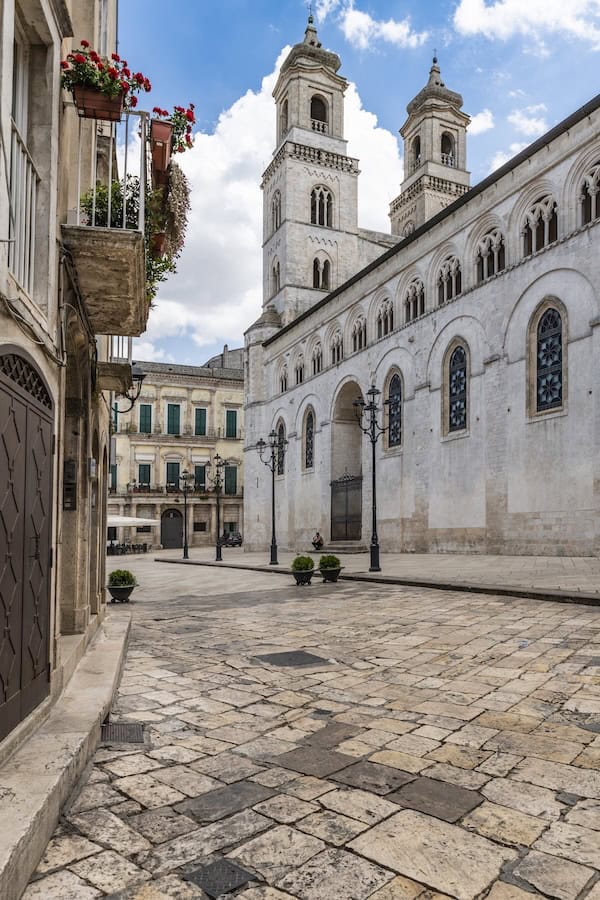
Walk through the historic center, see the see the Cathedral of Santa Maria Assunta, walkt through Arco Basso and buy some bread at Antico Forno Santa Caterina before leaving. Even if you’re not usually the kind of person who gets excited about regional bread, Altamura has a way of changing that.
After Altamura, continue to Matera for the night. Even though it’s technically in Basilicata rather than Puglia, I would absolutely include it in this itinerary.
Where to Stay in Matera
Matera is one of the most extraordinary places in southern Italy, and staying in the Sassi is part of what makes this route so memorable.
It’s a really cool experience to sleep in one of the cave hotels and part of what makes this night so memorable. Just pack very light for that night, because you’ll have to park outside of town and walk to your accommodation quite a bit over uneven streets and stairs.
MOYSEION Matera – IMMERSIVE HISTORY-LED STAY
MOYSEION is an inhabited museum built around the history of Matera and the ancient cultures that shaped it. Stay here if you want something atmospheric and genuinely different from the usual cave-hotel experience.
Cenobio Hotel & SPA Matera | BOUTIQUE SPA RETREAT
This is a great option if you want the charm of staying in the Sassi but with a slightly more indulgent feel. The spa element makes it especially appealing after a long day of walking Matera’s steep lanes and stone staircases.
Sant’Angelo, Matera | ICONIC SASSI EXPERIENCE
Sant’Angelo is one of the classic upscale stays in Matera and a very good pick if you want the full postcard-worthy cave-hotel experience. It’s right in the heart of the Sassi, so it feels atmospheric, memorable, as special as the destination itself.

Day 2 – Matera and Alberobello
This is one of the most memorable days of the whole trip. You start in Matera, which feels ancient and almost impossible to fully compare to anywhere else in Italy, and end in Alberobello, where you get a completely different kind of architectural experience.
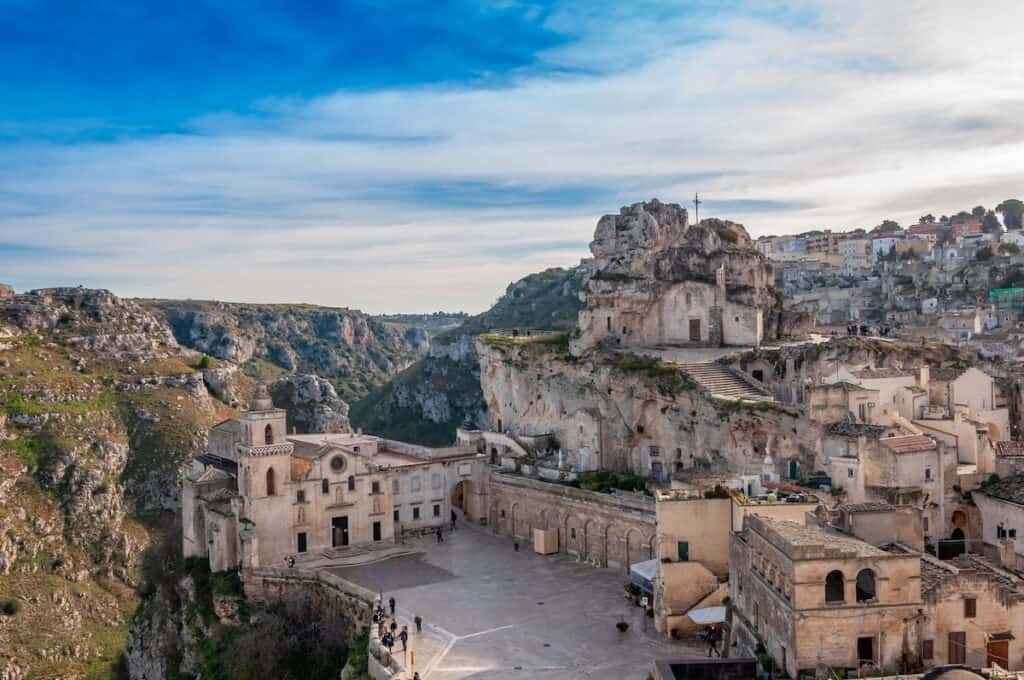
Matera
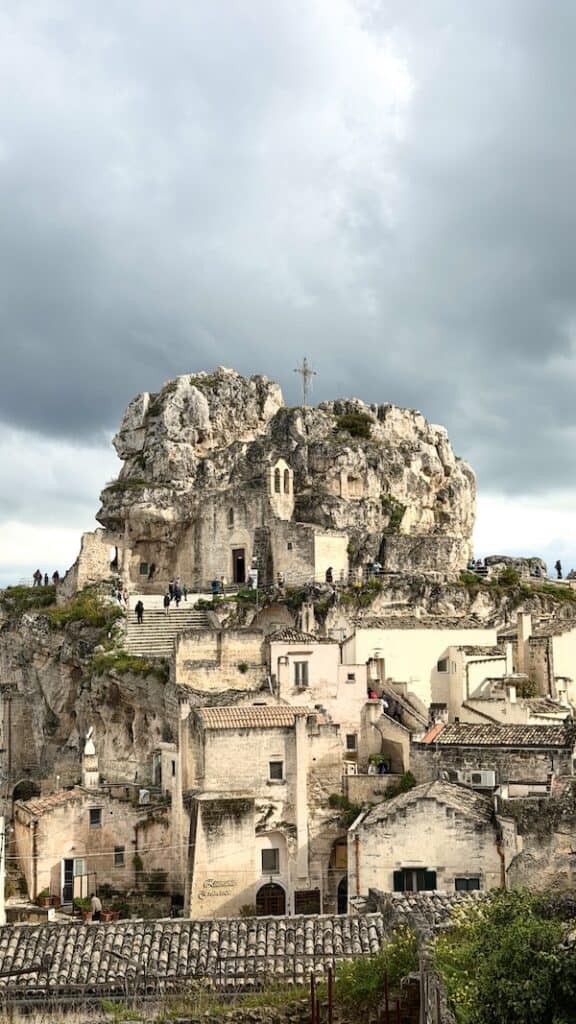
Matera is one of the oldest continuously inhabited settlements in the world, and it still has that feeling of a place shaped less by neat urban planning than by pure survival, religion, and geology working together over a very long time.
What makes Matera so special is the Sassi, the old cave districts carved into the rock on the edge of a deep ravine.
These cave homes and churches developed over centuries as people adapted to the landscape, digging into the soft limestone and building entire neighborhoods that almost seem to grow out of the hillside.
The city is split into two main cave districts, Sasso Caveoso and Sasso Barisano, and the best way to experience it is really just to walk. A lot.
You’ll be going up and down stone lanes, staircases, terraces, and viewpoints, so I’d wear proper shoes and keep the morning flexible. Don’t treat it like a checklist city. Matera is much better when you let yourself wander a little.

I’d structure the day like this:
Start bright and early with this small-group hot air balloon flight over Matera. The views over the Matera in the early morning light are absolutely breathtaking!
Follow this magic experience with a slow walk through the Sassi. Book this group walking tour of Matera if you want a proper introduction to the city without having to piece the history together yourself. Or opt for this Ape Calessino tour of Matera if your feet would appreciate a small act of mercy.
Make sure to visit at least one chiesa rupestre. These are rock-cut churches, carved directly into the stone, often with traces of frescoes and simple interiors that feel worlds away from the elaborate churches you’ll see later in Lecce.
Dont miss the Sassi in Miniatura. It sounds like a slightly niche little stop, but it’s actually a great way to understand what you’re looking at.
Seeing the city recreated in miniature makes the layout of the cave districts and the architecture much easier to grasp. The entrance is free but donations are appreciated or you can buy something from the souvenir shop.


If you have the energy and want more context, the wider area around Matera is also full of caves, ravines, and rock churches in the Murgia landscape opposite the city. That’s why the setting feels so dramatic.
Book this guided tour of Parco Murgia if you want to understand the landscape around Matera, not just the city itself.
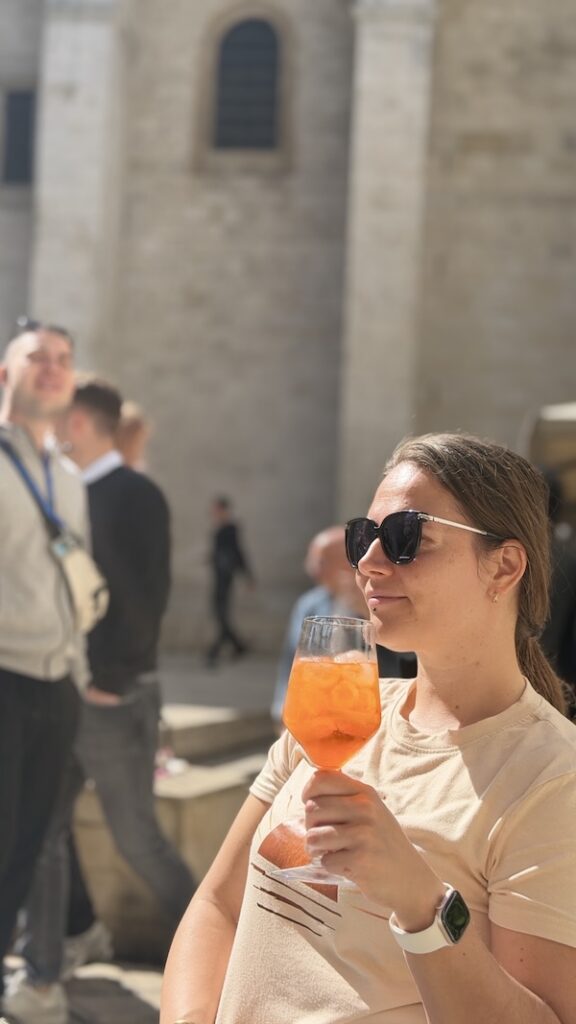
By late afternoon, I’d absolutely do aperitivo with a view before leaving. My favorite spot was Crialoss, which has stunning views over town. Zipa is another good option if you want one last drink overlooking the Sassi before getting back in the car.
If you want to add an experience while you’re here, these are the tours I’d actually book:
- Book this group walking tour of Matera if you want a proper introduction to the city without having to piece the history together yourself.
- Book this Ape Calessino tour of Matera if your feet would appreciate a small act of mercy.
- Book this guided tour of Parco Murgia if you want to understand the landscape around Matera, not just the city itself.
- Book this James Bond tour of Matera if you like the cinematic side of the place.
- Book this truffle tasting in Matera if you want to turn the stop into something more food-focused.
- And for a real splurge, book this small-group hot air balloon flight over Matera.

Drive to Alberobello
After aperitivo, drive from Matera to Alberobello and stay there for the night. I actually think this works better than sleeping in Matera twice, because it lets you have the Matera experience and the trulli experience!
Where to Stay in Alberobello
If you can, stay in an actual trullo for the night. Yes, it’s more of an experience stay than the most practical hotel choice, but this is one of the few places where I think the novelty is genuinely worth it.
After the day-trippers leave and before they arrive again, the town feels much calmer and more magical.
Le Alcove – LUXURY TRULLI STAY
A beautiful luxury stay in the heart of Alberobello, set inside restored trulli. This is the one I’d pick if you want the full trulli experience with a more polished, romantic feel.
Petra Suite – WELLNESS TRULLI ESCAPE
Lovely trulli stay, with an indoor spa pool. A very good choice if you want something a little more indulgent after a long day of sightseeing.
Trulli Moon – TERRACE VIEWS AND QUIET CHARM
Trullo with a lovely rooftop terrace and views over Alberobello. Stay here if you want the trulli experience with a slightly more relaxed, homey feel.

Day 3 – Alberobello, Locorotondo, and Cisternino
This day is all about the Valle d’Itria, one of the most distinctive parts of Puglia. You’ve got trulli, whitewashed hill towns, rolling countryside, and some of the best food stops of the trip.

Alberobello
Because you slept in Alberobello, you get to see it at the best possible time: early in the morning, before the streets fill up. That alone makes a big difference.
Book this guided tour of Alberobello if you want the history and symbolism explained properly. Or join this Alberobello tour by risciò, e-bike, or mini golf cart if you want something a bit more fun and less walk-heavy.
Alberobello is famous for its trulli, the whitewashed dry-stone houses with conical roofs that make the town look faintly unreal. They were built using local stone and without mortar, part of a long building tradition in this area.
The whole town became famous because of the sheer concentration of trulli here. It isn’t just one quirky building or two, but entire districts of them.
What makes them interesting is that they weren’t built as a novelty. They were practical rural buildings, tied to local materials, local labor, and the history of settlement in this part of Puglia. The cone-shaped roofs, thick stone walls, and simple structure made sense here long before they became one of the most photographed things in southern Italy.
That said, Alberobello is also very touristy. I really do think both things can be true. It’s special and magical, and it can also feel a bit overwhelmed by souvenir shops and crowds by late morning.
That’s why I’d use the morning to wander through Rione Monti and, if you want a quieter feel, Aia Piccola. One of my favorite little tips here is to pop into some of the souvenir shops with terraces which have rooftop access and surprisingly good views over the trulli.

Locorotondo
After Alberobello, continue to Locorotondo. It’s only a short drive away, but the feel is completely different.
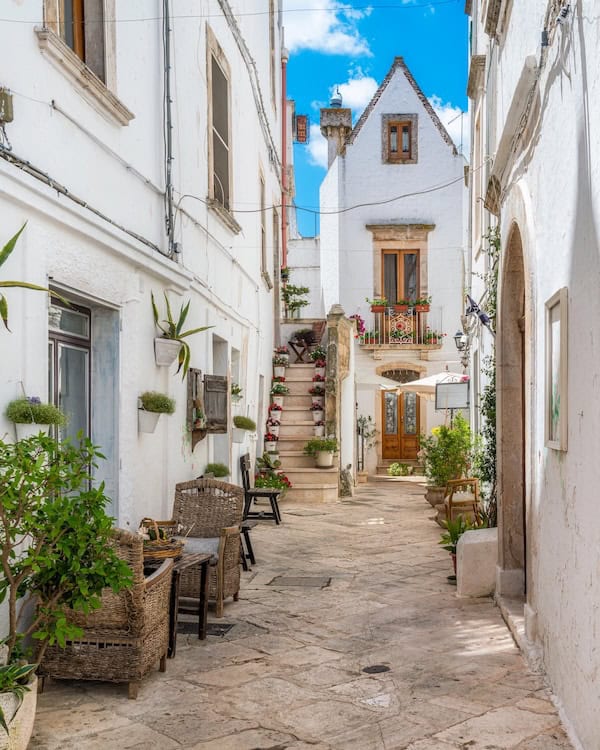
Locorotondo is one of the prettiest little towns in the Valle d’Itria, and the name basically tells you what it is: loco rotondo, or “round place,” because the old town is laid out in a circular form on the hill.
Architecturally, the town is known for its very neat whitewashed houses and its distinctive cummerse roofs. These sharply pitched stone roofs give Locorotondo a different look from the trulli countryside around it.
The whole town feels polished, orderly, and very photogenic.
I’d come here for a relaxed walk rather than any major sightseeing mission. This is a place for pretty lanes, viewpoints over the valley, and a slow drink rather than ticking off monuments. It’s lovely, but in my experience, Cisternino had more personality.
If you want to add something more hands-on here, book this stone souvenir workshop in Locorotondo.

Cisternino
Cisternino was one of my favorite surprises in Puglia, and I honestly preferred it to Locorotondo. It feels less polished, less curated, and a bit more lived-in, which for me made it more enjoyable.
The old town is compact, whitewashed, and very pleasant to wander, but the real reason to come is the food. Cisternino is known for its fornelli pronti, which are one of the best food experiences in Puglia.
They’re basically butcher shops with grills attached: you choose your meat at the counter, they cook it for you on the spot, and that’s dinner sorted.
The most famous thing to order is bombette, those little meat rolls cooked over the fire, but honestly the whole experience is the point. It feels local, informal, and very Puglian in the best way.
If your timing works, I’d stay here into the evening and have dinner rather than just doing a quick pass through town.
If you want extra context while you’re there, book this private Cisternino tour.
Where to Stay in Valle d’Itria
If you want the classic Valle d’Itria experience, I’d seriously consider staying in a masseria rather than in town. A masseria is a traditional Apulian country estate or fortified farmhouse, usually surrounded by olive groves and dry-stone walls, and staying in one is a big part of what makes this area feel so special.
Borgo Del Tempo Ritrovato – ROMANTIC COUNTRYSIDE LUXURY
A polished, intimate stay among olive trees and stone buildings. Best if you want a more luxurious, romantic version of the Valle d’Itria experience.
Masseria Luco – AUTHENTIC HISTORIC CHARM
A more traditional masseria that feels rooted in local history and architecture. A great choice if you want something atmospheric and genuinely classic.
Ottolire Resort – STYLISH MASSERIA ESCAPE
A refined countryside stay with a more boutique, design-led feel. Ideal if you want peace, comfort, and a slightly more elevated resort atmosphere.
Day 4 – Martina Franca, Taranto, and the Ionian Coast
This day is really the transition from the hill towns of the Valle d’Itria to the beaches and coastal scenery of Salento. The mood changes a lot; less trulli and white lanes, more sea, sand, watchtowers, and that lazy, sunbaked southern coastline feeling.
I wouldn’t try to overpack this day with formal sightseeing. It works best if you give Martina Franca and Taranto a bit of time, then slow down once you hit the Ionian coast and actually enjoy being by the sea.
This whole run down the Ionian side has that classic Salento beach-town rhythm; sun, sea, simple seafood lunches, and not much pressure to do anything at all.
Don’t feel pressured to stop everywhere on the list but rather pick and choose what feels right to you. If all you want is to lie on the beach all afternoon, that sounds like the perfect plan to me!

Martina Franca
Before heading south, spend a little time in Martina Franca. It tends to get overshadowed by Alberobello and Ostuni, but it’s worth at least a proper wander through the old town.
Martina Franca is known for its elegant baroque architecture, wide pale-stone piazzas, and a slightly grander, more aristocratic feel than some of the smaller Valle d’Itria towns.
It’s the kind of place that feels refined without being stiff. I wouldn’t build an entire day around it, but I do think it adds depth to the route and makes a very good morning stop before the coast starts calling.
Taranto
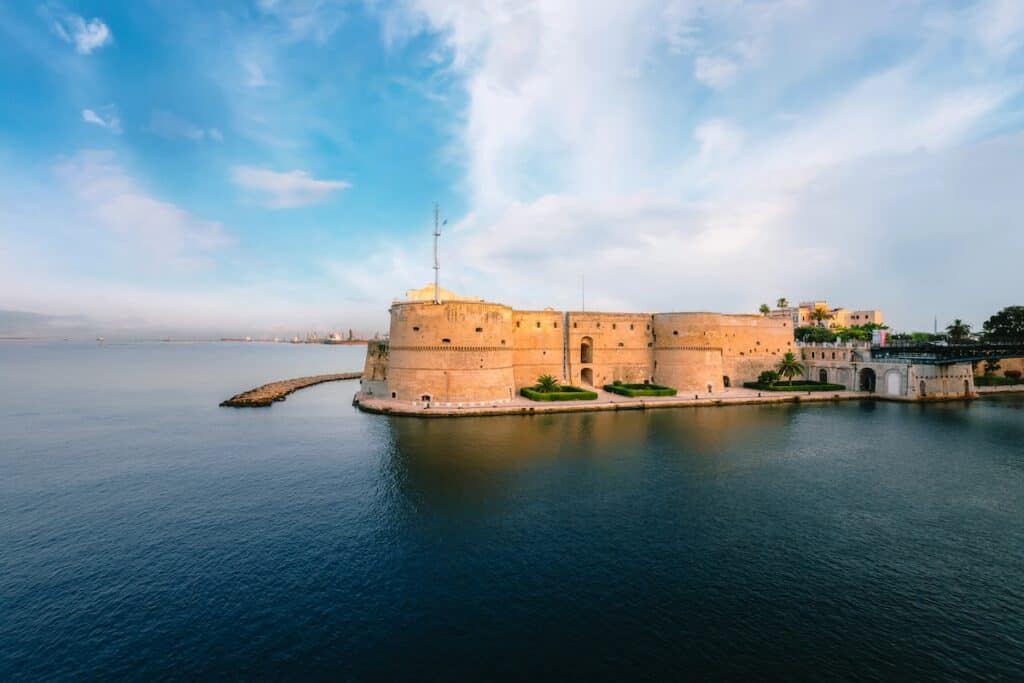
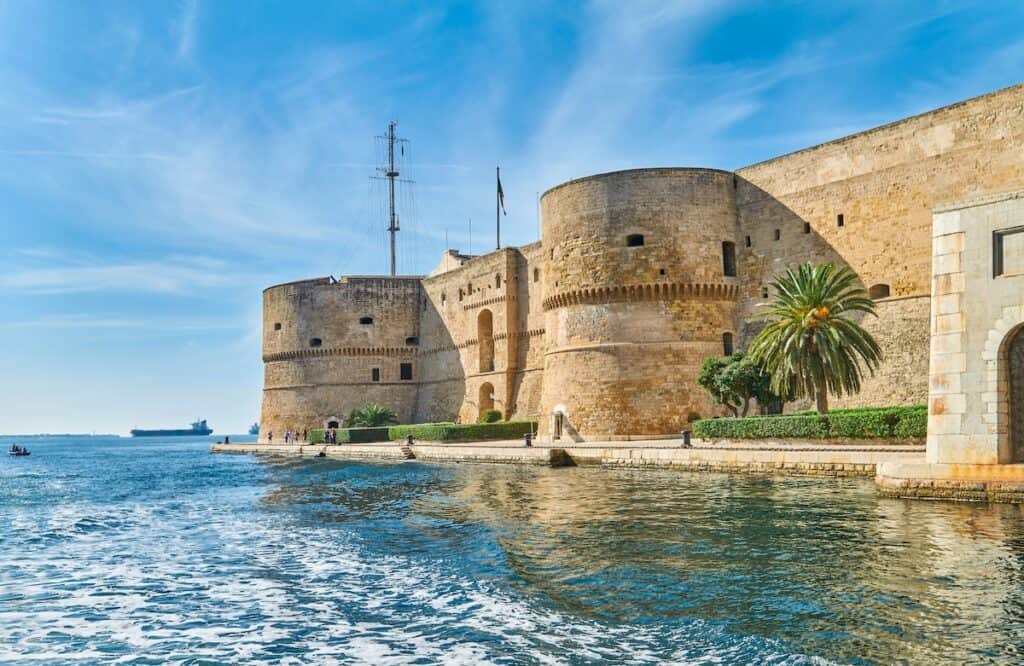
From Martina Franca, continue to Taranto, which feels like a completely different world again. Taranto was one of the most important cities of Magna Graecia, founded by Spartans, and historically it was a major power in the ancient Greek world.
These days, it’s not the prettiest or easiest city in Puglia, but that’s also partly what makes it interesting. It feels lived-in, layered, and a lot less polished than the postcard towns further north.
If you’re expecting instant charm, Taranto may not be your place. But if you like cities with a bit of grit and history underneath the surface, it’s worth a stop. I’d focus on the old town and the waterfront rather than trying to do too much.
If you want some structure here, consider these:
- Book this private Ape Calessino tour of Taranto for a fun, easy overview of the city.
- Book this Taranto walking tour with local audio and written guide if you prefer something more independent.
- Book this boat tour in Taranto if you want to get out on the water for a different perspective.

Campomarino di Maruggio
If you want a slightly less famous stop on this stretch, I’d also consider Campomarino di Maruggio. It fits nicely into the route and tends to feel a little more relaxed than some of the headline beach names.
The dunes and long sandy coast here are lovely, and it’s a good option if you want one more swim stop without chasing the most talked-about beach on the map.

Torre Colimena
Torre Colimena is a nice scenic stop. It’s not somewhere I’d devote hours to, but it has that quieter, more open coastal feel and works well as a pause between bigger beach stops.
The coastal towers along this stretch are part of what gives the Ionian coast its character. They were built as lookout points against pirate raids and Ottoman incursions, and even now they give the coastline that slightly rugged, defensive edge.

Punta Prosciutto
Punta Prosciutto is probably the most famous beach in this area, and yes, it really is that pretty. The water is intensely blue, the sand is pale and soft, and on a good day it has that almost Caribbean look people love to bring up whenever southern Italy gets involved.
That said, it’s also one of the places where popularity can get in the way of enjoyment. If you’re here in shoulder season, great. If you’re here in high summer prepare for the usual southern European beach drama: lots of people, lots of cars, and a general sense that half of Italy had the same idea.

Torre Lapillo
Just north of Porto Cesareo, Torre Lapillo is worth adding if you want another beach stop without needing much detour. It has some of the same gorgeous shallow water and powdery sand as the better-known beaches nearby, but depending on the time of year it can feel a little less hectic.
If you’re doing this trip outside the peak summer rush, this whole section of coast is a dream. In July and August, I’d just manage expectations and arrive early anywhere beach-related unless you enjoy circling for parking in the midday sun.
Porto Cesareo
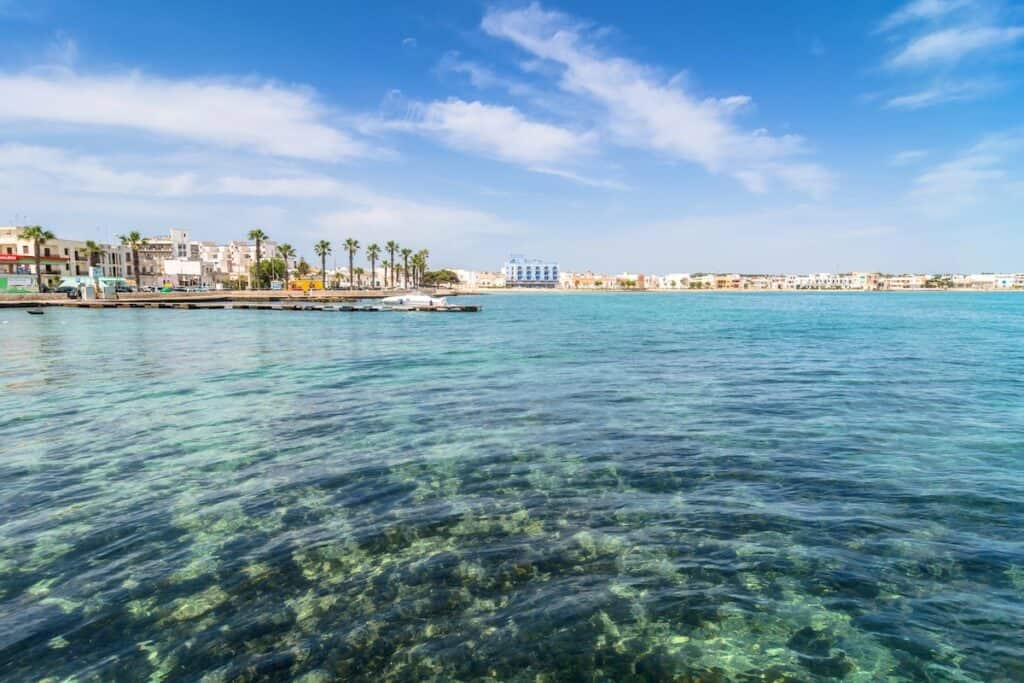
This stretch of coast is known for long sandy beaches, shallow clear water, and a much more beachy feel than the Adriatic side you’ll hit later in the trip.
The water here can be that bright, transparent blue that looks mildly suspicious in photos, as though someone has adjusted the saturation just a bit too much.
Porto Cesareo itself is more of a practical beach town than a beautiful historic one, so I’d come here for the coast rather than the town center. It’s a good place to stop for lunch, have your first proper swim if the weather’s good, and ease into the slower rhythm of southern Salento.
Where to Stay on the Ionian Coast
After a day of driving south, where you stay depends on how far south you make it. If you stop earlier, Porto Cesareo or Sant’Isidoro make the most sense. If you push further, Gallipoli is a great base with more atmosphere and restaurant options.
This is the kind of night where I’d keep things simple: check in, shower off the salt and sunscreen, eat seafood, and call it a success. Here are a few splendid options along the route:
Hotel Falli – EASY SEASIDE STAY IN PORTO CESAREO
A simple, well-placed option if you want to stay right in Porto Cesareo and keep the coast front and center.
Sant Isidoro Suite – QUIETER BEACH BASE
A great pick if you want something a little calmer between the bigger stops, with easy access to the sea and a more laid-back feel.
Biancodonda Greenblu Hotel & SPA – STYLISH GALLIPOLI ESCAPE
A more polished option if you make it as far as Gallipoli and want a stay with a bit more comfort and a spa element.

Day 5 – Gallipoli and Santa Maria di Leuca
Today takes you further down the Ionian side, from one of the most popular towns in southern Puglia to the dramatic southern tip of the peninsula.
It’s a very good day if you like the mix of old town wandering, sea views, and that satisfying feeling that you’re slowly making your way to the end of the land.
Gallipoli
Start the day in Gallipoli, which is one of the strongest coastal towns in Salento. The historic center sits on a limestone island connected to the mainland by a bridge, and that setting gives it a slightly self-contained, almost theatrical feel. It’s lively without feeling too polished, and it works really well as a morning stop.
Historically, Gallipoli was an important trading port, especially for olive oil, and you still get that sense of a town shaped by the sea and commerce rather than just tourism. The old town is full of churches, little lanes, sea-facing bastions, and worn golden stone that looks especially good in strong sunlight.
This is one of those places where I wouldn’t overplan. Wander the old center, look out over the water, stop for coffee, and let it unfold a bit. It’s busy in summer, but it earns its popularity more convincingly than some of the other big-name towns in Puglia.

Punta della Suina
Just south of Gallipoli, Punta della Suina is worth mentioning because it’s one of the best-known coastal spots in this part of Salento. It has rocky sections, pine trees, and clear water, and feels a bit more scenic and natural than a standard beach lido strip.
I wouldn’t necessarily force it into the day if you’re trying to keep things relaxed, but if you want a swim stop between Gallipoli and the deep south, it’s one of the better options.
Torre San Giovanni
Further down the coast, Torre San Giovanni is another useful stop if you want to break up the drive. It’s more of a beach base than a cultural stop, but the long sandy coastline and bright water make it a good place to pause for a swim or a lazy lunch.

Santa Maria di Leuca
By the time you reach Santa Maria di Leuca, you’re at the southern tip of Salento, where the land narrows and the trip starts to feel satisfyingly dramatic.
Leuca has long had this end-of-the-world atmosphere, helped along by the big lighthouse, the sanctuary, and the way the town sits right at the meeting point people romantically describe as where the Ionian and Adriatic seas come together.
Whether you want to get technical about the exact line in the water is another matter. But visually, it absolutely feels like a place where one coastline ends and another begins.
What I like about Santa Maria di Leuca is that it doesn’t rely on a big old town to impress you. It’s more about setting than sightseeing: the villas, the waterfront, the cliffs nearby, the sea caves, the lighthouse, the sense of arrival.
After several days of towns and villages, it gives the itinerary a different kind of payoff.
I’d get here in time for a relaxed evening. Have dinner by the water, walk the promenade, and get excited about the fact that tomorrow is one of the most scenic coastal days of the trip.
Where to Stay in Santa Maria di Leuca
Stay close to the seafront if you want an easy evening and somewhere you can walk to dinner.
This is another night where I’d lean into the coast properly. Book somewhere with a terrace if you can, go for a sunset aperitivo, and enjoy the fact that by this point in the trip, you’re fully in southern Salento mode.
Approdo Boutique Hotel Leuca – PANORAMIC HARBOR VIEWS
A great pick if you want sea views, a pool, and an easy position overlooking Leuca’s tourist port. It feels classic and relaxed, with the kind of terrace that suits this stop very well.
Villa La Meridiana – HISTORIC SEAFRONT CHARM
A lovely choice if you prefer somewhere with more old-world character. This 19th-century villa sits right on the lungomare and feels more elegant and atmospheric than a standard beach hotel.
HOTIDAY Leuca Lungomare – EASY BEACHFRONT COMFORT
A solid option if you want something simple and practical right on the seafront, with access to a pool, private beach, restaurant, and spa. Best if convenience matters more than boutique character.

Day 6 – Adriatic Salento
This is one of the most scenic days of the whole trip. After the sandy, beachy feel of the Ionian coast, the Adriatic side feels wilder and more dramatic. More cliffs, more rocky coves, more places where you stop the car “just for a photo” and then stay much longer.
I’d keep today fairly flexible. There are a few obvious stops, but the real point is to enjoy the coastline properly rather than rushing from pin to pin.
Santa Maria di Leuca
Before leaving Santa Maria di Leuca, take it slow in the morning. I’d have breakfast, go for a short walk, and then start heading up the Adriatic coast.
Sentiero delle Cipolliane
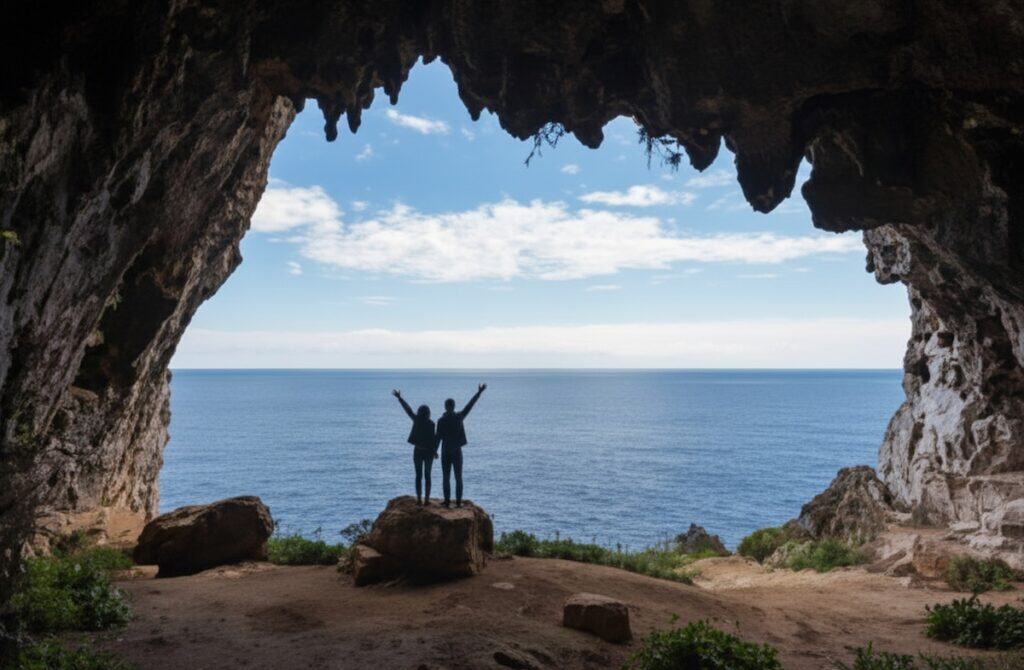
The Sentiero delle Cipolliane runs along the cliffs between Ponte del Ciolo and Marina di Novaglie, so it makes sense to pair it with Il Ciolo rather than treat it as a separate detour.
The scenic coastal section is about 2.5 km one way, so if you walk out and back, you’re looking at roughly 5 km total. It usually takes around 1.5 to 2 hours, depending on your pace and how often you stop for photos. While the elevation isn’t massive, there’s enough up-and-down and uneven rocky ground to make proper shoes a very good idea.
Hike from the Ciolo side toward Novaglie, enjoy the views, then return the same way and finish off with a refreshing swim.
Bring water, avoid the hottest part of the day if you can, and don’t underestimate the sun here. It’s a beautiful trail, but it is definitely more exposed than forgiving.

Il Ciolo
Whether or not you do the full hike, Il Ciolo is absolutely worth stopping for. The gorge, the bridge, and the deep blue water below make it one of the most dramatic natural viewpoints in Salento.
This is the kind of place where the view does all the work. You don’t need much else. Just pull over, walk out, and take it in. Oh, and take a dip!
Marina Serra
If you want to add one smaller stop that fits naturally into the day, Marina Serra is a nice one. It’s a tiny coastal hamlet known for its natural pool, and it makes a good quieter pause between the bigger-name viewpoints.

Castro
End the day in Castro, which I think is one of the nicest smaller coastal towns in this part of Puglia. It’s perched above the sea, has a compact old center, and feels much lower-key than some of the region’s bigger names.
What I like about Castro is that it doesn’t feel like it’s trying too hard. It’s scenic, pleasant, and easy to enjoy. After a day of viewpoints and coastal stops, it’s a very good place to slow down, have dinner, and enjoy the evening.
If you’re not driving this stretch yourself and want someone else to handle the route, book this Otranto and Castro full-day tour. It’s a very easy way to see two of the best coastal towns on this side of Salento without worrying about logistics.
Where to Stay in Otranto (or hinterlands)
You can stay in either Castro or Otranto tonight, or opt for another masseria in the hinterlands, all both work well. If you want more restaurant choice, a prettier old town, and a slightly easier setup for tomorrow, stay in Otranto.
If you want to stay right in town, Otranto is the best choice for atmosphere, evening strolls, and easy access to restaurants. If you’d prefer something quieter and more spacious, the countryside just outside Otranto — or the coast near Castro — works really well too.
Marenea Suite Hotel – SEASIDE LUXURY ESCAPE
A polished option near Castro with sea views, a spa, and a more indulgent resort feel. Best if you want to slow the pace a little and stay somewhere more serene.
Masseria dei Monaci – QUIET COUNTRYSIDE CHARM
A beautiful masseria just outside Otranto, surrounded by olive trees and with that peaceful, rural Salento atmosphere. A great pick if you want something calm and characterful.
Hotel Palazzo Papaleo – OLD TOWN BOUTIQUE GLAMOUR
A very strong choice if you want to stay in the heart of Otranto, close to the cathedral and the sea. The rooftop terrace makes it feel especially well suited to this stop.

Day 7 – Otranto and the Adriatic Coast
Today is one of the highlights of the itinerary. The stretch of coast just north of Otranto is beautiful, and this is exactly the kind of day where having a rental car pays off.
The route is simple and logical if you do it south to north: start in Otranto, then continue to the Faraglioni di Sant’Andrea, then Torre dell’Orso, and finally Grotta della Poesia at Roca Vecchia before going inland towards Lecce.
This whole stretch north of Otranto is beautiful, and I really do recommend tackling it either as a drive with short walks at each stop or as a more active day if you want to cover some of it on foot.
Either way, it’s one of the most rewarding coastal days in Puglia.

Otranto
Start the day in Otranto, one of the prettiest towns in Salento. It’s charming, compact, and historically much more important than its size suggests.
Because of its position facing the Balkans and the eastern Mediterranean, it has long been one of Italy’s key frontier ports, and that gives it a slightly fortified, edge-of-the-map feel that suits it very well.
The standout sight here is the Cathedral of Santa Maria Annunziata. It was refounded in 1068 over an earlier Christian church, but what really makes it unforgettable is the enormous medieval mosaic floor, one of the most important works of art in Puglia.
Created by artists led by the monk Pantaleone, the mosaic runs across much of the church and is built around the Tree of Life, weaving together biblical scenes, animals, mythical imagery, chivalric references, and episodes from Alexander’s Romance. It’s one of those rare church interiors where the floor completely steals the show.
If you want a bit more context while you’re here, book this private Otranto walking tour. It’s a good option if you want the history explained properly instead of just admiring pretty lanes and hoping the details magically absorb into your brain. If you’d rather do something a bit easier and more playful, book this Tuk Tuk tour in Otranto.

Ipogeo di Torre Pinta
If you like unusual little detours, I’d add the Ipogeo di Torre Pinta as a separate stop before leaving Otranto. It’s one of those hidden gems that feels genuinely odd in the best way.
The Ipogeo di Torre Pinta an underground rock-cut space just outside town that gives you another glimpse of how layered this part of Puglia really is.
It’s not a major landmark in the grand sightseeing sense, but that’s exactly why I like it. It feels a bit obscure, a bit mysterious, and completely different from the standard old-town-and-cathedral routine.

Faraglioni di Sant’Andrea
From Otranto, head north first to the Faraglioni di Sant’Andrea. This is the most dramatic stop on the route in purely visual terms. You’ll be in awe of huge white limestone formations, sea arches, jagged rocks, and that ridiculously bright Adriatic water below.
Even if you only stop for a short walk, don’t skip it. This is one of the most photogenic bits of coastline in Puglia, and it feels very different from the softer beach scenery on the Ionian side.
Torre dell’Orso
After the Faraglioni di Sant’Andrea, continue to Torre dell’Orso, one of the best-known beach stops on this stretch of coast.
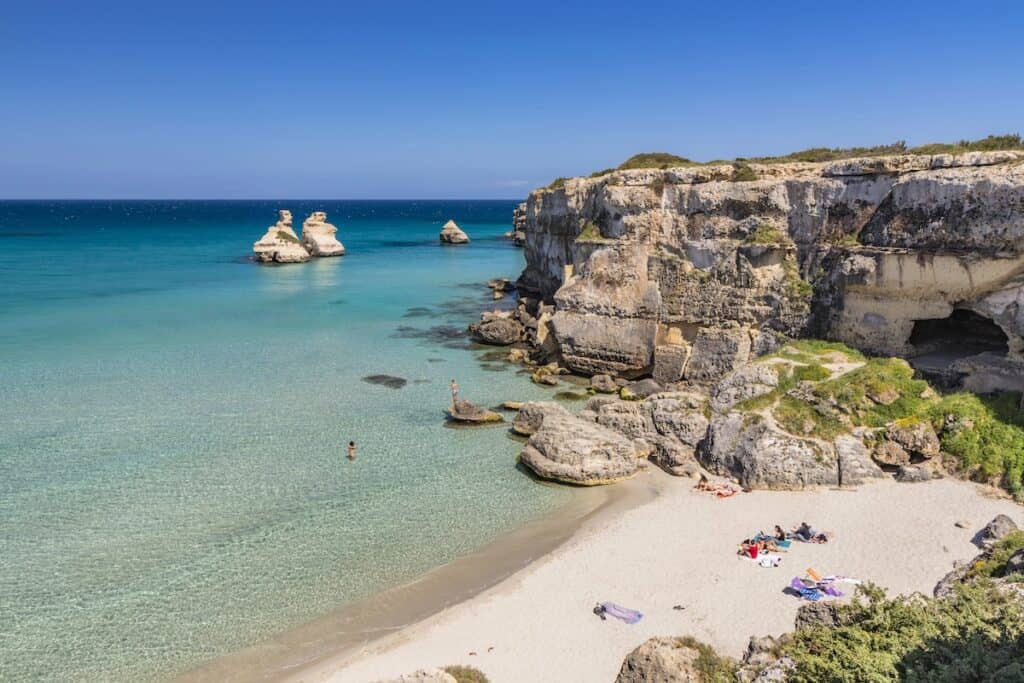
It’s often nicknamed the Caribbean of Italy and is famous for its long sandy bay, clear blue water, and the two sea stacks just offshore known as the Due Sorelle.
Those twin rocks are the iconic view here and easily the most photographed part of the coastline around Torre dell’Orso. They’re also tied to a local legend about two sisters transformed into stone, which only adds to the place’s already dramatic reputation.
The beach is backed by cliffs and pine trees, and if you want to fit in a swim on this day, this is the most natural place to do it.
From the beach, you can walk up toward the Due Sorelle viewpoint, though it’s a bit steep in places, or you can drive closer and park near the panorama if you’d rather save your energy for the rest of the day.
Torre dell’Orso is also the perfect place to stop for lunch. I highly recommend the the burgers (not every meal has to be traditional Italian!) at Madaros.
Grotta della Poesia
From Torre dell’Orso, continue north to Grotta della Poesia, with the wider archaeological area of Roca Vecchia.
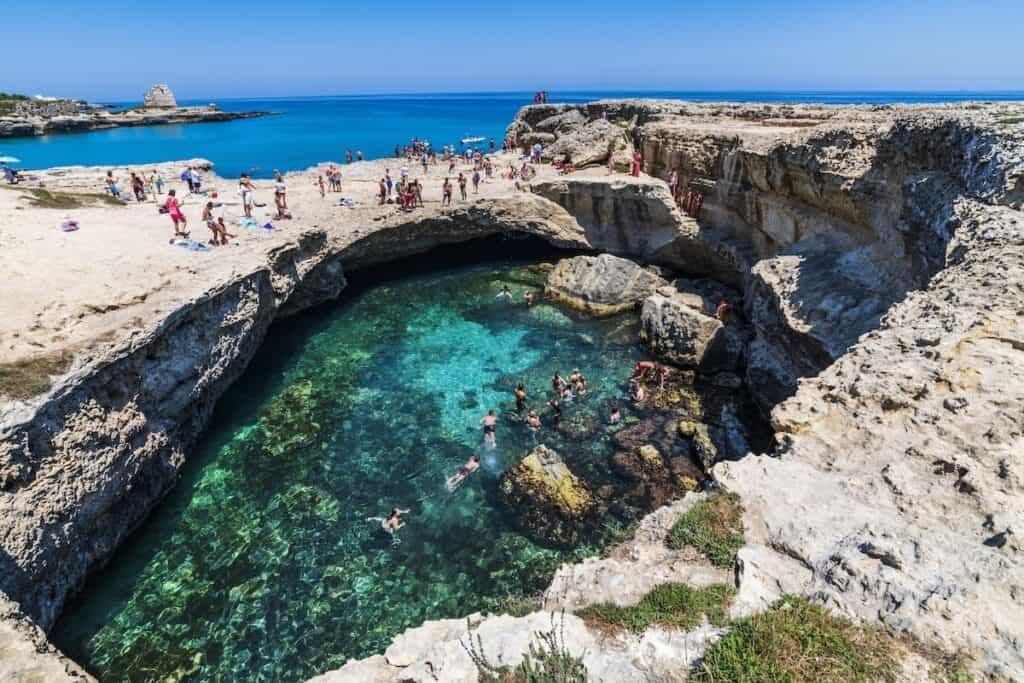
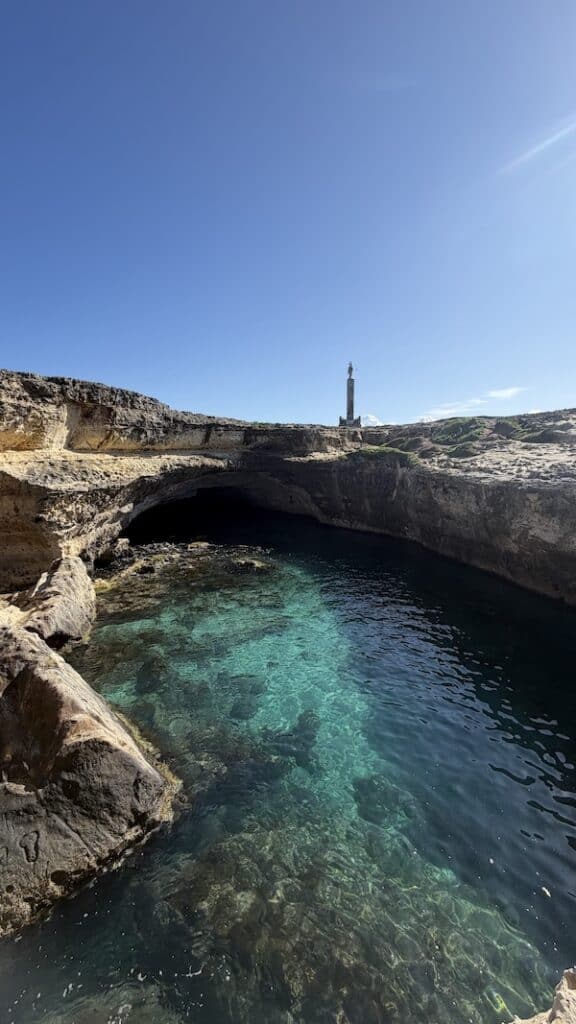
Grotta della Poesia is one of the most famous natural sights in Salento! A spectacular rocky sea pool cut into the limestone. It’s popular, yes, but it’s popular for good reason.
Where to Stay in Lecce
After the coast, continue inland to Lecce for the night. Lecce gives you a completely different mood again; elegant, golden, baroque, and much more of a proper city after several days of smaller towns and coastal stops. It’s also a very good place to eat well and have a fun evening, which is never a bad thing.
If you want the most atmosphere, stay in or near Lecce’s historic center so you can wander out for dinner and enjoy the city in the evening. If parking and easier access matter more, somewhere just outside the old town can work very well too.
La Fiermontina Luxury Home Hotel – TRANQUIL LUXURY HIDEAWAY
A beautiful, high-end stay that feels calm and tucked away, while still being close to the historic center. Best if you want something refined, romantic, and a little more private.
Patria Palace Lecce – CLASSIC GRANDE DAME STAY
A polished, iconic choice right in the heart of Lecce. This is the one I’d pick if you want a more elegant city stay with a proper sense of occasion.
Palazzo Dei Dondoli – BOUTIQUE STAY WITH EASY ACCESS
A lovely smaller-scale option that feels stylish but more relaxed. A great pick if you want something charming and comfortable without going fully grand hotel.

Day 8 – Lecce and Ostuni
This is one of my favorite combinations in the itinerary because the two places feel completely different. Lecce is all about baroque architecture, city energy, and long lunches that turn into slower afternoons than planned, while Ostuni gives you the hilltop white-city drama and one of the best sunset stops in Puglia.
Lecce
I’ve seen a lot of Puglia itineraries skip Lecce, and I honestly think that’s a mistake.
Lecce is one of the most beautiful cities in the region and easily one of the most rewarding urban stops on this whole route. While a lot of Puglia is about coast and villages, Lecce brings in a different layer with history, architecture, and a proper city atmosphere that still feels manageable on foot.
The city is famous for its elaborate Lecce baroque, built in warm local limestone that almost glows in the right light. Churches, balconies, facades, portals, everything here seems to have been given one extra decorative flourish, just because.
I’d spend the morning just wandering properly. See the main piazzas, step inside a church or two, and let yourself enjoy the city without trying to turn it into a frantic sightseeing marathon.

Lecce is also layered with Roman history, so it’s not just a pretty baroque face. You’ve got the Roman amphitheater in the center, ancient remains woven into the city, and that distinct feeling that a lot has happened here over a very long time.
This is also a very good place to do something food-related. If you want more context while you explore, book this Lecce history and food tasting tour. It’s a very good fit here because Lecce is one of those places where architecture and food are equally strong reasons to show up.
If you’d rather do something hands-on, book this pasta-making class and wine tasting in Lecce.
If you prefer a sit down lunch, I had a tourist menu at Boccon Divino (something I almost never do) and it was genuinely a pleasant surprise. Great food, delicious wine, and very good value. Which, honestly, is exactly what you want from lunch.

Drive to Ostuni
After lunch in Lecce, drive north to Ostuni. I wouldn’t leave this too late, because Ostuni is one of those places that really shines in the late afternoon and at sunset.
Ostuni
Ostuni is one of Puglia’s best-known towns, and unlike some of the more overhyped stops, I do think it earns it.
It’s known as the White City, and when you see it rising above the olive groves, all whitewashed and piled up on the hillside, it’s easy to understand why it became one of the icons of the region. You’ll probably stop for more than one photo while approaching town.
The appeal in Ostuni is partly visual and partly atmospheric. The old town is a maze of white lanes, stairs, arches, little passages, and sudden viewpoints.


I wouldn’t overcomplicate Ostuni with too much formal sightseeing. The point is to wander, enjoy the views, stop for a drink, and stay into the evening. That said, if you do want more structure, book this walking tour of Ostuni.
For me, Ostuni is best at sunset. If you can, get a table at Borgo Antico or Bar Perso for the views. That’s the moment to be here. I also had the best octopus sandwich at Doppio Gusto, and the owner was a gem, which made the stop even better. But if you want something more immersive, book this Apulian cooking experience with a view in Ostuni.
And if you’d like to do the wine side of the Valle d’Itria without driving, book this Valle d’Itria wine tour from Ostuni.
Where to Stay in Ostuni
For this night, I’d stay in Ostuni for that hilltop atmosphere, sunset views, and a scenic coffee in the morning. If you want the full Ostuni experience, I’d stay in or right by the historic center so you can enjoy the whitewashed lanes and sunset views properly.
That said, there are also some very good options just outside town if you want something quieter and a view over the white city.
La Sommità Relais & Chateaux – LUXURY IN THE HEART OF OSTUNI
A gorgeous high-end stay right in the old town, with the kind of setting that makes Ostuni feel especially romantic. Best if you want a classic splurge and a very central base.
Grotta Carlotta – UNIQUE CAVE-STYLE CHARM
A more unusual and intimate option with plenty of character. A great pick if you want something memorable and a little different from the standard boutique hotel feel.
Dama Bianca Boutique Hotel Ostuni – STYLISH BOUTIQUE
A polished, elegant stay at the outskirts of Ostuni old town with gorgeous rooftop views. Ideal if you want something chic and comfortable without going fully grand-hotel.

Day 9 – Monopoli, Polignano a Mare, and Conversano
This is a really satisfying last proper road-trip day because it puts three very different places close together before heading into Bari.
There’s also this sunset Vespa tour of Polignano, Conversano, and Monopoli, which is a fun option if you want a splurgey, cinematic version of this day without self-driving between each stop.

Monopoli
Start the day in Monopoli, which I liked more than I expected to. It has a pretty harbor, a compact old town, and most importantly, it still feels like a real place rather than a town that has fully surrendered to tourism.
There are actual locals living there, it doesn’t feel too busy, and it has a much more grounded atmosphere than some of the region’s bigger-name stops. It’s not trying to impress you every second, which oddly makes it more charming.
I’d spend the morning just walking the old center and along the waterfront. It’s a very easy town to enjoy without needing a huge sightseeing agenda. If you want to get more insight here, book this private guided walking tour of Monopoli.
If you want to get out on the water instead, book this boat tour from Monopoli to the Polignano caves with aperitif, which is a really good way to combine Monopoli with the coast near Polignano.

Polignano a Mare
From Monopoli, continue to Polignano a Mare, which is one of the most photographed places in Puglia. And to be fair, it’s obvious why.
The town sits on limestone cliffs above the Adriatic, with caves carved into the rock below and the famous little beach at Lama Monachile slicing dramatically into the center.
It is beautiful. It’s also, in my opinion, way overhyped.
That doesn’t mean skip it. It’s absolutely worth seeing. I’d just go in with realistic expectations: this is not some secret gem. It’s a famous, polished, very photogenic stop that can feel crowded and a bit self-aware. But the setting is so striking that it still earns a place in the itinerary.
If you want to make the most of it, this is one of the best places on the trip to get out on the water. Book this small-group boat excursion to Polignano a Mare because the cliffs and caves are half the appeal, and you get the best perspective from the sea.
If you’d rather stay on land, book this guided walking tour of Polignano a Mare or private Ape Calessino tour if you’re done walking (no judgment here, it’s been a full on trip!)
And if you want to do something more memorable than just take the usual photos and move on, book this cooking lesson or even this scuba experience in Polignano if you want something more adventurous.
And yes, if you want a very special meal, this is where you’ll find the famous Michelin-starred cave restaurant. It’s expensive, so I’d save that for a special occasion rather than a random Tuesday.

Conversano
After Polignano, continue to Conversano. This is exactly the kind of place I like adding to a Puglia itinerary because it gives the day a bit more substance after the cliffside drama of Polignano. It feels more grounded, more local, and for me, more genuinely interesting than a lot of the better-known stops nearby.
The town was once the seat of one of the most important counties in Apulia, and you still feel that in the historic center.
The big landmark here is the castle, originally built by the Normans in the 11th century as a defensive fortress and later transformed into the residence of the Acquaviva d’Aragona counts. So it’s not just a pretty building you glance at on the way to an aperitivo — it’s one of the reasons Conversano mattered politically in the first place.
Another place worth mentioning is the Monastero di San Benedetto, which has one of the more unusual medieval stories in Puglia. It became famous for its mitred abbesses — women who held exceptional religious and temporal power and answered directly to the Pope rather than to the local bishop.
In other words, yes, medieval Conversano had a monastery led by women with real authority, which is objectively excellent content and very much worth a mention.


That’s really why I think Conversano works so well as a stop. It isn’t just “nice.” It has real historical weight, a handsome old center, and enough layers to make it feel like more than a filler detour between Monopoli and Bari.
Another place worth mentioning is the Monastero di San Benedetto, which has one of the more unusual medieval stories in Puglia. It became famous for its mitred abbesses — women who held exceptional religious and temporal power and answered directly to the Pope rather than to the local bishop.
That’s really why I think Conversano works so well as a stop. It isn’t just “nice.” It has real historical weight, a handsome old center, and enough layers to make it feel like more than a filler detour between Monopoli and Bari.
Drop Off Your Rental Car
Before heading into Bari, I’d drop off the rental car. Bari is a big city with traffic, limited parking, and very little interest in making urban driving pleasant.
Most of the rental offices are actually outside the airport, so after dropping the car, you can go to Stazione Europa and take the cheap train into town. It’s much cheaper than taking the train from the airport itself, and from Bari Centrale it’s only about a 10-minute walk to Bari Vecchia.
If you prefer to spend the last night on the coast and drop off the car on your last day I’d still do that before heading into town. You can also leave your luggage at the station and explore Bari before heading to the airport later, which is genuinely useful if you’re timing this around a departure.

Where to Stay in Bari
Stay in Bari tonight so you can enjoy the city properly on your last day and avoid any last-minute airport stress. I’d stay near Bari Vecchia if you want charm and atmosphere, or near the station if convenience matters more.
That said, I would not stay in Bari Vecchia if you have a lot of luggage, because the old town is much easier to enjoy on foot than it is to navigate with bags in tow.
And if you decide you’d rather spend the night in Polignano a Mare and just drive into Bari the next morning, San Michele Suite is a very good option for a final night by the coast.
Bra Hotel Bari – BOUTIQUE STAY NEAR BARI VECCHIA
A stylish, atmospheric option right at the edge of Bari Vecchia. Best if you want charm, character, and an easy walk to Bari’s main sights.
Il Leon D’Oro Bari – PRACTICAL STAY NEAR THE STATION
A solid choice near the train station if convenience matters more than romance. Best for early departures, lighter logistics, and easy access to the train and airport connection.
San Michele Suite – FINAL NIGHT BY THE SEA
A lovely option in Polignano a Mare if you’d rather end the trip on the coast and drive into Bari the next morning. Great for one last scenic splurge before heading home.

Day 10 – Bari
Bari is a good final stop because it gives the itinerary a different kind of ending. After all the hill towns, beaches, and smaller historic centers, Bari feels like a real working city — scruffier in places, more layered, and much more local than people sometimes expect.
That said, one important practical thing: Bari Vecchia is tiny. It’s charming, atmospheric, and absolutely worth seeing, but you do not need a full packed day just for the old town itself. If you’re efficient, you can walk most of it in a cfew hours. Add more time if you want a long lunch, museums, or a slower pace.
That’s why Bari works especially well as a final day. You can see the highlights without feeling rushed, eat very well, and still have enough to make your flight.

Castello Svevo di Bari
Start at the Castello Svevo, Bari’s Norman-Swabian castle and one of the city’s major historical landmarks. It was originally built by the Normans, destroyed, and then rebuilt under Frederick II, which already gives it a solid medieval résumé by Italian standards.
It’s worth seeing because it helps explain Bari as more than just a pretty old port town. This was a strategic city, and the castle makes that immediately obvious. It also anchors your walk nicely, since it sits right on the edge of the old town.
If you want to go inside without overthinking it, buy this entry ticket to the Norman-Swabian Castle and start the day there.


Wander Bari Vecchia
From the castle, head into Bari Vecchia. This is the part of the city most people come for. It’s a compact knot of alleyways, little squares, laundry lines, churches, old stone buildings, and the sort of everyday street life that makes even a quick walk feel interesting.
What I like about Bari Vecchia is that it still feels properly lived-in. It’s not polished in the same way as somewhere like Locorotondo or Ostuni, and that’s part of the appeal. It feels a little rougher around the edges, but more real because of it.
Still, it’s small. Really small. So don’t build this up in your mind as some massive old quarter you’ll need a full day to conquer. You won’t.
The better approach is to wander slowly, look around, stop for coffee, and then spend the rest of your time eating or exploring the newer part of town too.
If you want some structure instead of just meandering, book this Bari walking city tour. It’s a good option if you want the history and context without needing to piece it all together yourself.

Arco Basso (Orecchiette Street)
Then make your way to Arco Basso, better known as Orecchiette Street. Yes, it’s touristy. Yes, it’s still worth a look.
Watching local women make pasta outside their homes is one of Bari’s most famous little sights, and while it won’t take long, it’s part of the experience. Just treat it as a quick stop rather than the centerpiece of the day.

Basilica di San Nicola
One of the most important sights in Bari is the Basilica di San Nicola, which is a major pilgrimage church and a big part of why Bari mattered so much historically. The relics of Saint Nicholas are kept here, which gave the city enormous religious importance and helped shape Bari’s role as a port between East and West.
Even if you’re not especially into churches, this one is worth stepping into because it tells you something important about the city.

Street food for lunch in Bari
If food is a big priority — which in Bari it probably should be — book this Bari street food tour. This is one of the places where I think a food tour makes real sense, because Bari is such a good city for snacking, street food, and quick local specialties.
If you’re tight on time or prefer a sit down lunch in Bari Vecchia, I’d go to La Uascezze. It’s a great choice if you want something atmospheric in the old town and a meal that feels like part of the experience rather than just a logistical stop between landmarks.
If youneed to leave a little earlier, or just want something more practical before taking the train to the airport, Trattoria Pupetta is a very good option near Bari Centrale.
And if you’re staying longer into the evening, Casa Ra is another great pick — not just for lunch, but also as a very solid dinner option if you have a late flight or are spending one more night in the city.

Walk the Lungomare
After lunch, head for the lungomare. Bari’s seafront is one of the nicest parts of the city and gives you a completely different feel from the tight lanes of Bari Vecchia.
This is where Bari opens up — sea views, broad pavements, and that classic Adriatic-city feeling. It’s a good reset after the old town and makes the city feel much bigger than Bari Vecchia alone suggests.
Piazza Mercantile and Piazza del Ferrarese
Before wrapping up, spend a bit of time around Piazza Mercantile and Piazza del Ferrarese. These are the natural places to slow down for a drink, do a bit more wandering, and enjoy your final few hours in the city.
They also make a good bridge between the old town and the newer parts of Bari, which are worth seeing too. If you have time, I really would walk beyond Bari Vecchia into the newer shopping streets. There are some gorgeous palazzos there, and it rounds out the city much better than staying in the old quarter alone.

If You Have a Late Flight
If your flight is later in the day and you had to skip Trani on Day 1, this is actually a really good moment to do it.
Because Bari Vecchia doesn’t need that much time, you can absolutely use a late departure day to visit Trani instead of stretching Bari into something bigger than it is. Trani makes a great half-day add-on: elegant harbor, beautiful cathedral, easy walking, and a very different mood from Bari.
If you don’t want to figure it out yourself, book this Trani wine tour with Castel del Monte or this Trani and Castel del Monte tour from your accommodation if you want to turn that spare time into one last proper excursion.
Getting to the airport from Bari
If you dropped your rental car before coming into the city, the train setup is very straightforward. From Bari Centrale, you can head back out toward the airport when you’re done, and if needed, you can also leave your luggage at the station while you explore. You can buy tickets directly at the train station.
That’s one of the reasons I like ending the itinerary this way. The final day feels flexible rather than stressful. You can do a bit of sightseeing, eat well one last time, and still leave yourself enough breathing room to get to the airport without chaos.

7-Day Puglia Itinerary
If you have 7 days in Puglia, you can still see a lot without the trip feeling like a full-blown endurance sport. This version keeps the big hitters like Matera, the Valle d’Itria, Lecce, Ostuni, and the coast, but trims out some of the slower detours from the 10-day version.
It’s still a road trip, still food-heavy, and still packed with some of the best scenery in southern Italy.
If you’d rather skip the driving and let someone else handle the logistics, book this 7-day Puglia and Matera tour from Bari with accommodation.
It’s a very good option if you want to cover a lot without spending your holiday dealing with parking, train schedules, or whether Google Maps is about to send you down a lane designed for goats

Day 1 – Castel del Monte, Altamura, and Matera
This is a strong first day if you land reasonably early in Bari. If you arrive late, I’d skip Castel del Monte and go straight to Altamura and Matera instead.
Pick Up Car
Pick up your rental car at Bari Airport and get moving straight away. With only 7 days, having your own car makes a massive difference.
Book your rental car through Discover Cars and get the full coverage. Puglia’s roads are not the place to get optimistic about potholes.
Castel del Monte
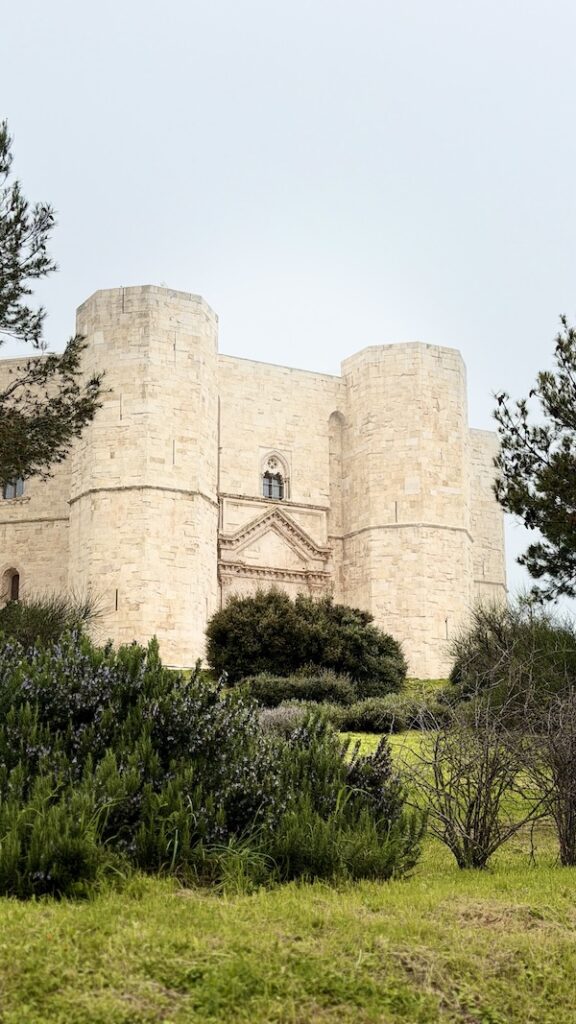
Start with Castel del Monte, one of the strangest and most memorable landmarks in southern Italy. Built by Frederick II, this octagonal castle is a UNESCO World Heritage Site and feels more symbolic than defensive. It’s one of those places that looks almost too geometrically perfect to be real.
As of my trip planning for spring 2026, parking here was €5, with a separate entry fee for the castle itself. Buy this Castel del Monte skip-the-line ticket if you want to keep the stop easy, or book this guided Castel del Monte tour if you want more of the history and symbolism explained.
Altamura
Then continue to Altamura, which is much more interesting than people give it credit for. It’s known for its famous bread, but the town itself is also worth a wander, with a handsome historic center and a very local feel that makes a nice contrast to the more famous stops later in the trip.
I had a great lunch at Trattoria Federico II di Svevia, where all the local Carabinieri seemed to be eating, which felt like a very solid sign.
Matera
From Altamura, continue to Matera for the evening. It’s not technically in Puglia, but I would never leave it out if you’re already this close. The Sassi, those ancient cave districts carved into the rock, are one of the most extraordinary sights in southern Italy.
Arrive in time for an evening walk and aperitivo with a view. Crialoss was my favorite for that.
If you want help understanding the city properly, book this group walking tour of Matera. If you’d rather save your legs, book this Ape Calessino tour of Matera instead.
Where to Stay in Matera
Stay in the Sassi if you can. Sleeping in one of the cave hotels is a big part of the experience. Just pack light, because you’ll usually have to park outside the old town and walk in over uneven streets and stairs.


Day 2 – Matera and Val d’Itria
This is a big day, but a very good one. You go from Matera’s cave-city drama to the trulli towns and whitewashed villages of the Valle d’Itria.
Matera
Use the morning to see Matera properly. Don’t miss the Sassi in Miniatura, at least one chiesa rupestre, and time to just wander the lanes and viewpoints. If you want to understand the landscape beyond the city itself, book this guided tour of Parco Murgia.
Alberobello
Then drive to Alberobello, the most famous trulli town in Puglia. It is magical, yes, but also very touristy, so I’d keep expectations realistic. Go for the architecture, the atmosphere, and the novelty of seeing whole districts made up of those cone-roofed stone houses.
If you want more context, book this guided tour of Alberobello.

Locorotondo
Next, stop in Locorotondo, known for its circular old town and its neat whitewashed lanes. It’s very pretty and works well as a short wander-and-drink stop.
If you want to add something hands-on, book this stone souvenir workshop in Locorotondo.
Cisternino
Finish the day in Cisternino, which I honestly preferred to Locorotondo. It feels less polished and more lived-in, and it’s one of the best places in Puglia to try fornelli pronti — butcher-grill restaurants where you choose your meat and have it cooked on the spot.
If you want a guided intro, book this private Cisternino tour.
Where to Stay in Otranto
Tonight, I’d make the longer drive and stay in Otranto. It sets you up well for the next day and gives you one of the most atmospheric coastal bases in Salento.

Day 3 – Castro, Otranto, and the Adriatic Coast
This is one of the most beautiful coastal days in the itinerary. The whole stretch north of Otranto is gorgeous, and with a week, I’d absolutely prioritize it.
Grotta della Poesia
Start at Grotta della Poesia in Roca Vecchia, one of the most famous natural sights in Salento. It’s a spectacular rocky sea pool cut into the limestone and a very good first stop before the coast gets busier later in the day.
Faraglioni di Sant’Andrea
Then continue to the Faraglioni di Sant’Andrea, one of the most dramatic bits of coastline in Puglia. The white rock formations, arches, and sea stacks here are easily some of the most photogenic scenery in the region.
Torre dell’Orso
Next, head to Torre dell’Orso, known for its wide sandy bay and the Due Sorelle, the two iconic sea stacks just offshore. If you want a swim, this is the easiest place to do it.
Otranto
Finish in Otranto, one of the prettiest towns in Salento. Don’t miss the cathedral, especially the extraordinary medieval mosaic floor, and add the Ipogeo di Torre Pinta if you want a strange, worthwhile little detour.
To get more out of the town itself, book this private Otranto walking tour, or book this Tuk Tuk tour in Otranto if you want something easier.

Day 4 – Coastal Salento
This day is more rugged and scenic, with cliffs, coastal walks, and some of the best viewpoints in southern Puglia.
Sentiero delle Cipolliane
If you want one proper hike on this trip, do the Sentiero delle Cipolliane. The scenic coastal section runs between Ponte del Ciolo and Marina di Novaglie. It’s roughly 2.5 km one way, so around 5 km out and back, and usually takes about 1.5 to 2 hours depending on pace.
Bring water, wear proper shoes, and don’t underestimate the heat.
Il Ciolo
Whether or not you do the full hike, Il Ciolo is worth stopping for. The gorge, bridge, and vivid blue water below make it one of the most memorable viewpoints in Salento.
Santa Maria di Leuca
Finish in Santa Maria di Leuca, right at the southern tip of Salento. This stop is more about setting than big sights — waterfront, villas, lighthouse, sea views, and that satisfying end-of-the-land feeling.
Where to Stay in Santa Maria di Leuca
Stay in Santa Maria di Leuca tonight so you can enjoy the seafront in the evening and avoid extra driving.

Day 5 – Lecce and Ostuni
This is a packed day, but it brings together three very different stops.
Gallipoli
Start in Gallipoli, whose old town sits on an island linked to the mainland by a bridge. It’s lively, scenic, and a good quick stop for a morning wander by the sea.
If you’re doing this region from Lecce as a base instead, book this Gallipoli full-day coastal and winery tour from Lecce.
Lecce
Then continue to Lecce, one of the cities in Puglia I really think people shouldn’t skip. It’s elegant, full of baroque architecture, and just a very enjoyable place to spend a few hours.
I had a surprisingly good tourist menu at Boccon Divino, with delicious wine and excellent value. If you want to turn Lecce into more of an experience, book this Lecce history and food tasting tour or this pasta-making class and wine tasting in Lecce.
Ostuni
End the day in Ostuni, the White City, which is absolutely at its best around sunset. If you can, get a table at Borgo Antico or Bar Perso for the view. I also had the best octopus sandwich at Doppio Gusto here.
If you want a guided introduction, book this walking tour of Ostuni.
Where to Stay in Ostuni
Stay in Ostuni tonight. It’s one of the nicest overnight stops in Puglia and a very good place to linger into the evening.
Day 6 – Monopoli, Polignano a Mare, and Conversano
This is a really satisfying mix of coastal prettiness, famous views, and one more lower-key historic town.
Monopoli
Start in Monopoli, which I liked more than I expected to. It still feels lived-in, has a pleasant harbor, and doesn’t feel too overwhelmed by tourism.
If you want more than just a wander, book this private guided walking tour of Monopoli.
Polignano a Mare
Then continue to Polignano a Mare. It’s dramatic, photogenic, and definitely worth seeing — I just also think it’s overhyped. The cliffs and caves are half the appeal, so if you want to experience it properly, book this small-group boat excursion to Polignano a Mare.
If you’d rather stay on land, book this guided walking tour of Polignano a Mare.
Conversano
Finish in Conversano, which feels more grounded and local than some of the big-name stops nearby. The castle and the Monastero di San Benedetto, famous for its powerful mitred abbesses, give the town more substance than a quick glance suggests.
Where to Stay in Monopoli, Polignano a Mare, or Conversano
All three can work, but I’d personally stay in Monopoli or Conversano over Polignano. They feel a bit less showy and a bit easier to enjoy.
Day 7 – Bari
A week in Puglia ends well in Bari because the city is easy to explore, very practical for onward travel, and excellent for one last meal.
Bari
Spend your final day in Bari Vecchia, but keep expectations realistic — it’s charming, but small. You only need a couple of hours to walk the lanes, see Orecchiette Street, visit the Basilica di San Nicola, and wander past the Castello Svevo.
If you want structure, book this Bari walking city tour. If food is your priority, book this Bari street food tour.
For lunch in Bari Vecchia, I’d go to La Uascezze. If you need something practical near the station before heading out, Trattoria Pupetta is a very good option. And for dinner, Casa Ra is a great choice.
If you have a later flight and had to skip Trani at the start of the trip, this is a very good moment to do it as a final half-day detour.

5-Day Puglia Itinerary
If you only have 5 days in Puglia, I’d be realistic: you’re not going to see everything, and trying to do so will just make the trip feel rushed. The trick is to focus on the most rewarding mix of coastal towns, a few inland highlights, one bigger city, and Matera.
This version is fast-paced, but it still gives you a very good feel for the region. I’d definitely do it with a car, and I’d be quite disciplined about start times, because you don’t have much room for lazy logistical mistakes here.
If you want the highlights without the self-drive and planning, book this 5-day private Puglia and Matera highlights tour. It’s especially worth it if you’re short on time and want to make the most of every day without turning the trip into a full-time logistics project.

Day 1 – Monopoli, Polignano a Mare, and Conversano
This is a very good first day because the stops are close together and each one shows you a different side of the region.
Pick Up Car
Pick up your rental car at Bari Airport and head straight out. Book your rental car through Discover Cars and take the full coverage — still my best advice in Puglia.
Monopoli
Start in Monopoli, which feels more lived-in and less performatively pretty than some of the more famous nearby towns. Walk the harbor and the old center, then move on.
If you want to add a proper activity, book this private guided walking tour of Monopoli.
Polignano a Mare
Then continue to Polignano a Mare. It’s beautiful, yes, but I do think it’s overhyped. Still, the setting is spectacular and very much worth seeing. The best way to appreciate it is honestly from the sea, so book this small-group boat excursion to Polignano a Mare if you want the cliffs and caves to make their full case.
Conversano
Finish in Conversano, one of the more underrated stops in this part of Puglia. It has real historical substance thanks to its castle and the Monastero di San Benedetto, where powerful female abbesses once held remarkable authority in medieval southern Italy. A genuinely good detour.
Where to Stay in Monopoli, Polignano a Mare, or Conversano
I’d stay in Monopoli or Conversano rather than Polignano. Both feel easier and less overrun.

Day 2 – Ostuni, Lecce, and the Adriatic Coast
This is a big day, but it covers some of the most beautiful parts of southern Puglia.
Ostuni
Start in Ostuni, the White City. If you stayed nearby, take advantage of the early light and quieter streets before heading south.
If you want a proper introduction to the town, book this walking tour of Ostuni.
Lecce
Then continue to Lecce, which I really think is worth including even on a shorter trip. It adds architecture, city atmosphere, and some excellent food to an itinerary that could otherwise become all coast and viewpoints.
For a food-and-history combo, book this Lecce history and food tasting tour.
Torre dell’Orso
After Lecce, head to Torre dell’Orso, known for its sandy bay and the Due Sorelle sea stacks just offshore. It’s one of the easiest places on this coast to fit in a quick swim if the weather is good.
Faraglioni di Sant’Andrea
Then continue to the Faraglioni di Sant’Andrea, one of the most dramatic coastal stops in Puglia. Even a short walk here is worth it.
Grotta della Poesia
Next, stop at Grotta della Poesia in Roca Vecchia, one of the best-known natural sights in Salento.
Otranto
Finish the day in Otranto, one of the prettiest towns on the coast. Don’t miss the cathedral and its remarkable mosaic floor.
If you want a more structured visit, book this private Otranto walking tour or this Tuk Tuk tour in Otranto.
Where to Stay in Otranto
Stay in Otranto tonight. It’s one of the best bases in Salento and makes the next morning much easier.

Day 3 – Alberobello and the Val d’Itria
This day brings you back inland for trulli towns and one of the best food stops in the region.
Alberobello
Start in Alberobello, famous for its trulli. It’s one of the most iconic places in Puglia and also one of the most touristy, so go early if you can.
If you want more than just a wander, book this guided tour of Alberobello.
Locorotondo
Then continue to Locorotondo, with its circular hilltop layout, neat whitewashed lanes, and polished atmosphere. It’s a nice short stop.
Cisternino
Finish in Cisternino, which I found more enjoyable than Locorotondo. It feels more local and is one of the best places to try fornelli pronti and bombette.
If you want to add a bit more context, book this private Cisternino tour.
Where to Stay in Val d’Itria
Stay somewhere in the Val d’Itria tonight — Alberobello, Locorotondo, Cisternino, or Martina Franca all work depending on the vibe you want.

Day 4 – Matera and Castel del Monte
This is a long day, but it lets you include two of the most distinctive stops in the wider region.
Matera
Start early and head to Matera. Even on a shorter itinerary, I would still include it. The Sassi are just too unusual and memorable to miss.
Don’t overcomplicate the visit. Walk the cave districts, see Sassi in Miniatura, step into at least one chiesa rupestre, and have a drink with a view if timing allows. If you want a proper introduction, book this group walking tour of Matera.
Castel del Monte
On the way back toward Bari, stop at Castel del Monte if you still have the energy and arrived early enough in Matera to make the day work. It’s one of the most distinctive castles in Italy and worth seeing for the architecture alone.
To make the stop easy, buy this Castel del Monte skip-the-line ticket.
Where to Stay in Bari or Near the Airport
Tonight, I’d stay in Bari or somewhere convenient near the airport, depending on your departure plans the next day.
Day 5 – Bari
Bari makes a practical final stop because it’s compact, easy to explore, and well connected.
Bari
Spend the day in Bari Vecchia, but remember that it’s small. You can comfortably see the old town highlights in a couple of hours, including Orecchiette Street, the Basilica di San Nicola, and the area around the Castello Svevo.
If you want structure, book this Bari walking city tour. If you want to leave with one last excellent food memory, book this Bari street food tour.
If you had to skip Trani earlier in the trip and you have a later flight, this is also your chance to do a final detour before heading out.

Is Puglia Worth Visiting?
Puglia is one of the most rewarding regions in Italy if you like a mix of beautiful towns, dramatic coastlines, memorable food, and places that still feel properly lived-in.
What makes it so good is the range. You can sleep in a cave hotel in Matera, wander trulli in Alberobello, have aperitivo in Ostuni at sunset, drive a stunning stretch of coast near Otranto, and eat ridiculously well the entire time. Some of the biggest names are definitely touristy, but the region still has plenty of places that feel more grounded, like Altamura, Cisternino, Conversano, and Monopoli.
For me, Puglia is especially worth visiting as a road trip destination. It’s varied, scenic, and easy to shape around your own pace.

Getting to Puglia
Puglia is very easy to reach, and for most itineraries, you’ll want to fly into either Bari or Brindisi.
- By Air: Bari is usually the best arrival point for this itinerary because it gives you the easiest access to northern highlights like Castel del Monte, Altamura, and Matera, and it works well for a full loop through the region. Brindisi can also work, especially if you’re focusing more on Lecce, Salento, and the southern coast. If you’re planning to road trip, I highly recommend you book your rental car through Discover Cars and get full coverage. The potholes in Puglia are not part of the cultural experience.
- By Train: If you’re already in Italy, you can also arrive by train, especially to Bari or Lecce. This works well if you’re planning to stay in one base and do day trips rather than drive the whole region.
- By Car: Driving into Puglia from elsewhere in Italy is very doable, especially if you’re combining it with Basilicata or another southern region.

Getting Around Puglia
The best way to get around Puglia is by rental car. It gives you the most flexibility in terms of what you can see, how you structure your days, and how long you stay in each place.
For this itinerary in particular, I really do think a car is worth it. A lot of the best stops are smaller towns, coastal viewpoints, and places that are much easier to combine when you’re not relying on train schedules or trying to piece together buses in the middle of a road trip.
If you want the highlights without handling the driving and logistics yourself, book this 7-day Puglia and Matera tour from Bari with accommodation or this 5-day private Puglia and Matera highlights tour. They’re a very good option if you want to cover a lot without turning your holiday into a parking strategy workshop.

What and where to Eat and Drink in Puglia
Puglia is ridiculous in the best possible way when it comes to food. One of the nicest surprises of the trip was that I didn’t have a single bad meal, which is frankly a very strong regional performance.
Rather than focusing on restaurants here, I’d focus on the local dishes and drinks you should actively look for, because that’s where Puglia really shines.
Try these:
- Orecchiette con cime di rapa — The classic Puglian pasta dish, especially associated with Bari.
- Purè di fave con cicoria — A humble but delicious broad bean purée with chicory, most typical in central and southern Puglia.
- Pane di Altamura — Famous local bread that’s best tried in Altamura itself.
- Fornelli pronti — A classic Cisternino food experience where you choose your meat and have it grilled on the spot; order the bombette.
- Burrata — Best eaten fresh in inland Puglia and dairy-producing areas.
- Polpo — A must in coastal towns like Monopoli, Polignano a Mare, Gallipoli, Bari, and Otranto.
- Pasticciotto — The pastry to try in Salento, ideally for breakfast or a mid-morning snack.
- Wine — Especially worth paying attention to in the Valle d’Itria and Salento.
- Aperitivo with a view — More of a travel rule than a dish; especially good in Matera and Ostuni.
If food is a big part of why you travel, I’d also add at least one food tour or cooking class somewhere along the way:
- Book this Bari street food tour if you want the most useful overview of local specialties,
- book this Lecce history and food tasting tour if you want something more city-focused, or
- book this pasta-making class and wine tasting in Lecce if you want to come home with at least one useful life skill besides parallel parking trauma.
Best Time to Visit Puglia
The absolute best times to visit Puglia are the last week of April and the first week of October.
Yes, that’s oddly specific. But there’s a reason for it.
That sweet spot gives you relatively long days, usually good weather, fewer crowds, and much better prices. Once you get into the main season from May through September, accommodation, tickets, and parking all tend to get more expensive, and the most popular towns feel noticeably busier.
We visited over Easter, which is technically outside summer but can still be a fairly busy period. The weather was bad, so it actually felt much quieter than expected. Still, for a road trip like this, I’d choose late April or early October every time.

FAQ
How many days do you need in Puglia?
For most people, 7 to 10 days is the sweet spot. That gives you enough time to see the highlights without turning the trip into constant packing and unpacking. You can do 5 days if you’re selective, and you could easily spend 2 weeks here if you want more beach time and more smaller-town detours.
Is Puglia better with a car?
Yes, for this kind of itinerary, absolutely. You can visit parts of Puglia by train and use Bari or Lecce as a base for day trips, but a car gives you far more flexibility. It also makes it much easier to combine inland towns, coastal stops, and places that aren’t well connected by public transport.
Is Matera worth including in a Puglia itinerary?
Yes. Even though Matera is technically in Basilicata, it fits very naturally into a Puglia road trip and is one of the most memorable stops in southern Italy. I would absolutely include it if you have enough time.
Is Puglia expensive?
It can be in peak season, especially in the most famous towns and beach areas, but overall I’d still say it offers good value compared with some other parts of Italy. You’ll save a lot by visiting in shoulder season and by avoiding the most obvious tourist traps for parking and accommodation.
What is the most beautiful part of Puglia?
That depends on what you like. For dramatic coastlines, I’d choose the stretch north of Otranto, including Faraglioni di Sant’Andrea, Torre dell’Orso, and Grotta della Poesia. For iconic towns, it’s hard to beat Ostuni, Alberobello, and Matera. For food and atmosphere, I loved Lecce, Cisternino, Altamura, and Monopoli.
Is Bari worth visiting or should you skip it?
Bari is worth visiting, but I’d be realistic about it. Bari Vecchia is small, and you only need a couple of hours to walk the lanes, see the main sights, and eat well. It works very well as a final stop, especially because it’s practical for onward travel, but I wouldn’t give it more time than it needs unless you really want to dig deeper.
Is Brindisi worth visiting or should you skip it?
I’d skip it, or give it a very short stroll at most. In my experience, it was the only place in Puglia that felt a bit underwhelming. Yes, it has historical significance as the end of the Via Appia, which is objectively important and all that, but unless you have extra time, I don’t think it competes with the more rewarding stops on this itinerary.
What is the most touristy place in Puglia?
In my experience, Alberobello and Polignano a Mare felt the most touristy, with Alberobello probably taking the crown. Both are still worth seeing — I’d just go in knowing they are popular for a reason and definitely not secret.
Where should you base yourself in Puglia without a car?
If you’re not driving, I’d recommend Bari or Lecce as the best base. Bari works better for northern and central Puglia, while Lecce is a much better base for Salento and the southern coast.
Are you planning a trip to Puglia?
Puglia looks easy on a map, but it’s bigger, more spread out, and more varied than many people expect. Where you stay, how you get around, and which towns you prioritize can make a huge difference to your trip.
Before you book anything, check out all our Puglia guides and itineraries too.